

Best Red Tattoo Ink: Brands, Allergy Risk and How to Work Red
Red tattoo ink reads more vividly on skin than any other colour — which is exactly why it is also the colour most often linked to skin reactions. This guide covers the red-ink brands actually in stock, why red behaves differently from black on a chemical level, how to reduce the allergy risk before you tattoo it, and how to work red so it stays saturated once healed.
Red is the most vivid tattoo ink and the one most likely to cause a skin reaction. What the brands in stock actually offer, why red is different, and how to reduce the allergy risk before you tattoo it.
Why red is the "sensitive" colour
Red pulls more skin reactions than any other tattoo colour, and it is not folklore — it shows up consistently in the dermatology literature. Historically, red pigments relied on cinnabar (mercuric sulfide), a well-documented cause of allergic contact dermatitis. Mercury-free reformulations that followed from the 1970s onward did not solve the problem: modern reds are built mainly on organic azo pigments, and azo-based reds are still implicated in allergic reactions, even without mercury in the mix. In practice, a client can tattoo cleanly in black and then react only in the red-filled areas of the same piece.
Red ink brands in the catalogue
Red is not one shade — every brand gives you a range, from blood-red to brick-red to magenta. Every ink below needs to meet the EU's REACH requirements for tattoo pigments to be sold legally on the European market.
| Brand | What it offers in red | Good for |
|---|---|---|
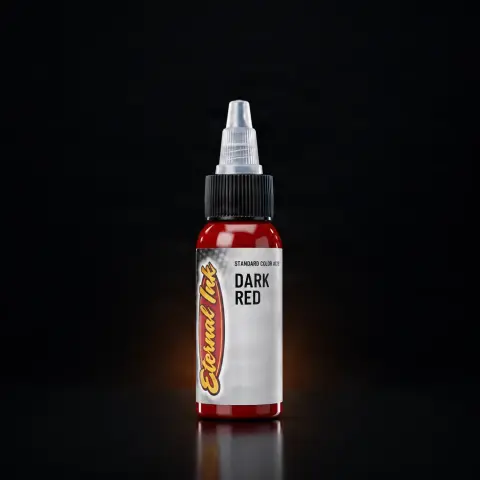
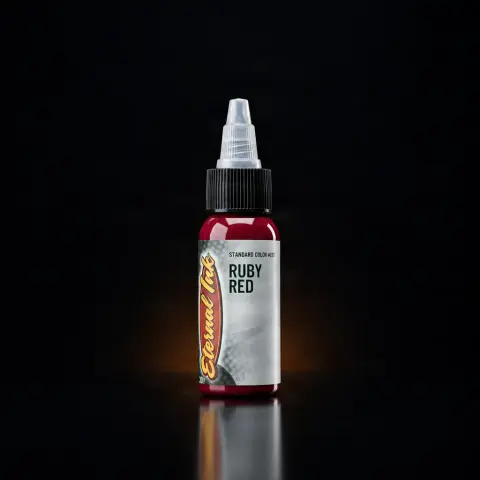
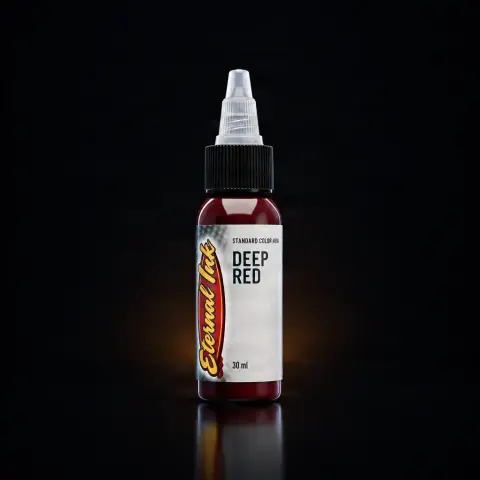
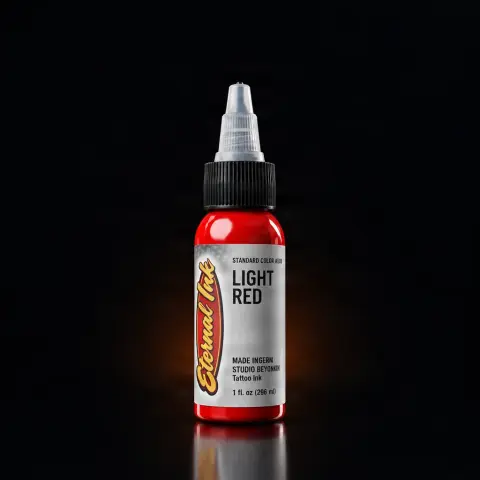
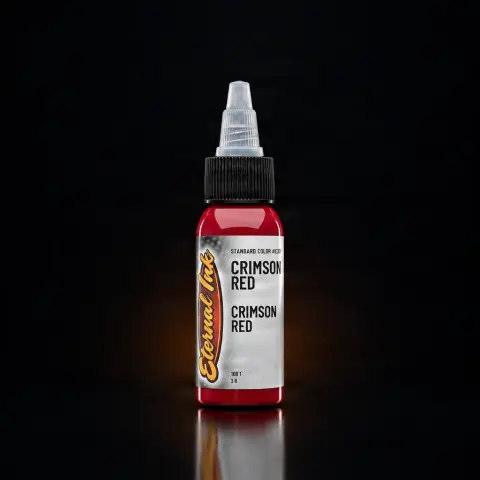
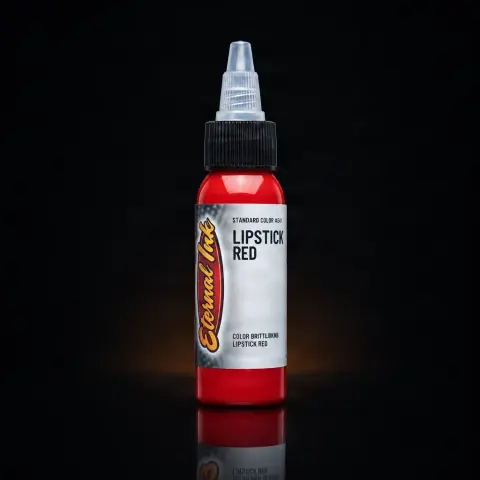
| Eternal Ink | Saturated reds, warm-tone sets | Traditional, neo-traditional |
| Intenze | Intense reds, wide colour range | Colour realism, illustrative work |
| World Famous | Opaque reds, dense coverage | Old school, solid fills |
| Fusion Ink | Vivid reds, concentrated pigment | New school, vibrant colour work |
| Viking by Dynamic | Dynamic's colour line, reds included | Outlining and accents over Dynamic black |
Since January 2022, Commission Regulation (EU) 2020/2081 has restricted a range of pigments historically used in reds and oranges across the EU. Use only inks the manufacturer declares REACH-compliant — an unlabelled or non-compliant red is not just against the rules, it is the exact reaction risk you are trying to avoid.
How to reduce the allergy risk
- Ask whether the client has reacted to red in a previous tattoo — history is the best predictor you have.
- Skip the improvised patch test. A tattooed patch test is not conclusive and leaves a permanent mark either way; if the history is concerning, refer the client to a dermatologist before the session.
- Use sealed, REACH-compliant ink from a traceable source — never an unlabelled or repackaged red.
- Never dilute red with improvised thinner. Dilute only with sterile distilled water, in a separate cap for each dilution.
- Tell the client what normal looks like: mild redness and slight swelling in the first days are expected. A true allergic reaction shows up as persistent itching, thick crusting or raised texture confined to the red areas, sometimes appearing weeks later.
How to work red so it stays vivid
Red fades faster than black if it is deposited too shallow or in a single thin pass. Pack it densely, with overlapping passes, until the colour reads solid — but stop before you traumatise the skin, because over-worked tissue rejects ink. On darker skin, a light red disappears; go for saturated, opaque shades rather than pastel reds.
Order matters. Work red after black and after lighter colours, so you do not carry contamination into your caps. Wipe excess with a clean wipe, not the one you used on black. At healing, red needs closer sun protection than black — UV degrades warm pigment faster.
Should you make your own red ink?
"How to make dark red tattoo ink" is a search that comes up, and the honest answer is: do not. Professional tattoo ink is a regulated mixture with a declared pigment, carrier, batch number and REACH compliance behind it. A home-mixed pigment has none of that — no verified purity, no sterility, no traceability if something goes wrong — and red pigments already carry the worst allergy track record of any tattoo colour to begin with. If you want a specific dark, brick or oxblood red, look for it as a named shade from a real manufacturer, not as a recipe.
Red tattoo inks in stock
Întrebări frecvente
Why does red cause more allergic reactions than black?+
Mostly chemistry. Historical reds relied on cinnabar, a mercury compound with a well-known allergy record; modern reds moved to organic azo pigments, which are mercury-free but still implicated in reactions. Black pigment is chemically more stable and pulls far fewer reports of skin reactions.
Can I patch-test red ink before a full tattoo?+
Not reliably. A tattooed patch test leaves a permanent mark and is not conclusive, since a reaction can surface weeks later. If the client has a concerning history with red, a dermatologist referral before the session is the honest route, not an improvised test.
What red brand should I use for old school work?+
An opaque, densely-covering red — World Famous or Eternal both work well for old school fills. Opacity is the priority in that style: the red has to stay solid and legible for years, not fade toward pastel.
Why does red fade faster than black?+
Two reasons: it is often deposited too shallow or in a single thin pass, and UV light degrades warm pigment faster than black. Pack it densely and push sun protection hard on the red areas during healing and afterwards.
Is it safe to make my own tattoo ink at home?+
No. A safe tattoo pigment needs verified purity, a proper carrier, sterility and REACH compliance — none of which a home mix can guarantee. Red pigments already carry the highest allergy risk of any tattoo colour; using an unverified DIY mix adds a second, avoidable risk on top of that.