
Did Vikings Really Have Tattoos? What Ibn Fadlan's Account of the Rus Traders Actually Says
In 921-922 CE, the Arab diplomat Ahmad ibn Fadlan traveled the Volga and recorded his encounter with Rus traders, a group of Scandinavian origin active in trade with the Volga Bulgars. His account contains exactly one sentence about tattoos — and it's the only written record we have from the Viking Age itself. Everything else, from the elaborate sleeve designs in prestige TV to symbols sold today as 'Viking tattoos,' comes from somewhere else entirely. This guide separates the primary source from the pop-culture reconstruction.
The only surviving 10th-century eyewitness account describes men tattooed from fingertips to neck — but the text says far less than TV shows and video games would have you believe.
Who Was Ibn Fadlan, and Why the Account Matters
Ahmad ibn Fadlan served as secretary to a diplomatic mission sent by the Abbasid caliph al-Muqtadir to the ruler of the Volga Bulgars, in what is now northern Russia. Along the way, in 921-922, he encountered a group of traders that Arabic sources call the 'Rus' — merchants working the Volga trade route that connected Scandinavia to Arab markets through furs, walrus ivory, and enslaved people. His text, known as the Risala, is regarded by historians as the most detailed direct description of a Scandinavian-origin group written by a contemporary — not a legend passed down generations later, but a travel account.
What the Text Actually Says About Tattoos
The relevant passage describes the Rus men this way: from the tips of the fingers to the neck, each man is marked with dark green designs — trees, figures, and 'so forth.' That's the entire description. There's no mention of mythological scenes, runes, wolves, or ships — the motifs that dominate 'Viking tattoos' today. Translations vary slightly (some render it as 'green trees,' others simply 'dark green markings'), because the original Arabic term is ambiguous and could mean green, dark blue, or black.
The pigment Ibn Fadlan describes was almost certainly wood ash worked under the skin — a technique documented among other peoples of the period — not a true 'green' dye. Popular retellings often turn this into 'vivid green tattoos,' which the text doesn't actually support.
Who the Rus Actually Were — All Vikings, or One Specific Group?
'Rus' is not a synonym for 'all Vikings.' Historians mostly associate the term with traders and mercenaries of Scandinavian origin — likely Swedish, given the Volga route — who settled and intermixed, over several generations, with local Slavic and Finno-Ugric populations. Ibn Fadlan describes one specific group, encountered in one specific context (trade, and later a ship burial), not Scandinavian people as a whole. Extrapolating 'all Vikings had tattoos' goes beyond what the source actually claims.
Why There's No Archaeological Evidence
Skin doesn't survive in Scandinavia's acidic soil — Viking Age graves yield bone, metal, occasionally wood, almost never soft tissue. By contrast, tattoos have survived on mummies from Siberian permafrost (the Pazyryk culture, much older and unrelated to the Vikings), which only shows that tattooing was widespread across ancient Eurasia, not that Scandinavian Vikings practiced it in the form the text describes. The result: Ibn Fadlan's account remains the only source, with no independent confirmation from skeletal remains, graves, or other contemporary Scandinavian texts — because no Norwegian or Swedish written tradition existed yet in that period.
What Pop Culture Invented
The intricate geometric designs in TV shows (Vikings), games (Assassin's Creed Valhalla), or today's tattoo studios come from a different source: decorative Viking art preserved on metal, wood, and stone — the Borre, Jellinge, and Urnes styles, with interlocking animals and knotwork. Costume and game designers translated these patterns onto skin as a plausible artistic hypothesis, not as evidence-based reconstruction of actual tattoos.
- Vegvisir ('the Viking compass'): first documented in 19th-century Icelandic manuscripts, centuries removed from the Viking Age
- Ægishjálmur (Helm of Awe): recorded in the Icelandic Galdrabók grimoire, 17th century — roughly 600 years after the Viking Age
- Rune or mythology-scene tattoos: no source from the period places them on skin
- Knotwork / gripping-beast patterns: attested on metal and wood, not as tattoos
Absence of evidence isn't evidence of absence — Vikings may have had more elaborate tattoos than Ibn Fadlan's sentence suggests. But what we can document stops at his description: dark green markings, fingertips to neck. Everything beyond that is plausible reconstruction, not historical fact.
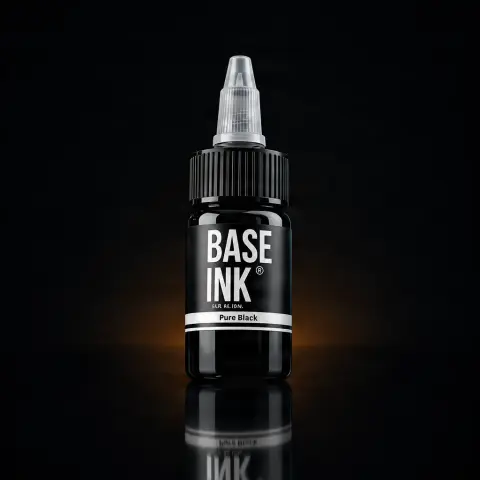
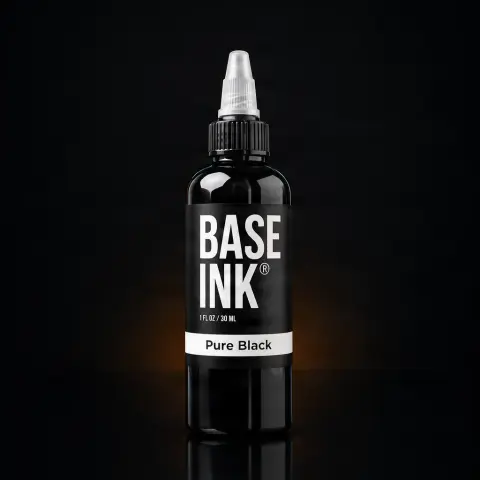
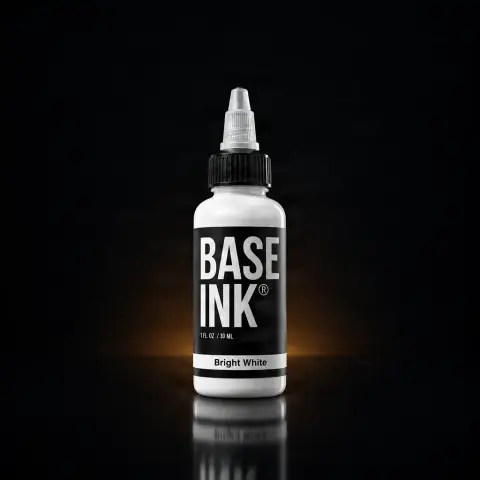
Black ink for Nordic-style / blackwork lines and shading

Liner needles for knotwork and fine lines






What's Certain, What Isn't
- CERTAIN: a 10th-century contemporary described Rus men tattooed from fingertips to neck
- CERTAIN: the pigment was dark-colored (green/blue/black), likely wood ash
- UNCERTAIN: whether the designs were figurative (trees, animals) or abstract symbols — translation varies
- UNCERTAIN: whether the practice was universal among Vikings or specific to the Rus trading group
- MYTH: Vegvisir and Ægishjálmur as Viking tattoos — they appear centuries later, in post-Viking Iceland
- MYTH: full-sleeve elaborate designs from shows and games — modern artistic inventions
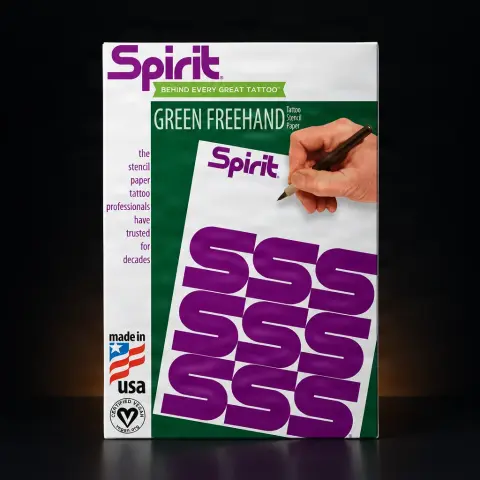
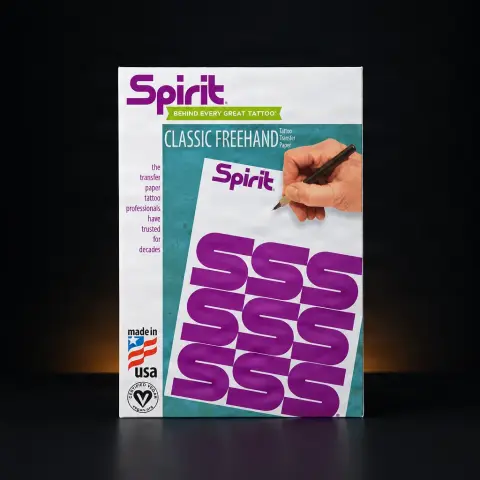
Stencil transfer paper for Nordic-style designs


Întrebări frecvente
Did Vikings really have tattoos?+
The only contemporary written evidence says yes, at least for the Rus traders Ibn Fadlan met in 921-922 on the Volga, who were marked with dark designs from fingertips to neck. There's no independent archaeological evidence, though, because skin doesn't survive in Scandinavian soil.
Who was Ibn Fadlan?+
An Arab diplomat and writer sent by the Abbasid caliph al-Muqtadir on a mission to the Volga Bulgars; along the way he documented the customs of the Rus traders, including their tattoos, in a text known today as the Risala.
Are the elaborate geometric designs from the Vikings TV show real?+
Not as historically documented tattoos. They're based on decorative Viking art found on metal and wood (the Borre, Jellinge, and Urnes styles), artistically translated onto skin by costume designers.
Is the Vegvisir symbol an authentic Viking tattoo?+
Not from the Viking Age. It's first documented in 19th-century Icelandic manuscripts, centuries after the Viking era ended.
Does 'Rus' mean 'all Vikings'?+
Not exactly — the term describes a group of traders and mercenaries of Scandinavian origin (likely Swedish), active on the Volga trade route, who gradually intermixed with Slavic and Finno-Ugric populations.
Why haven't tattoos been found on Viking remains in Scandinavia?+
The region's acidic soil breaks down soft tissue; only bone, metal, and occasionally wood survive — which is why the only evidence of tattooing remains a written text, not a physical find.