
The Cross Tattooed on the Forehead: Balkan Women Who Marked Themselves to Escape the Ottomans
In the Ottoman-ruled Balkans, a few lines of soot ink could decide whether a young woman stayed free or ended up in a harem. Sicanje — the cross tattooed on the forehead, hands or chest — was how Christian girls signaled their faith and made abduction less appealing. The practice lasted for centuries and, through displaced communities, reached even southern Romania.
Sicanje was the tattoo that shielded Christian girls from abduction in Ottoman Bosnia and Croatia — and it reached southern Romania too, carried by Aromanian women resettled from Pindus.
Sicanje: the tattoo that protected Christian girls
Sicanje (from the Serbo-Croatian verb for "to prick") is the name for the ritual tattoos applied to Catholic girls and women in central Bosnia, Herzegovina and the hilly hinterland of Dalmatia, roughly between the 15th and 19th centuries, while the region lived under Ottoman rule. The motifs were plain — crosses, dots, lines — but the message was not: the bearer was Christian, and she had a family that would claim her back.
How the tattoo was made
- Placement: forehead, temples, hands, fingers and sometimes the chest — visible spots, hard to hide or fake.
- Pigment: soot or gunpowder mixed with honey, often together with breast milk.
- Technique: hand-poked with a simple needle, no equipment — "stick and poke" before the term existed.
- Who did it: older women in the family or village, not specialized artisans.
Why it worked as protection
Under Ottoman administration, Christian girls could be taken through devshirme levies or abducted outright for harems and forced conversion to Islam. A cross tattooed on the forehead or hand did not physically stop an abductor, but it lowered the girl's value as a captive: a visibly Christian mark made forced conversion messier and made her identifiable if she was ever separated from her family. Over time the tattoo also became a form of quiet religious defiance — a refusal written on skin, in a period when saying it out loud could cost far more.
The lesser-known angle: the cross of Aromanian women in southern Romania
The story is best documented in Bosnia and Croatia, but the mark also traveled to Romania — not through native women in Oltenia or Banat, but through the Aromanians of the Pindus Mountains (in what is now northern Greece), who lived under the same Ottoman rule and kept the same custom. After World War I, the Romanian state resettled Aromanian families from Pindus into the Quadrilateral, in southern Dobruja. Many of the women already carried the cross tattooed between their eyebrows, inherited from their grandmothers' generation and the era of abductions. Ethnographic records and Romanian press coverage (Historia.ro, Adevărul, DCNews) confirm that elderly Aromanian women with this tattoo were still seen around Tulcea as late as around 1980.
Wallachia, including Oltenia, was an autonomous principality paying tribute to the Ottoman Porte rather than a directly occupied province like Bosnia — so no local tradition of protective tattooing developed there. The mark still reached southern Romania, though, carried by Aromanian women resettled from the Balkans. That is why many readers from Oltenia or Banat have never heard this story, even though it is part of the country's own recent history.
For a fine-line cross tattoo, true to the original design




From survival mark to cultural symbol
Once the threat of abduction faded, the tattoo did not disappear overnight — it stayed part of how older women dressed and presented themselves, a wordless "I lived through that." Later generations wore it less often, until it survived mostly as a family memory. Today the cross motif comes back in a different register: as a tattoo people choose deliberately, for faith, identity or ancestral memory, not for protection.
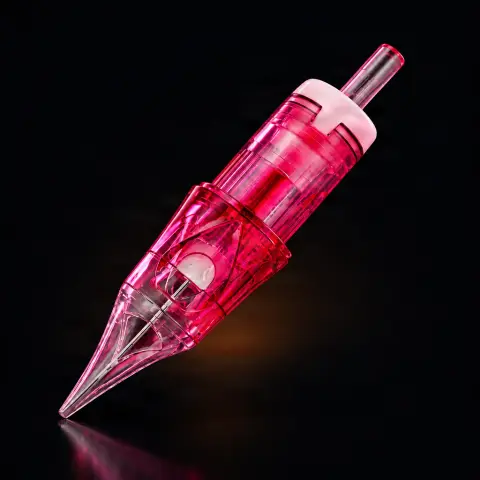
Fine lines, like the traditional cross tattoos





What's left of the custom today
- The sicanje tradition is nearly extinct — the last documented bearers were elderly women, mainly in Bosnia and Croatia.
- In Romania, the last sightings among Aromanian women near Tulcea date from around 1980.
- Local museums (such as MEAP Tulcea) and ethnographers photographed and recorded the custom before it disappeared completely.
- In Croatia, a handful of contemporary tattoo artists have revived sicanje motifs as a decorative style, with input from the communities that still keep the tradition alive.
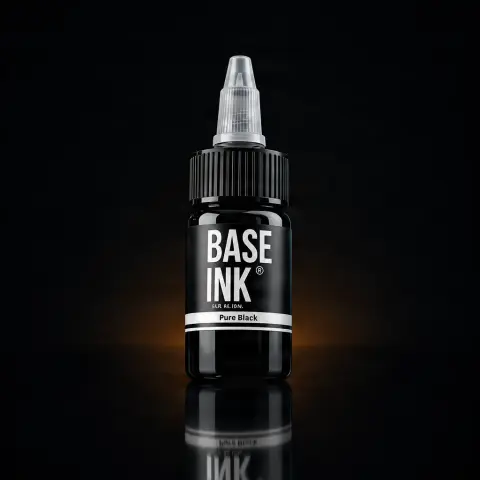
Classic black ink for a tattoo with religious meaning
Întrebări frecvente
What does sicanje mean?+
Sicanje is the Serbo-Croatian term for the ritual tattoos — crosses, dots, lines — applied to Christian girls and women in Bosnia and Croatia between roughly the 15th and 19th centuries, while the region was under Ottoman rule.
Why did Balkan women tattoo a cross on their forehead?+
To visibly declare their Christian identity and make abduction into harems or forced conversion to Islam less appealing. The mark also helped identify girls if they were ever separated from their families.
Did this custom exist in Romania too?+
Yes, but not among native women in Oltenia or Banat — it reached southern Romania (the Quadrilateral, in Dobruja) with Aromanian women resettled there after 1918, who already carried the tattoo from the Pindus Mountains.
What did they tattoo with, since there was no equipment?+
A simple needle and pigment made from soot or gunpowder, mixed with honey or breast milk. It was applied by hand by older women in the family or village.
Are there still women alive today with this tattoo?+
Very few — the last documented sightings, both in the Balkans and among Aromanian women near Tulcea, date from around 1980. The tradition essentially ended with that generation.
What does a cross tattoo mean today compared to back then?+
Back then it was a protective mark forced by historical circumstance. Today it's a personal choice — faith, family memory, or simply an appreciation of the motif itself.