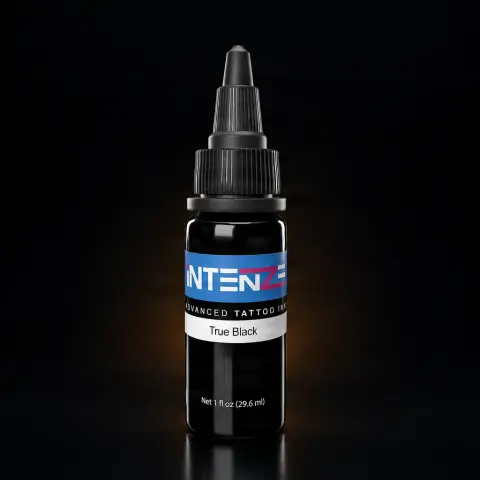
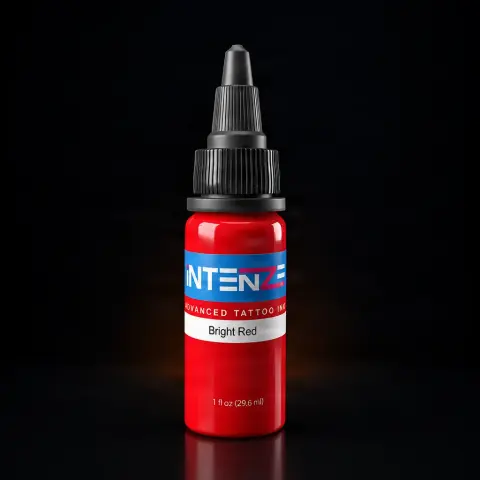
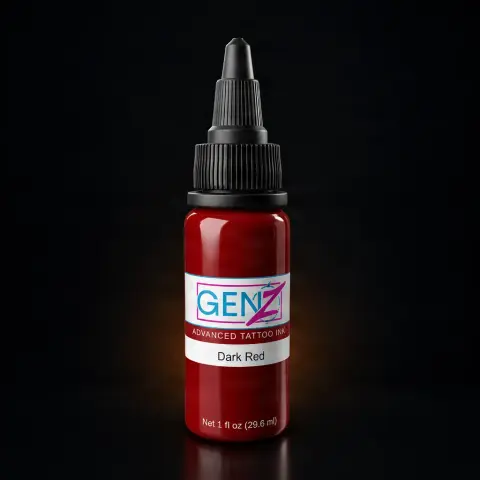
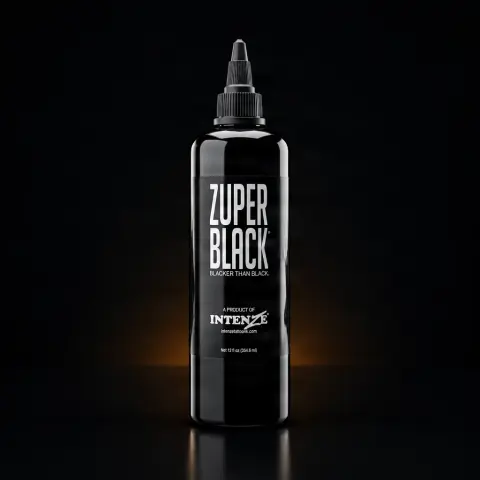
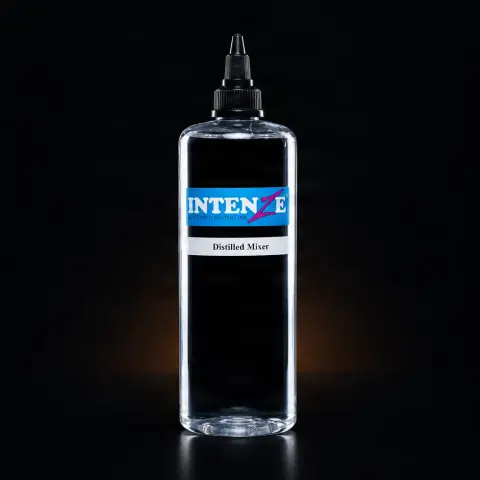
A professional dilution solution designed for shading, wash, and blending: mixed with black ink it builds the entire gray scale for black and grey, and with colored inks it produces semi-transparent washes for watercolor effects or glazes. It is aimed at tattoo artists — from those perfecting their first shadings to realism specialists who need predictable tones, session after session. The 120 ml bottle, sterile-packed, is the standard format for an individual artist.
What makes it better than distilled water for diluting ink?▾
Distilled water only mechanically dilutes the pigment, with no control over dispersion. This solution contains agents that facilitate uniform and controlled penetration of the ink into the skin, so washes come out more homogeneous and predictable, with reduced risk of blow-out and cleaner transitions between tones. Essentially, it's the difference between an improvised diluent and a carrier specifically designed for shading techniques.
What dilution ratios should I use to make my gray scale palette?▾
Common ratios range from 1:1 to 1:10 (solution : ink), depending on how light you want the tone. A standard palette prepared before the session looks like this: pure black, then 1:1 (dark gray), 1:2 (medium gray), 1:4 (light gray), 1:8 (very subtle gray), and optionally a cap with pure solution for final blending. Some artists instead prefer to add the solution gradually to the working cap, mixing in real time — both methods are correct, the important thing is to be consistent so you can reproduce the tones.
Does it work with colored inks or only with black?▾
It works excellently with colors too — it is declared compatible with all Intenze inks, including colored ones. Diluting a color gives you a semi-transparent wash, ideal for watercolor effects, layering glazes over already deposited colors, or gradual transitions in color realism. The technique is identical to that for grays, only the ink changes. For inks from other manufacturers, the sensible recommendation is to use the dilution solution from that respective range, to stay with formulas tested together.
How do I keep the bottle hygienic over the few months of use?▾
The basic rules: always pour from the bottle into disposable ink caps, without the bottle mouth touching the cap or gloves, never return used liquid back into the bottle, and discard everything left in the caps at the end of the session. Close the cap immediately after pouring and keep the bottle on the 'clean' area of the work station, not in the contaminated work field. Store it tightly sealed, away from heat and direct sunlight. The product comes sterile-packed — its subsequent hygiene depends entirely on how you handle it.
How long does the 120 ml bottle last me?▾
It depends on the workload: a standard 4-5 hour black and grey session consumes approximately 5-10 ml, a full portrait 10-20 ml, and a full sleeve 30-50 ml. In practice, the 120 ml bottle comfortably covers 10-20 regular shading sessions, which for an individual artist specialized in black and grey means about 2-4 months of regular work. Keep in mind: the solution is consumed faster than ink, because in washes it represents the largest part of the mixture.
Can I work with pure solution, without any ink?▾
Yes, there is a finishing technique exactly on this idea: after all the gray tones are deposited, you go one last time over the transitions with clean needles dipped only in pure solution. It doesn't deposit pigment, but helps redistribute the pigment already present in the skin, smoothing the edges between tones and creating a natural blur effect. It is an optional blending step used by advanced artists, not a mandatory stage.