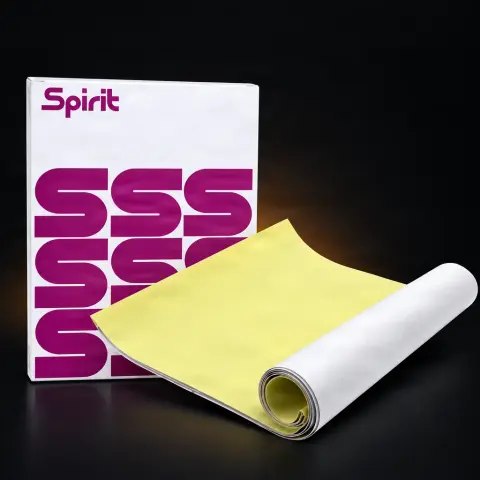
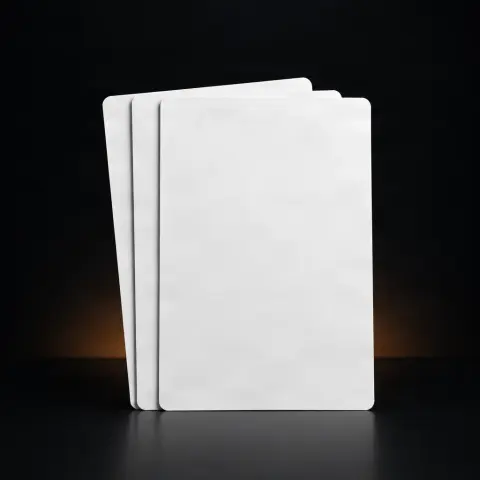
This pack of 100 A4 sheets is intended for artists who draw their tattoo stencils by hand, directly, without needing a thermal copying machine. Spirit hectograph paper works by pressure: the highly visible violet pigment deposits on the back of the sheet as you draw, and from there it transfers to the skin. It is a practical solution for lettering, custom drawings, and freehand work alongside the client, and the 100-sheet format is aimed at studios with consistent workflow volume.
Can it be used with a thermal machine or printer?▾
No. This is freehand hectograph paper, designed for hand-drawn stencils. It is not compatible with printers, nor with copiers or thermal stencil machines. If you work with printed designs, you need thermal transfer paper, not this one.
How many sheets does the pack contain and what size are they?▾
The pack contains 100 sheets in A4 format (standard size 210 × 297 mm), each with the complete three-layer system. It is a bulk format designed for studios with constant consumption.
How do I get the clearest and most visible outline?▾
Draw with firm, even pressure — the pigment is pressure-sensitive, so the more constantly you press, the fuller the line. The violet pigment has high visibility, and a fixing solution applied to the skin before transfer helps keep the outline sharp during the session.
Is it safe for skin?▾
The manufacturer describes it as vegan-friendly and safe for most skin types. As with any consumable that touches the skin, use a new sheet for each client, prepare and disinfect the area beforehand, and do not reuse the stencil.
What is the difference from thermal transfer paper?▾
Thermal paper requires a thermal machine or copier and a design already drawn or printed, which is copied onto the paper. Spirit hectograph paper is drawn by hand, through pressure, without any machine — that's why it is the right choice for freehand, custom lettering, and on-the-spot adjustments.
How do I store it so it doesn't get damaged?▾
Keep the pack in its original packaging, placed horizontally, in a cool, dry place away from direct sunlight and heat. Humidity and high temperatures can affect the pigment, so avoid them.