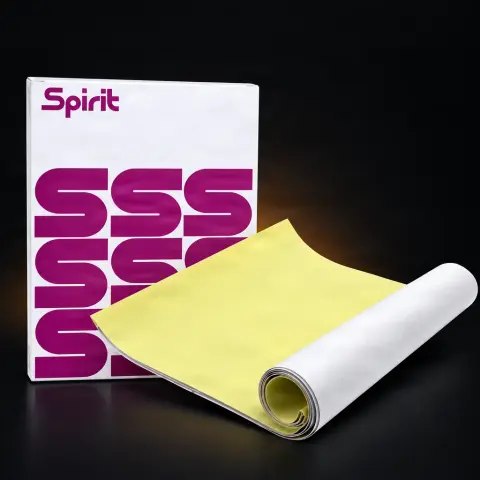
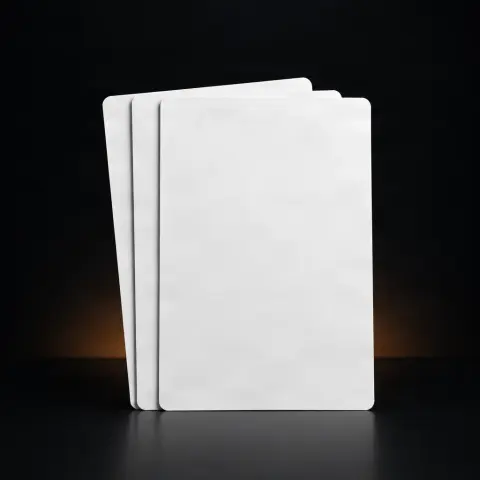
An economical stack of 100 A4 sheets of Spirit classic transfer paper, created for manual tattoo stencils — no thermal printer required. It uses high-visibility violet dyes for clear lines on the skin and is vegan-friendly, safe for most skin types. It is the right choice for artists who work freehand or trace designs by hand, as well as for multi-artist shops or tattoo academies that consume sheets in bulk and want a better unit price than with individual purchase.
Can I use these sheets in a thermal stencil printer?▾
No — these are classic hand-transfer sheets designed for manual tracing with a pen or pencil, specifically so you don't need a thermal machine. For thermal stencil printers, there are dedicated sheets which are not interchangeable with classic ones. Many shops keep both types in stock: classic for freehand work and on-the-spot adjustments, thermal for digitally printed stencils.
Can I reuse a sheet or stencil on multiple clients?▾
No. The stencil comes into direct contact with the client's skin, so it is strictly single-use — reusing it would mean a risk of cross-contamination. The transfer sheet itself is consumed during tracing (the carbon layer is depleted on the traced area), so the practical rule is simple: one sheet, one design, one client, then discard.
How long does a stack of 100 sheets last?▾
It depends on your workload. As a rough guide, at an average consumption of 2–3 sheets per day, a solo artist covers about 5–7 weeks from a stack. In a shop with two or three artists, the same stack is consumed in a few weeks, and at academies where students make multiple attempts until they master correct pressure, consumption per session is noticeably higher. Calculate your actual consumption over a week and always keep a reserve — running out of sheets in the middle of a workday is not an option.
How should I store the stack to prevent the sheets from degrading?▾
Horizontally, in the original packaging, at room temperature, in a dry place away from humidity and direct sunlight. Moisture affects the carbon layer and reduces transfer quality. Do not place heavy objects on top of the stack. Properly stored, it maintains its quality throughout its shelf life, typically 2–3 years.
What do you use to trace the design onto the sheet and how do I get clear lines?▾
With a pen or pencil directly over the design placed on top of the layer system. The secret to clear lines is firm and steady pressure throughout the tracing — this is why this type of sheet is valued for the control it gives you on hand-drawn stencils. Before separating the layers, lift a corner and check the transfer: it's much easier to complete a line then than to start over from scratch.
Is this stack suitable for a beginner or only for shops?▾
The technique itself is accessible even to beginners — you trace the design, transfer it to the skin with stencil cream, and work on the stencil. However, the 100-piece format is designed for sustained consumption: full-time artists, multi-artist shops, and tattoo academies where the lower unit price compared to individual purchase matters. If you are a beginner practicing transfers a lot, the large stack can actually be advantageous because the sheets are identical in quality to the individual version and you won't run out of material during practice.