
Plasma Domes Under Saniderm or Second Skin: Normal or a Warning Sign?
First time wearing second-skin film or Saniderm over a fresh tattoo, a raised fluid pocket under the film can look alarming. In most cases it's just plasma pooling normally in the first 24-48 hours. Here's the difference between a normal dome and one that needs action, plus the exact steps: leave it, pop it, or pull the film.
A practical breakdown of plasma domes under second-skin tattoo film — what counts as normal healing, what's a red flag, and the exact steps to take.
What a Plasma Dome Actually Is
Once the tattoo is fresh, wounded skin releases plasma — the clear-to-yellowish fluid from blood that drives wound healing. Under an occlusive film like Saniderm or second skin, that plasma has nowhere to evaporate, so it pools into a visible raised pocket. Mixed with a little blood and excess ink, it forms a flattened blister-like bubble, often brownish-red or yellow, usually without pain beyond the tattooed area itself.
Normal vs Warning Sign
- Clear, yellowish, or brownish-red fluid (plasma + blood + ink) showing up in the first 24-48 hours
- Small to moderate volume that isn't steadily growing
- No odor, no worsening pain, no redness spreading past the tattoo's outline
- Film edges still sealed to the skin
- Cloudy, milky-white, or greenish fluid with a bad smell
- Redness clearly spreading beyond the tattoo, swelling that keeps growing
- Pain getting worse instead of easing after the first day or two
- Red streaks running from the tattoo toward nearby lymph nodes, fever above 38°C/100.4°F, chills — these are urgent, not routine aftercare
As tempting as it looks, don't puncture or press the dome to force the fluid out. Breaking an intact film opens a direct path for bacteria into a fresh wound — exactly when skin is most vulnerable.
What To Do, Step By Step
- Check the seal first: if the film's edges are still stuck down, leave the dome alone — the fluid inside keeps hydrating the wound.
- Don't press, rub, or puncture it, no matter how big it looks.
- If the fluid finds its own way out and starts leaking from an edge, remove the film right away rather than waiting for it to tear further.
- After removing it, rinse the tattoo gently with lukewarm water and a fragrance-free antibacterial soap, then let it air-dry.
- Reapply a fresh second-skin sheet only if the skin isn't broken or irritated; otherwise switch to cream-based aftercare as your artist recommends.
- Keep the first film on for 24-48 hours (follow your studio's exact window) and no longer, even if it still looks clean.
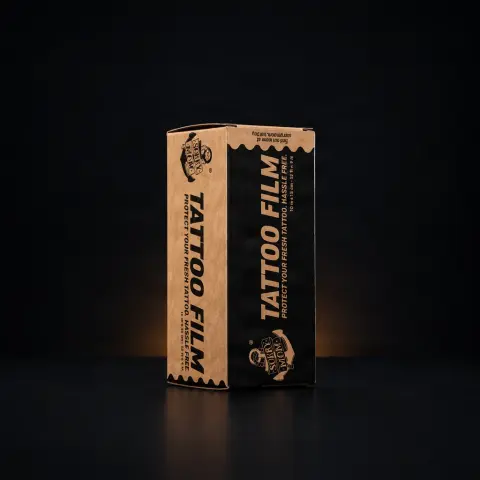
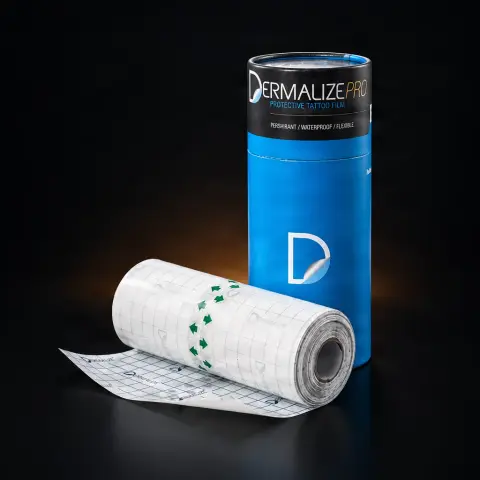
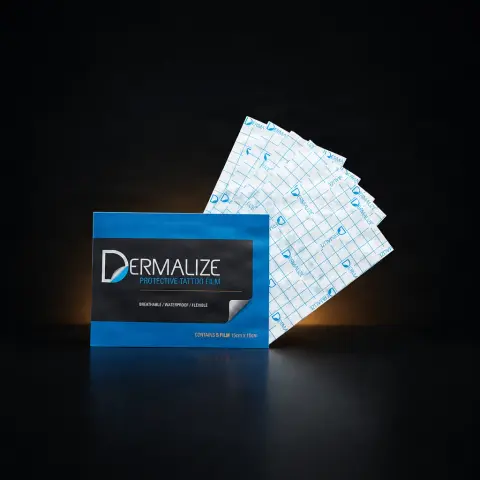
Second Skin Film for Tattoo Protection

Why Popping It Is Never the Fix
Second-skin film works as a sterile occlusive barrier: intact, it keeps bacteria out and plasma's moisture in — the exact combination skin needs to close over. One puncture, however small, cancels that barrier and exposes the wound to anything that touches the film from outside — hands, clothing, bedding. If the dome bothers you visually or physically, the fix is removing the whole sheet, not poking a hole in it.
Don't press a torn or lifted section back down over exposed skin. Take the whole sheet off, clean the tattoo, and either apply a fresh sheet on clean, dry skin or move to cream aftercare, depending on how long the wound was exposed.
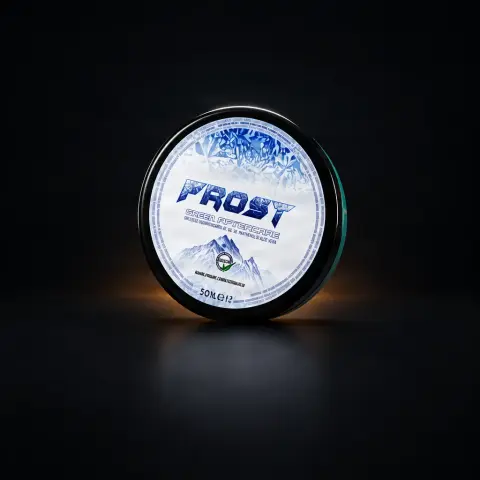
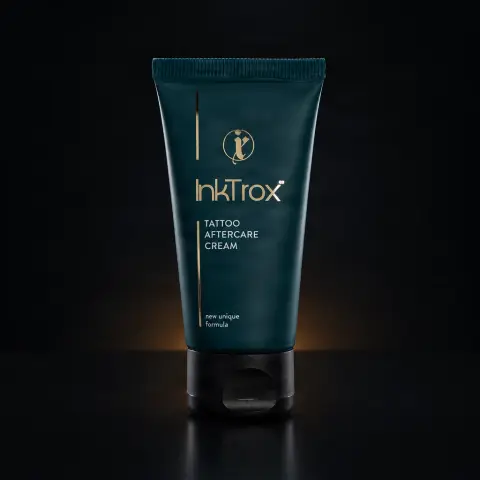
Tattoo Healing Balm

The Real Signs of Infection (Don't Confuse Them With This)
A normal plasma dome is not an infection. Medical sources describe infected tattoos differently, and the signs usually show up or worsen after the first day or two, not within the first few hours:
- Redness that clearly extends past the tattoo's outline, not just local irritation
- Thick, yellow-green pus, or discharge with a foul smell
- Pain that keeps increasing instead of easing day by day
- Swelling that's warm to the touch and not going down
- Fever above 38°C/100.4°F, chills, or red streaks running from the tattoo toward lymph nodes — these call for immediate medical care, not just a message to your artist
This guide is informational, not a substitute for medical advice. If you notice real infection signs (pus, fever, red streaking, worsening pain), contact a doctor or urgent care right away. For anything about normal healing or the film itself, check with the artist who did your tattoo — they saw your skin at the time of application.
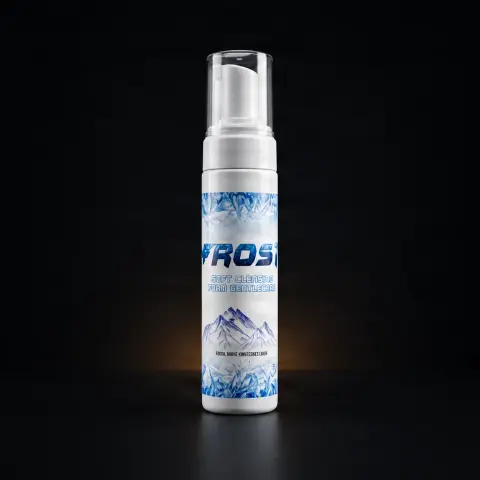
Tattoo Cleansing Spray
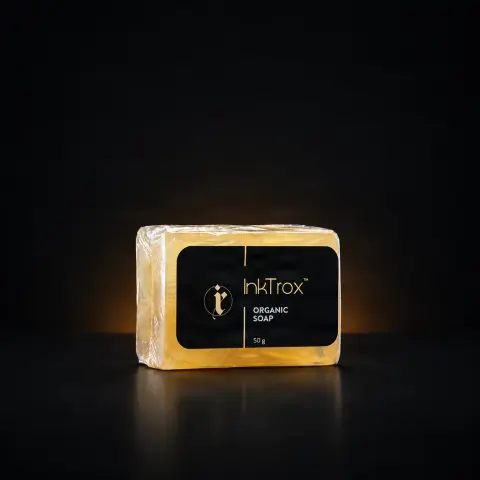
Browse the full range of fresh-tattoo aftercare products →
Surse și referințe
Întrebări frecvente
How long does a plasma dome normally last under the film?+
It usually forms in the first 24-48 hours and stays stable as long as the film is intact. If it's not leaking and no warning signs show up, leave it until you remove the first sheet, following your studio's timeline (typically 24-48 hours).
Can I pop the dome to let the fluid out?+
No. Puncturing it opens a direct entry point for bacteria into a fresh wound. If the fluid bothers you, remove the whole sheet instead of poking a hole in it.
What do I do if plasma leaks out from under the film's edge?+
Remove the film right away, rinse the tattoo gently with water and a fragrance-free soap, let it air-dry, and either apply a fresh sheet or switch to cream aftercare as your artist recommends.
How do I tell normal plasma apart from infected pus?+
Normal plasma is clear, yellowish, or brownish-red, with no odor and no worsening pain. Infected pus is thick, yellow-green, foul-smelling, and comes with spreading redness, increasing pain, or fever.
Does a plasma dome leave a scar?+
No, as long as it's left to reabsorb naturally under an intact film and isn't popped manually. Manipulating it (puncturing, rubbing) raises the risk of irritation and, indirectly, poor scarring.
Should I call my artist if a dome shows up?+
Not necessarily, if the symptoms fit the normal pattern (no odor, no spreading redness, no worsening pain). Call them if you're unsure or if warning signs appear — they saw your skin right after the tattoo and can compare.