
Digital Precision Scale for Mixing PMU Pigments and Tattoo Inks
Mixing your own tones by eye works until a client comes back for a touch-up six months later and the shade is off. A digital precision scale turns a mix into a repeatable recipe: weigh, write down the ratio, reproduce it exactly next time. This guide covers what resolution you actually need, how to use a scale correctly for ink and pigment work, and the mistakes that quietly ruin consistency.
A 0.1g or 0.01g digital scale lets you record and repeat a custom ink or pigment mix by weight instead of guessing by eye — here's how to pick one and use it correctly.
Why weight beats volume for custom mixes
Eyeballing drops or using a syringe by volume introduces two errors at once: viscosity differs between pigment brands, and surface tension changes how a drop forms depending on the tip and the liquid's temperature. A gram is a gram regardless of viscosity, temperature, or which bottle you're pouring from. That's why artists doing PMU brow and lip color correction, or tattoo artists blending custom skin-tone or gray-wash ratios, weigh components instead of counting drops — the scale removes the variable that eyeballing can't control.
0.1g resolution vs 0.01g: which one do you need
A 0.1g (1 decigram) scale is enough for most tattoo ink dilution and gray-wash ratios, where total mix volume is a few grams and a 0.1g swing is a small percentage of the total. A 0.01g (centigram) scale matters more for PMU pigment correction work, where you're often adding a tiny amount of a corrector (a fraction of a gram) into a base pigment — at that scale, 0.1g resolution can represent 10-20% of the corrector's total weight, which is enough to shift a color-correction result. If your work is mostly diluting black ink for gray wash or mixing bold custom tattoo tones in multi-gram batches, 0.1g resolution is generally sufficient. If you regularly do PMU color correction or need to replicate a client's exact brow shade across sessions months apart, 0.01g resolution gives you the margin to record and repeat small corrector additions accurately.
Building a repeatable mixing workflow
- Tare the scale with the empty mixing container on the plate before adding anything.
- Add the base pigment or ink first and record its weight.
- Add each additional component one at a time, weighing and writing down the running total after each addition.
- Calculate the ratio (e.g., base : corrector : diluent) as a percentage or simple fraction, not just absolute grams — this makes the recipe scalable to larger or smaller batches.
- Log the recipe with the client's name or a batch code, plus the pigment brand and lot number, since formulations can shift between lots.
- Re-tare between clients or between batches to avoid cross-contamination of residual weight readings.
Digital scales drift over time and after being moved or bumped. Most precision scales accept a calibration weight (commonly 50g, 100g, or 200g depending on the model) — check yours periodically, especially after transport to a convention or a new studio setup. A scale that's off by even a few percent defeats the purpose of weighing in the first place.
Common mistakes that break consistency
- Not taring between components, so the recorded weight is cumulative but mislabeled as an individual amount.
- Using a kitchen or jewelry scale with 1g resolution for PMU corrector work, where sub-gram precision actually matters.
- Placing the scale on an uneven or vibrating surface (near equipment, on a soft mat) — precision scales need a flat, stable base to read accurately.
- Skipping the written recipe log and relying on memory, which fails exactly when a client returns months later expecting the same shade.
- Ignoring humidity and container static, which can add a few tenths of a gram of error on very light components — wipe down and dry the container before taring.
Maintenance and cleaning
Keep the weighing plate covered with a disposable barrier or a cleanable tray insert, since pigment and ink residue will otherwise build up on the plate and skew readings over time. Most precision scales are not fully washable — wipe the plate and housing with a damp cloth rather than submerging or spraying directly onto the unit. Store it in its case away from direct sunlight and extreme temperature swings, both of which can affect the internal load cell's accuracy between uses.
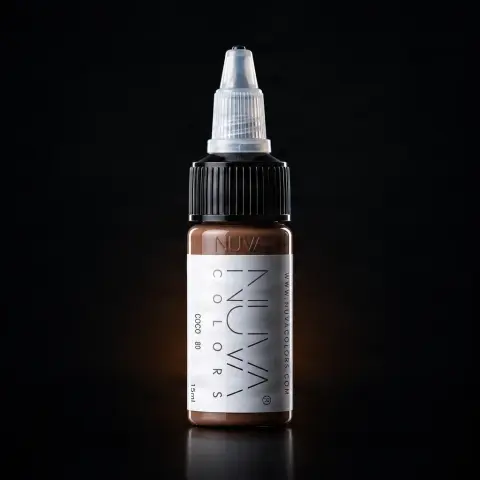
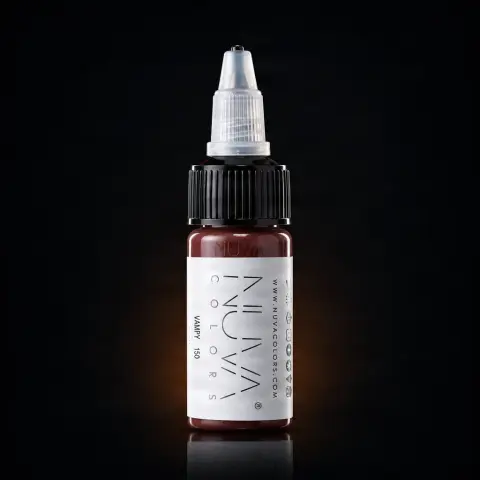
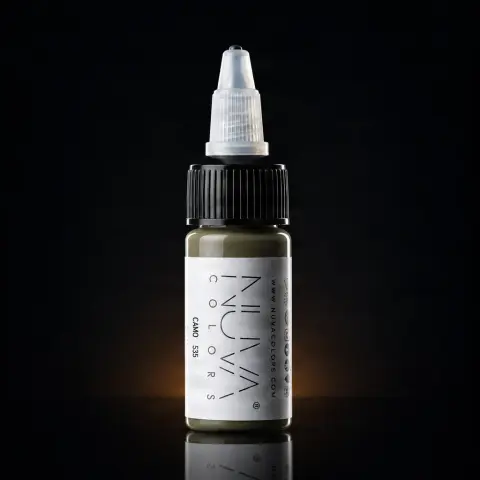
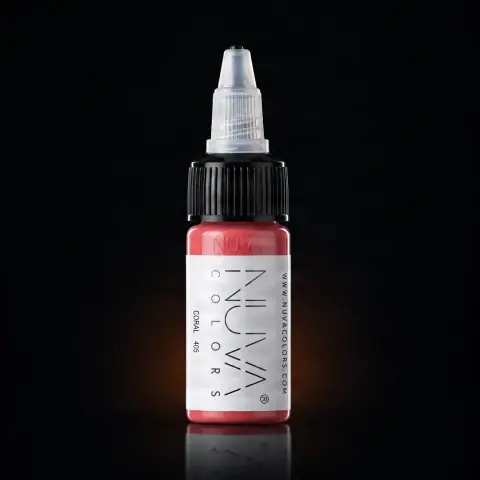
PMU pigments
Întrebări frecvente
Can I use a regular kitchen scale instead of a precision scale?+
A kitchen scale typically has 1g resolution, which is too coarse for PMU corrector additions or small tattoo ink adjustments where fractions of a gram change the outcome. For gray-wash dilution in larger batches it can work in a pinch, but a dedicated 0.1g or 0.01g scale gives consistent, repeatable results across sessions.
How often should I calibrate my precision scale?+
Check calibration whenever the scale has been moved, dropped, or hasn't been used in a while — a monthly check is a reasonable baseline for a scale in regular studio use. Use the calibration weight specified for your model; most precision scales list the required weight in the manual or on the underside of the unit.
Does the mixing container material affect the reading?+
The container's own weight is removed by taring, so material itself doesn't bias the reading — but static-prone plastics can attract a small amount of extra charge that adds noise to very light readings. Glass or anti-static containers reduce this effect for sub-gram precision work.
What's a practical way to record mixing ratios?+
A simple log with client name or batch code, date, base pigment/ink brand and lot number, each component's weight, and the calculated ratio is enough to reproduce a mix reliably. Some artists keep this in a notebook by the workstation; others use a spreadsheet or notes app for quick lookup during touch-up sessions.
Is 0.01g resolution overkill for tattoo ink dilution?+
For most gray-wash and dilution work in multi-gram batches, 0.1g resolution is generally sufficient since the error represents a small percentage of the total. 0.01g becomes more useful when working with very small quantities, such as PMU corrector additions, where a tenth of a gram can be a large share of the total amount added.
Can humidity affect the scale's accuracy?+
High humidity can leave a thin film of moisture on the plate or container, adding a small amount of measurable weight. Wiping the plate dry before taring and keeping the container dry before placing it on the scale minimizes this source of error.