
How Long Should You Wait After a Tattoo Before Intimate Contact? The Real Hygiene Reasons
It's a question people search for quietly but rarely discuss out loud: how long after a tattoo session is it safe for intimate contact? The answer comes down to skin biology, not modesty. A fresh tattoo is, medically speaking, an open wound — and friction, sweat, saliva, and bodily fluids are exactly the factors that raise infection risk and cause ink loss. Below are the real timeframes, stage by stage, with the hygiene reasoning behind each one.
A direct, medically grounded guide to the safe waiting period after a tattoo before intimate contact, based on the real stages of skin healing.
Why a fresh tattoo behaves like an open wound
Regardless of size or placement, tattooing punctures the epidermis thousands of times per minute. The result is, clinically, an open surface wound: the skin temporarily loses its natural barrier against bacteria. In the first days the area oozes plasma and a little blood, and any contact with outside bacteria — from skin, saliva, or bodily fluids — can trigger a local infection. Intimate contact involves exactly those factors: friction, sweat, saliva, and fluids, which is why artists and dermatologists recommend a clear waiting period.
The healing stages, step by step
- Days 1-3: the wound is open, with redness, mild swelling, and plasma discharge — contact with any non-sterile surface should be avoided entirely.
- Days 4-14: fine scabs form and the skin starts flaking; the area stays sensitive to friction and irritating products.
- Weeks 2-4: the surface visually closes (no scabs, no discharge), but the skin is still thin and vulnerable — for larger or more complex tattoos this stage can extend to 4-6 weeks.
- Months 1-6: deep healing continues under the skin — collagen rebuilds and ink settles, even though the tattoo looks fully healed on the surface.
The recommended waiting period
There's no single number that applies everywhere — it depends on the tattooed area and how exposed it is to friction or bodily fluids.
- Tattoo on an area not directly involved in intimate contact (arm, upper back, calf): you can resume once the surface has fully closed, usually 2-3 weeks, provided you avoid direct friction on the area.
- Tattoo on an area exposed to friction during intimate contact (hip, inner thigh, lower abdomen, buttock, lower back): wait at least 3-4 weeks, until the skin has stopped flaking and is no longer tender to the touch.
- Tattoo directly on or very close to the genital area: the recommended minimum is 4-6 weeks, in line with guidance for genital piercings, where full healing takes longer due to the constant moisture and friction in the area.
If the tattoo still has scabs, is flaking, hurts to the touch, or your artist hasn't given the go-ahead, it isn't healed enough for direct intimate contact on that area — no matter how many days have passed on the calendar.
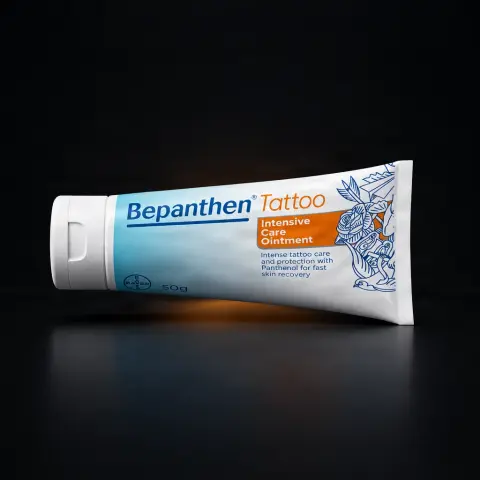
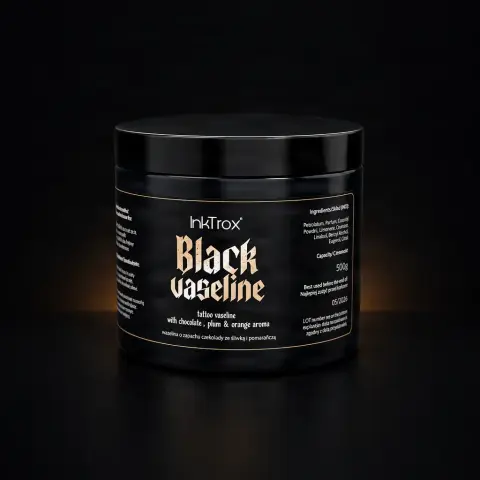
For proper healing


What you risk by not waiting
- Local bacterial infection — spreading redness, warmth, pus, sometimes fever.
- Ink loss and patchy spots if scabs are pulled off by friction.
- Permanent scarring or texture damage on the tattooed area.
- A significantly longer healing time, sometimes requiring a touch-up later.
How to lower the risk if you can't avoid contact entirely
If waiting it out completely isn't an option, a few measures reduce the risk without eliminating it:
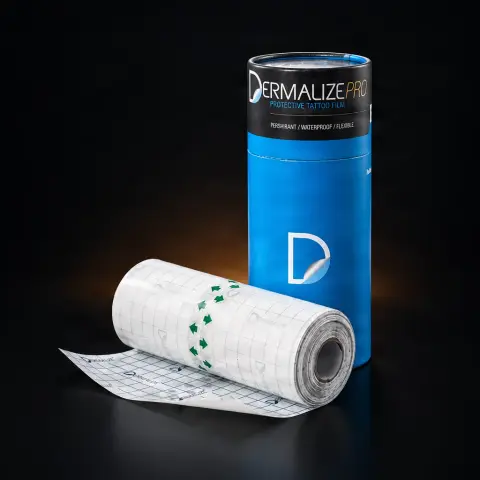
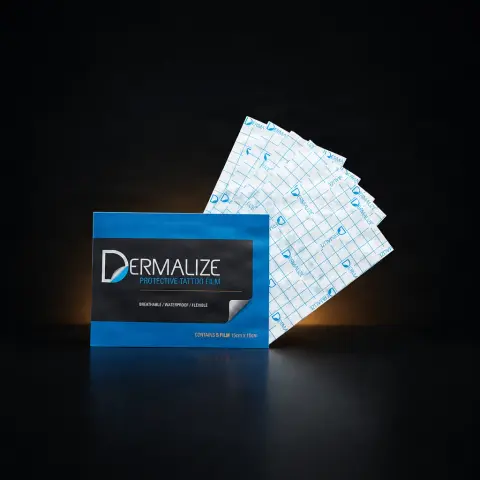
- Cover the tattoo with a clean, freshly applied protective film if the area can be shielded from direct friction.
- Use a barrier (condom, dental dam) if the tattoo is near the genital area, to avoid contact with bodily fluids.
- Shower right after, with lukewarm water and a mild soap, without scrubbing the tattooed area.
- Wear clean, breathable cotton underwear that doesn't add extra friction overnight.
- Never use saliva as lubricant on or near the tattooed area — it carries bacteria that can infect the wound.
Protection for the tattooed area
Signs of infection — when to see a doctor
- Redness spreading beyond the tattoo's outline that doesn't fade after 3-4 days.
- Yellow-green pus or an unpleasant smell.
- Strong local warmth and swelling that increases instead of going down.
- Fever, chills, or feeling generally unwell.
- Pain that intensifies instead of easing after the first week.
This guide provides general information and does not replace a medical consultation. If you notice signs of infection, see a doctor or dermatologist. For anything specific to your own tattoo's healing, ask the artist who did it — they know the technique and depth used.
Daily hygiene for a fresh tattoo
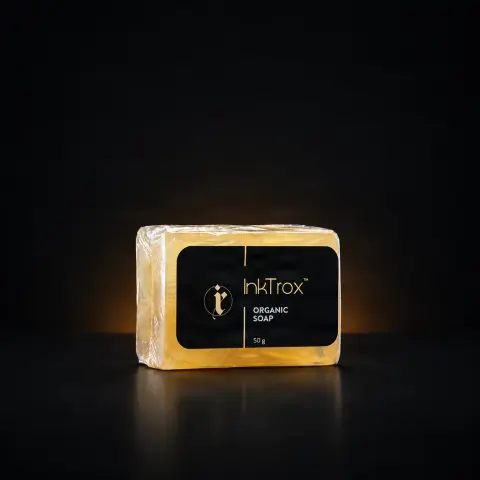
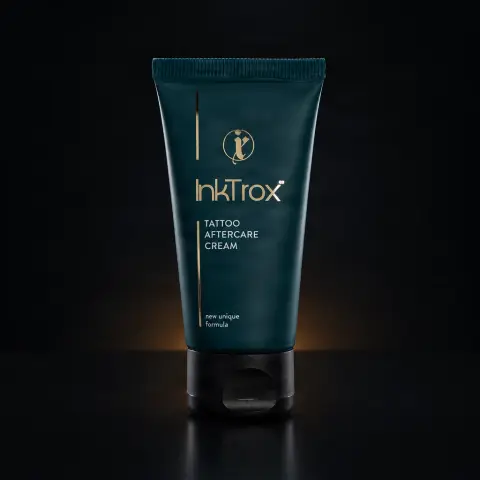


See all products for fresh tattoo aftercare →
Surse și referințe
Întrebări frecvente
What's the minimum wait if the tattoo isn't in an intimate area?+
Generally 2-3 weeks, until the surface is fully closed, with no scabs or discharge, and the area is no longer sensitive to direct touch.
The tattoo is on my hip or inner thigh — does that change anything?+
Yes. Areas exposed to friction during intimate contact need a longer window, usually 3-4 weeks, because repeated friction can pull off scabs and delay healing.
If the tattoo is right on the genital area, how long should I wait?+
At least 4-6 weeks, in line with healing times for genital piercings — the area is more exposed to moisture, friction, and bodily fluids, which raises infection risk.
What actually happens if I have intimate contact too soon?+
You risk local bacterial infection, ink loss from scabs being pulled off, permanent scarring, and a much longer healing time, sometimes requiring a touch-up.
Can I use a condom as protection if I can't wait it out fully?+
A barrier reduces the risk of contact with bodily fluids, but doesn't eliminate the risk of friction on the tattooed area. Waiting for full surface healing remains the safest option.
How do I know for sure the tattoo has healed enough?+
When it has no more scabs, has stopped flaking, doesn't hurt with light touch, and the skin looks and feels close to normal. If in doubt, ask the artist who did your tattoo.