
Footwear for the First Two Weeks After a Foot or Ankle Tattoo
A tattoo on the foot, ankle, or top of the foot heals slower than one on the arm or back, because the area works with every step, sweats more, and often sits enclosed inside a shoe. What you wear during the first 14 days directly affects how cleanly the tattoo heals and your risk of irritation or infection. Below is a day-by-day plan, not generic advice.
Feet and ankles are the hardest tattoo placement to heal — friction with every step, sweat, and shoes that rub directly on the skin. Here's what to wear day by day for the first two weeks.
Why feet are the hardest area to heal
Skin on the ankle and top of the foot has less fat padding underneath, moves with every step, and sits in a warm, moist environment for hours at a time — ideal conditions for friction and bacteria. Unlike a tattoo on the arm, you can't just rest this area: you walk, stand, and wear socks. That's why artists commonly advise avoiding closed shoes entirely for at least two weeks.
Days 1-3: sandals or slides only, no socks
The first 72 hours are the most fragile: the tattoo weeps (lymph fluid plus a little blood), and the skin is swollen and red. Any friction or pressure can tear the scab that's just starting to form.
- Open sandals, slides, or flip-flops only — nothing should touch the design directly.
- No socks over the tattoo, even in cool weather — the fabric rubs and traps sweat.
- If the tattoo is on the ankle, keep jeans or fitted pants away from the edge of the area; go with shorts or loose trousers instead.
- Don't keep the foot inside a shoe all day 'to protect it' — airflow matters more than physical coverage at this stage.
Redness spreading beyond the tattoo, yellow or greenish pus, pain that increases rather than fades after the first week, or fever are not part of normal healing — they're infection signs. See a doctor or urgent care; don't wait it out.
Days 4-7: scabbing starts, friction is still the main enemy
Thin scabs typically start forming around day 3-4. That's expected. What's not fine is ripping them off with a tight shoe or an elastic sock band.
- Stick with open or very roomy shoes — if you absolutely need closed shoes for work, pick the widest, softest pair you own and take them off at every break.
- If you use a second-skin protective film over the tattoo, don't leave it on more than 24 hours without checking the skin underneath — it can trap sweat and create the exact environment that favors infection.
- Skip socks with tight elastic bands over the tattooed area — they leave marks and cut circulation exactly where you shouldn't be applying pressure.
- Keep washing daily with lukewarm water and a mild, unscented soap, then pat dry — never rub.
Healing products for a clean recovery
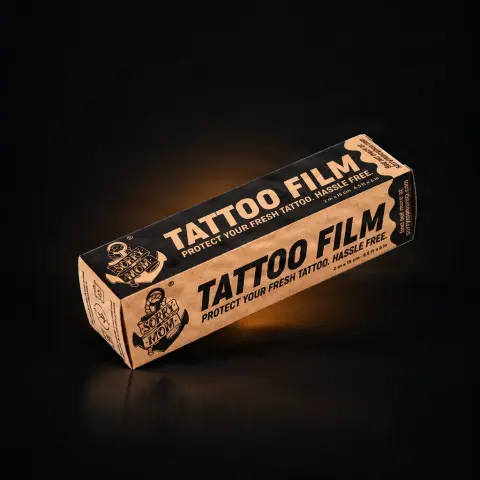
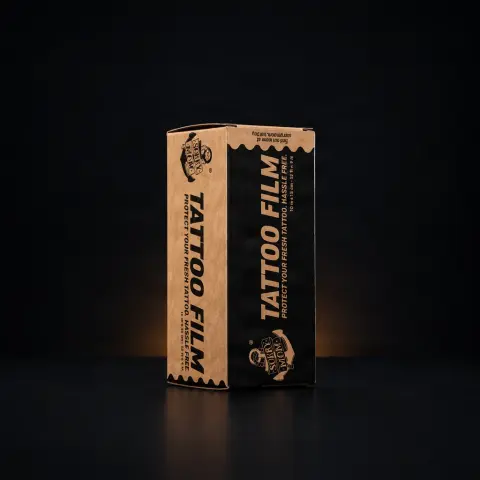
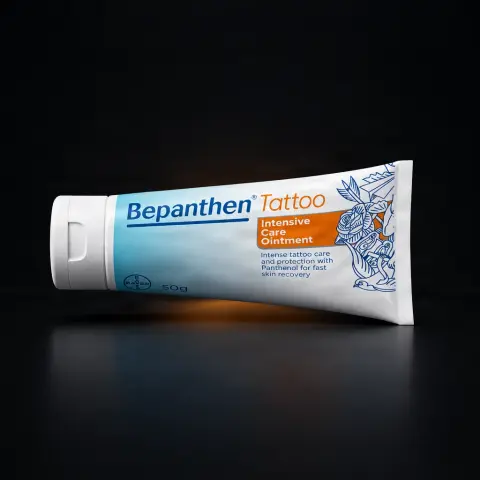
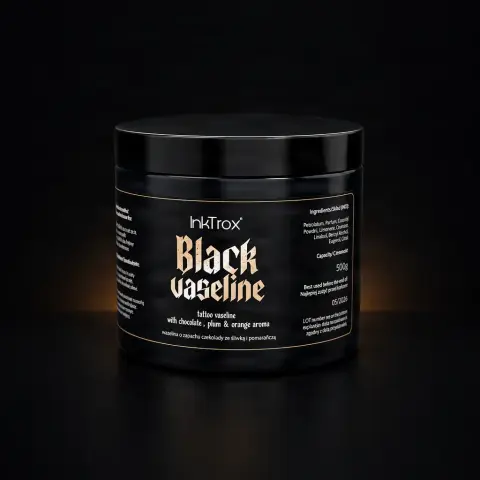
Second-skin film for a fresh tattoo
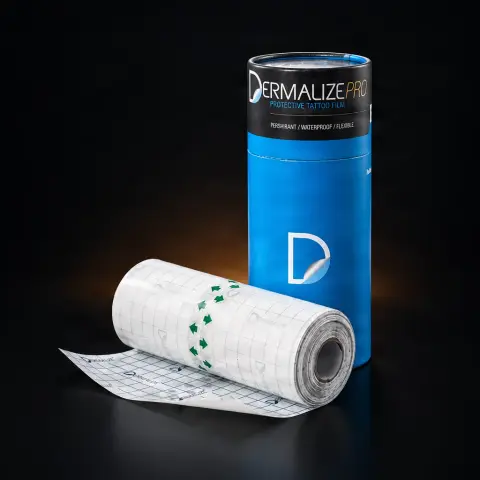

Week 2: peeling starts, but the skin still isn't ready for normal shoes
Around day 7-14 the skin starts to peel — a normal part of healing, not a green light to jump back into tight sneakers or boots. The layer underneath is still fragile.
- You can gradually move toward more closed shoes, but keep them roomy and breathable (soft leather, canvas) — avoid synthetic materials that trap heat.
- If you wear socks, choose cotton with no thick seams over the tattooed area, and change them immediately if you sweat.
- Keep moisturizing daily with a fragrance-free lotion — skin that peels while too dry cracks more easily under friction.
- Still avoid pools, the sea, and long baths — standing water on a partially healed area is a higher infection risk than a normal shower.
Moisturizer for healing skin
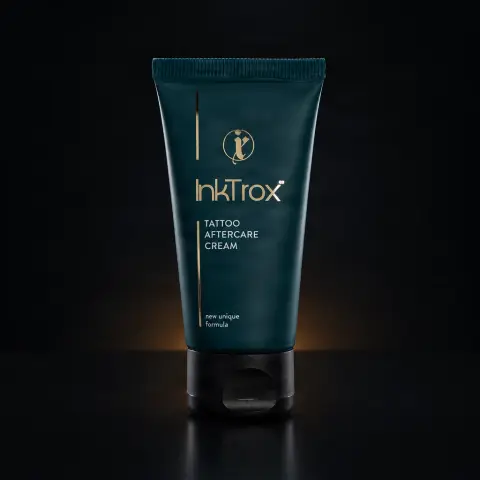
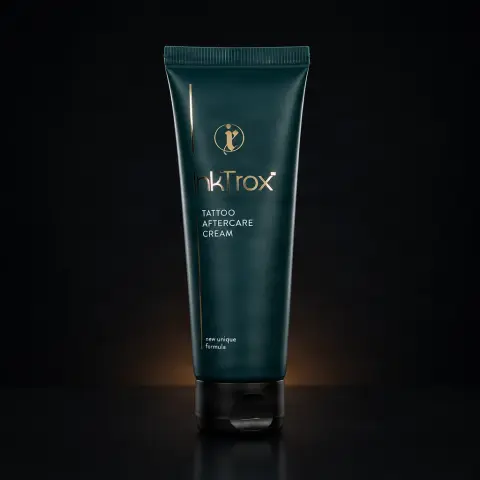

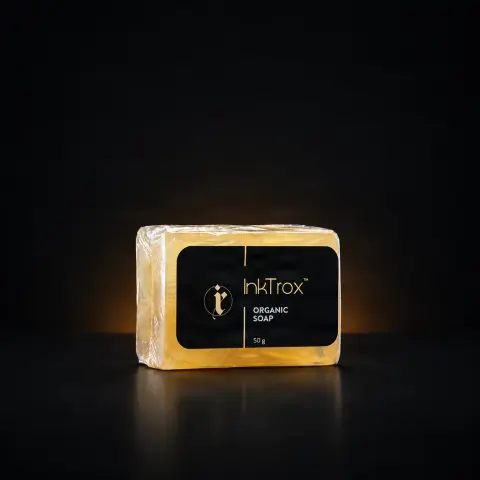
What to avoid no matter the day
- Brand-new, unbroken-in shoes — any spot that bites on a new shoe will almost certainly rub right where the tattoo is.
- Tight athletic shoes or intense running/training while the area is still sensitive — heavy sweating plus repeated friction slows healing.
- Compression socks or any tight elastic band over the tattoo.
- Testing whether it's healed by squeezing into your favorite tight shoes early — if it hurts or feels pressure, it isn't healed.
When you can go back to normal shoes
As a rule of thumb, after 2-3 weeks — once the scabs have fallen off on their own, the skin isn't sensitive to touch, and it's no longer weeping — you can return to your usual footwear. That doesn't mean the tattoo is fully healed: the deeper skin layer keeps rebuilding for months, so keep being mindful about friction and moisture for a while longer even if the surface looks fine.
See products for fresh tattoo aftercare →
Surse și referințe
Întrebări frecvente
How long do I need to avoid socks and closed shoes?+
At least 2 weeks. If the area (ankle, top of foot) hasn't fully 'closed' — scabs haven't fallen off on their own, or the skin is still weeping or sensitive — wait a few more days, even up to 3 weeks.
Can I wear sneakers in the first week?+
Not recommended. Tight sneakers combine exactly the friction and sweat that delay healing and raise the risk of irritation or infection on a freshly tattooed area.
What if I need closed shoes for work?+
Pick the roomiest, softest shoes you own, skip socks directly over the tattoo when possible, and take them off at every break. A second-skin protective film can help for short stretches, but don't keep the skin covered non-stop.
Can I shower or bathe with a fresh tattoo on my foot?+
A short lukewarm shower is fine from day one. Avoid soaking in a bathtub, pools, and the sea for at least 2-3 weeks — standing water on an open wound raises infection risk.
How do I tell an infection apart from normal healing?+
Mild redness and tenderness in the first week are normal. Redness that spreads after day 7, yellow or greenish pus, increasing pain, or fever are not normal — see a doctor.
When can I go back to my usual shoes completely?+
Usually after 2-3 weeks, once the scabs have fallen off and the area isn't sensitive to touch anymore. Even then, stay mindful of friction for a while longer — deep skin healing continues for months.