
How to Calculate Your Tattoo Studio's Break-Even Point
The break-even point tells you exactly how many sessions you need to book in a month to cover every cost, with no profit and no loss. It's not a theoretical number — you calculate it from your real fixed costs and your actual average revenue per session over recent months. This guide walks through the formula, the calculation steps, and three worked examples: a solo studio, a studio with commission-based collaborators, and a new studio with a high-rent central location.
A practical formula for a tattoo studio's break-even point: fixed costs, variable cost per session, and average revenue, with three numeric examples across different setups.
What break-even means and why it matters
Break-even is the number of sessions, or the amount of monthly revenue, at which a studio covers all of its costs exactly — no profit, no loss. Below that point, every month eats into savings; above it, every additional session drops straight to profit. For a new studio, this number shows how fast it can become sustainable. For an established one, it shows how much of a safety margin exists before raising rent, hiring, or buying new equipment.
The core formula
The standard formula is: Break-even point (sessions/month) = Monthly fixed costs ÷ Contribution margin per session. Contribution margin per session = Average revenue per session − Variable cost per session. Fixed costs stay the same no matter how many sessions you book in a month (rent, utilities, subscriptions). Variable costs only show up when you actually tattoo someone (consumables, commissions, card fees).
Step 1: add up your monthly fixed costs
List everything you pay regardless of how many clients walk in that month:
- Rent and space upkeep
- Utilities: electricity, water, internet, phone
- Space insurance and operating permits (sanitary, fire safety)
- Recurring accounting and legal services
- Software subscriptions: online booking, inventory, POS
- Recurring marketing: social media ads, website upkeep
- Fixed salaries: front desk, cleaning, if they're on payroll
- Loan payments on equipment or renovation, if any
Step 2: calculate the variable cost per session
The variable cost is the sum of materials used in an average session, plus any commission tied directly to that session:
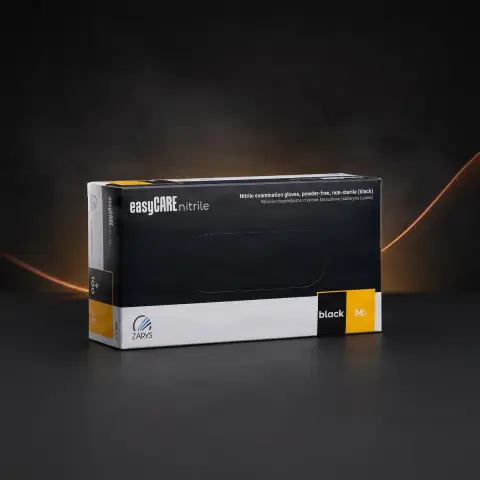
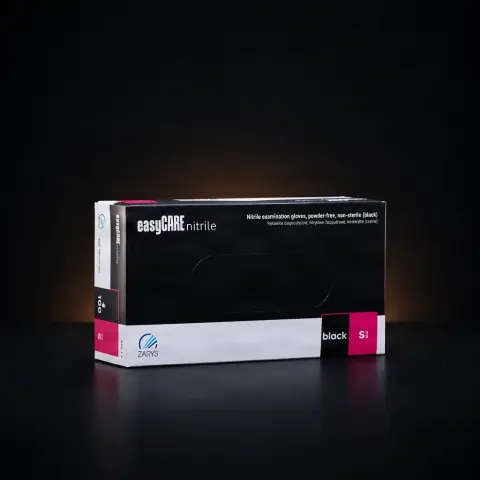
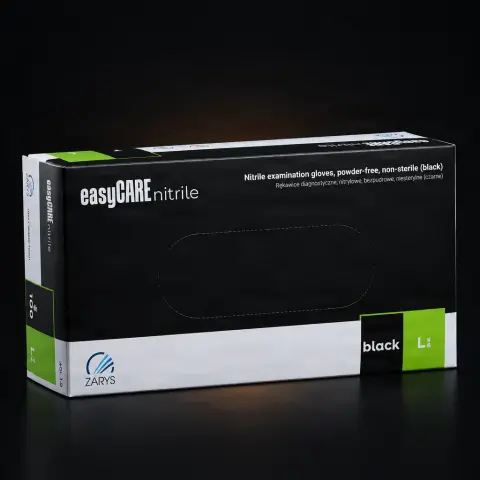
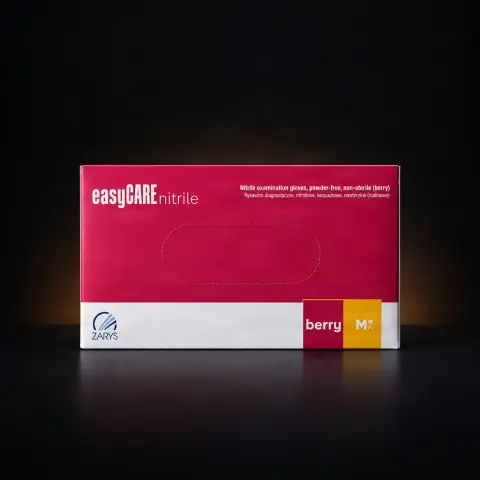
- Gloves, needles/cartridges, protective film, paper towel rolls, disposable towels
- Ink used (varies a lot with the size of the piece)
- The fee kept by the card payment processor
- The commission paid to a collaborating artist, if they work on a percentage rather than a fixed salary
Gloves and basic consumables for every session
Step 3: average revenue per session
Don't use the highest price on your menu — calculate the real average from the last 3-6 months: total session revenue ÷ number of sessions. Include both large pieces and small touch-ups, because they pull the average down and give you a realistic figure.
Standard break-even doesn't account for depreciation of the initial investment (equipment, build-out) or a cash-flow buffer for slow months. If you're financing equipment, the monthly payment goes into fixed costs; an initial investment paid in full doesn't enter the monthly calculation, but it's worth tracking separately as a payback period.
Example 1: solo studio, one owner-artist
Rent 2,500 RON, utilities 400 RON, insurance and permits 150 RON, accounting 300 RON, booking software 100 RON, minimal marketing 200 RON — total fixed costs: 3,650 RON/month.
Average variable cost per session (consumables + card fee): 80 RON. Average revenue per session: 450 RON. Contribution margin: 450 − 80 = 370 RON.
Break-even point: 3,650 ÷ 370 ≈ 9.9, so 10 sessions a month — roughly 2-3 sessions a week. In revenue terms, that's a minimum of 4,440 RON collected monthly just to cover fixed costs.
Example 2: a 2-3 chair studio with commission-based collaborators
The math gets more complex here, because the revenue that matters isn't the studio's total intake — it's only the share the studio keeps after paying collaborators' commission.
Rent 6,000 RON, utilities 700 RON, insurance and permits 350 RON, accounting 450 RON, software 150 RON, marketing 600 RON, part-time front desk 2,000 RON — total fixed costs: 10,250 RON/month.
Assume a 60% artist / 40% studio split for collaborators. If a third of sessions belong to the owner (100% goes to the studio) and two-thirds to collaborators (40% goes to the studio), at an average gross revenue of 500 RON/session, the weighted average revenue the studio actually keeps is roughly 300 RON/session.
Variable cost per session (covered by the studio regardless of who's tattooing): 85 RON. Contribution margin: 300 − 85 = 215 RON. Break-even point: 10,250 ÷ 215 ≈ 47.7, so about 48 sessions a month studio-wide — roughly 11-12 a week, under 4 per chair.
Needle cartridges and consumables for the studio


Example 3: a new studio, central rent, tattoo + piercing + PMU mix
Central rent 8,000 RON, utilities 900 RON, insurance and permits (including piercing/PMU-specific ones) 500 RON, accounting 400 RON, software 150 RON, launch marketing 1,000 RON, equipment loan payment (chairs, autoclave) 800 RON — total fixed costs: 11,750 RON/month.
With an estimated mix of 60% tattoo sessions (average revenue 400 RON), 20% piercing (150 RON), and 20% PMU (350 RON), the weighted average revenue per session is roughly 340 RON. Average variable cost per session: 60 RON. Contribution margin: 340 − 60 = 280 RON.
Break-even point: 11,750 ÷ 280 ≈ 42 sessions a month. The higher central rent pushes the threshold up significantly compared with Example 1, even though average revenue per session is comparable.
Piercing and PMU consumables

These examples use estimated figures to demonstrate the calculation, not market-average costs. Real costs vary by city, space type, and team structure — rerun the formula with your own numbers from invoices and bank statements.
How to use the number in practice
- Recalculate the break-even point monthly, or whenever rent, staff, or prices change
- Compare your actual session count against the calculated threshold, not just total revenue
- If you're consistently under the threshold, you have two levers: cut fixed costs or raise the contribution margin (higher price or lower variable cost per session)
- Treat the threshold as a minimum benchmark, not a target — plan bookings above it, not right at the edge
- Before any expansion (new chair, new hire), calculate a separate break-even with the new fixed costs first
Browse session consumables to calculate your real variable cost →
Întrebări frecvente
What's a "normal" break-even point for a new studio?+
There's no universal number — it depends on rent, city, and team structure. A solo studio with low rent might break even at 8-10 sessions/month, while a multi-chair studio with central rent might need 40-50. Run the formula above on your own numbers rather than comparing directly to other studios.
What do I do if I miss break-even for several months in a row?+
First check whether the problem is session volume (marketing, bookings) or contribution margin (price too low, variable costs too high). Then review fixed costs — a rent or subscription can often be renegotiated or cut before you touch anything else.
Do I include equipment depreciation (tattoo machines, chairs, autoclave) in monthly fixed costs?+
If you paid for the equipment outright, it doesn't factor directly into monthly break-even, but it's worth tracking separately as a payback period. If you're paying it off through a loan or lease, the monthly payment goes into fixed costs, just like rent.
How do I calculate average revenue per session if I also offer piercing or PMU alongside tattooing?+
Calculate a weighted average based on the real percentage of sessions in each category, as shown in Example 3 above. Update the weights every few months as your service mix shifts.
How often should I recalculate the break-even point?+
Whenever a major fixed cost changes — rent, a fixed salary, a loan payment — or the team structure changes (a new commission-based collaborator). Without major changes, a quarterly recalculation is enough to track the trend.
What's the difference between break-even and profit?+
Break-even is the point where revenue exactly covers costs — zero profit. Every session beyond that threshold contributes fully, minus its variable cost, to profit, because fixed costs are already covered.