
The Blow Test: Checking a Cartridge Membrane Before Use
The membrane inside a cartridge is the only thing standing between the tip that enters the skin and the grip you're holding. When it's defective, missing, or poorly seated from manufacturing, ink and blood can travel back into the machine — a cross-contamination risk that's rarely talked about but takes seconds to check before you ever load the cartridge.
A quick, underused check that tells you in seconds whether a cartridge's membrane will actually stop ink and blood from reaching back into the machine.
What the membrane actually does
Inside the cartridge sits a medical-grade silicone membrane acting as a one-way valve: it lets the needle bar move freely back and forth, but blocks fluid from crossing from the front chamber (where ink and any blood reflux collect) back toward the open rear end that mounts onto the grip. Without a working membrane, the pressure changes created by the needle's rapid stroke on pen-style machines can push fluid backward past the bar and into the machine body itself.
The blow test, step by step
- Take the cartridge out of its sterile packaging without mounting it on the machine yet.
- Hold it with the open rear end — the part that fits onto the machine's bar — close to your mouth.
- Blow gently through that open end, no force needed.
- Listen and feel at the needle tip end: if you hear a hiss or feel air escaping there, the membrane isn't sealing the pathway — which means ink or blood wouldn't be stopped either.
- If no noticeable air comes through, the membrane looks intact and the cartridge can be loaded normally.
Only test a fresh cartridge straight out of its sterile pack, before it touches skin — never a cartridge that's already been used on a client, no matter how quick you want the check to be for a second pass. A used cartridge is biohazard waste; it gets disposed of, not re-tested or reused.
The alternative: a water or ink check
For an extra visual check, briefly dip the cartridge tip in water or colored ink and watch the rear housing near the grip opening for a few seconds. Any moisture or trace of color showing up there means fluid has already crossed the barrier — the cartridge is defective and gets discarded, whatever the blow test suggested.
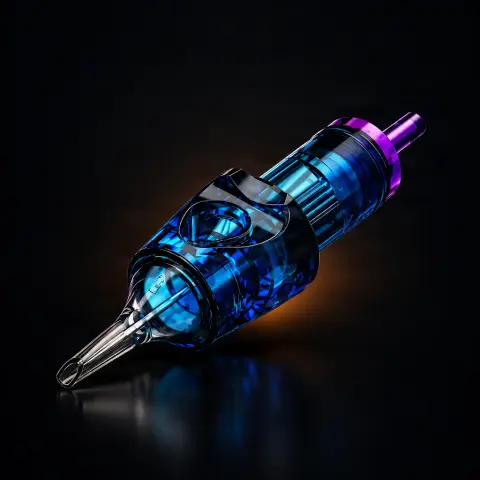
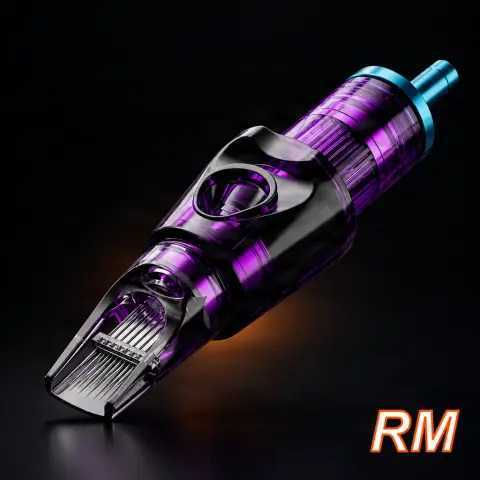
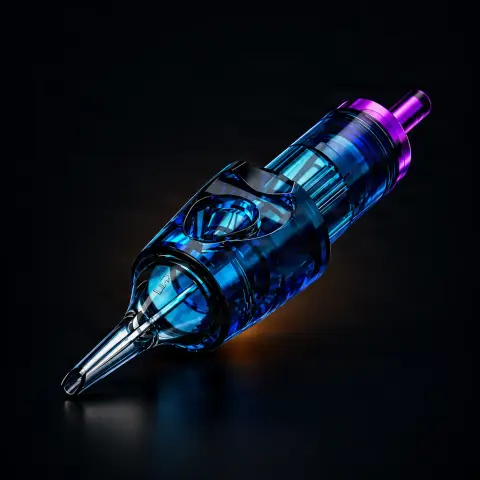
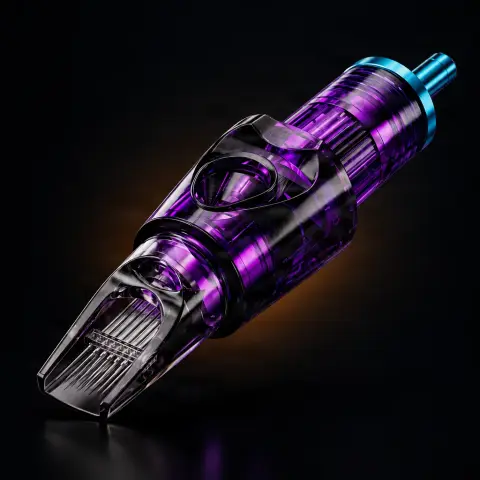
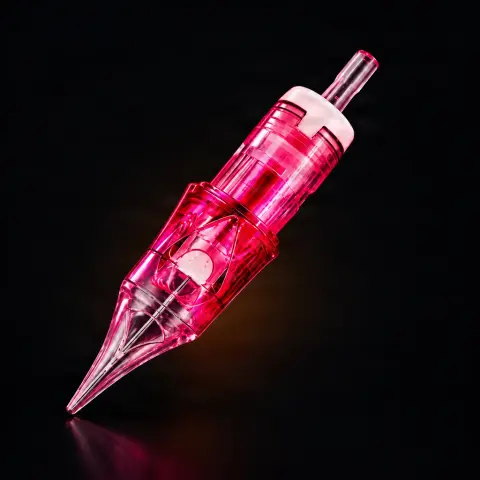
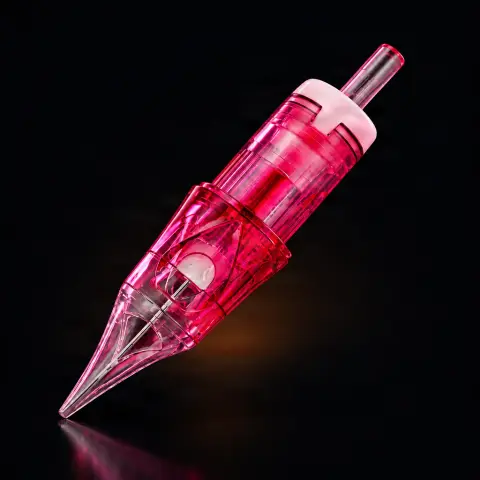
Membrane cartridges available now
Signs to throw the cartridge out, not use it
- Air or liquid passes freely on the blow test or the water test.
- Visible cracks in the housing, especially near the membrane area.
- The plunger moves with zero resistance or spring-back — a good cartridge gives a small, springy push when you press and release it.
- Inconsistent or sluggish needle rebound across needles from the same blister.
- The label or packaging doesn't specify "with membrane" — some budget lines skip this layer entirely.
PMU cartridges with membrane
Why this matters more on pen-style machines
On pen machines the motor sits inside the body you're holding, and the cartridge mounts directly onto the drive bar, very close to the mechanism. The pressure fluctuations from every needle stroke are exactly what can push fluid backward if the membrane doesn't hold — which is why cartridge makers explicitly recommend membrane versions for pen machines, unlike older coil setups where a direct path back into the motor is less of a concern.
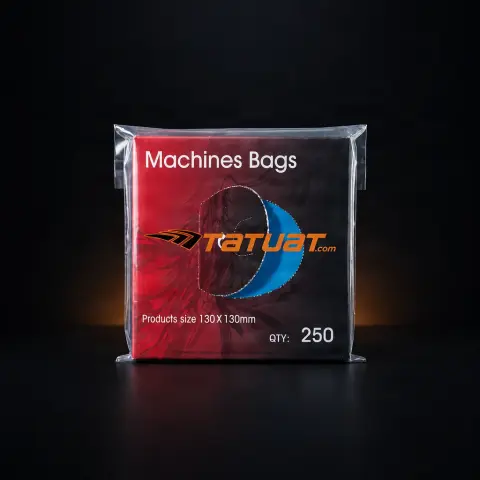
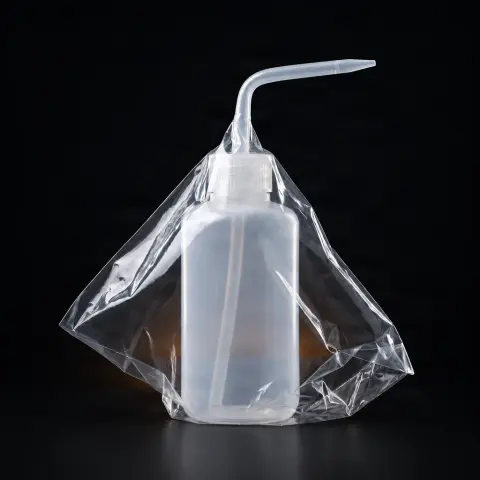
Even with a fully functional membrane, you still use barrier film on the grip and machine, plus single-use cartridges per client. The membrane is an extra layer of safety, not a reason to skip the standard barrier and disinfection protocol.
Barrier film for grip and machine
Pre-session routine
- Open the cartridge right before the session, not well in advance.
- Run the blow test on every new cartridge, especially when switching supplier or batch.
- Check the housing visually for cracks or loose parts.
- Mount it on a grip that already has barrier film applied.
- If any check comes back suspicious, discard the cartridge and open another — don't continue the session with it.
Întrebări frecvente
What do I do if I feel air escaping at the tip during the blow test?+
Discard that cartridge without mounting it on the machine. Don't use it 'carefully' either — a membrane that doesn't stop air won't stop ink or blood during work.
Do all cartridges on the market have a membrane?+
No. Some lines, especially budget or unbranded ones, skip this layer entirely. Check the label or product spec before buying, especially if you work with a pen-style machine.
Does the water or ink test damage a cartridge that passes?+
No, if the liquid doesn't cross the membrane the cartridge remains fully usable. A brief contact with water or ink on the tip before loading doesn't affect needle function.
How often should I run the blow test?+
Ideally on every fresh cartridge you open, especially when switching batch or supplier. It becomes a few-second reflex rather than a real time cost per session.
Is a cartridge without a membrane automatically unsafe?+
Not automatically — some setups and techniques work without one, but the risk of reflux toward the grip is higher, particularly on pen machines. If you're working with such a cartridge, barrier protection on the grip matters even more.
Can I reuse a tested cartridge on another client if the membrane looked fine?+
No. Cartridges are single-use, per client, regardless of any test result. The blow test only applies to fresh cartridges before their first use.