
Why Japanese Hot Springs (Onsen) Ban Tattoos: The Real History Behind the Rule
If you're planning a Japan trip with visible ink, you've probably heard onsen (hot springs) can turn you away. The rule isn't a national law — it's the result of a concrete historical chain: decorative art in the Edo period, a ban imposed in 1872 by the Meiji government, and the underground revival of tattooing by the yakuza. Here's how the rule actually formed, and how much it has changed in recent years.
From decorative Edo-period art to the 1872 Meiji ban and the yakuza connection — the full chain of events behind the rule that still keeps many tattooed travelers out of Japanese hot springs, plus how much it has actually relaxed.
Edo-Period Japan: Tattoos as Craft, Not Shame
During the Edo period (1603-1868), irezumi was a mature visual art form, not a taboo. City firefighters (hikeshi), who often worked stripped to the waist, wore elaborate tattoos across their backs and arms, as did day laborers and figures from the gambling world. At the same time, authorities used tattooing as visible punishment: thieves and criminals had their skin marked with symbols or lines, a practice known as irezumi keibatsu (or bokkei). The two traditions — decorative and punitive — coexisted for centuries, and that duality left a shadow over tattooing long after corporal punishment officially ended.
Bold-line ink for traditional Japanese style
1872: The Meiji Ban and What Was Really Behind It
In 1868, the Meiji Restoration ended Japan's isolation and kicked off an intense push to modernize along Western lines. The government was renegotiating the unequal treaties forced on it by foreign powers and worried about the image Japan projected to European and American visitors. In 1872, decorative tattooing was outlawed — not for medical or religious reasons, but because it was seen as a mark of backwardness, incompatible with the image of a civilized nation Meiji leaders wanted to build. The ban stayed in force for almost eight decades.
How Tattooing Survived: On Yakuza Skin
Pushed outside the law, the practice didn't disappear — it went underground, where organized crime groups (yakuza) picked it up. The traditional tebori technique (hand-tattooing, no machine) took years, was painful and expensive, which turned it into an initiation ritual: seeing it through proved loyalty and endurance. Full-body nagasode suits — covering the entire body except a deliberately bare central strip — became the visible marker of clan membership. That's how the link between irezumi and organized crime got fixed for generations, a link that had nothing to do with the art's original Edo-period form.
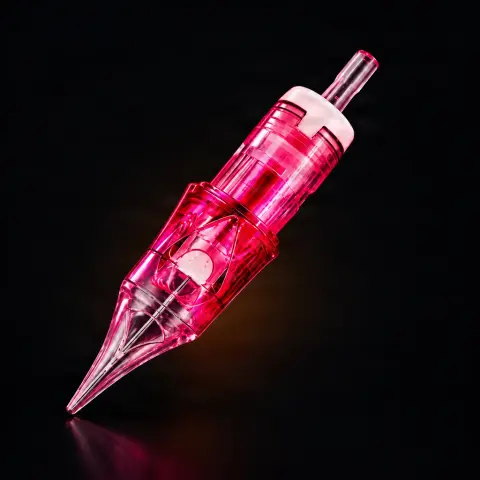
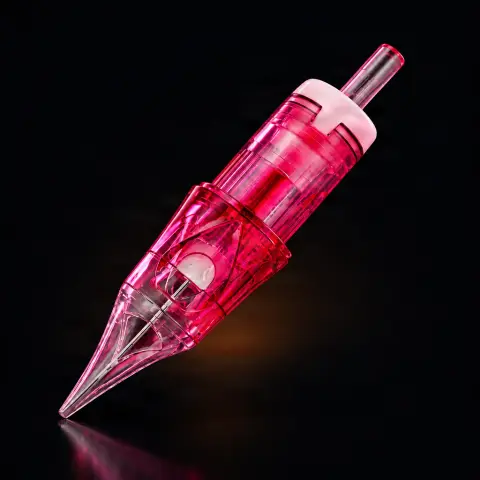
Needles for clean lines, traditional style
The decorative ban was lifted in 1948. Even so, an administrative reading of Japan's health law kept tattoo artists in a legal gray zone — technically requiring a medical license — until September 16, 2020, when Japan's Supreme Court ruled definitively that tattooing is not a medical act. Today there is no national law banning tattoos, either generally or in onsen. The 'no tattoos' rule is a private policy set individually by each hot spring, sauna, or pool.
Why Onsen Specifically Kept the Rule
The reason the rule stuck specifically to public baths traces back to the postwar period. Authorities launched campaigns to exclude yakuza from commercial spaces (bōryokudan haijo), and businesses — including onsen and sento — started posting 'no tattoos' signs as a simple way to keep clan members out. The problem: front-desk staff can't tell a yakuza tattoo from a decorative one on a foreign tourist or a young Japanese person. A rule aimed at one specific group ended up covering anyone with ink on their skin.
Today's Rule: How Much Has Actually Relaxed
- The Japan Tourism Agency's 2015 survey (3,768 facilities contacted, 581 responded, ~15% response rate): 56% refused tattooed guests outright, 31% admitted them with no conditions, 13% admitted them if the tattoo was covered.
- Secondary-source estimates for 2025 put unconditional acceptance at roughly 20% and cover-sticker acceptance at roughly 30% — meaning about half of facilities still remain fully off-limits to tattooed visitors.
- In 2024, the Japan Tourism Agency issued explicit industry guidance: offer cover stickers and promote private baths as a standard alternative.
Cover patches (locally called tattoo kakushi shiru) are sold at drugstores like Matsumoto Kiyoshi or Don Quijote, are waterproof, and cover areas up to roughly postcard size. For larger pieces, the reliable option is a private bath (kashikiri buro) — a tub reserved exclusively for your group, available at most ryokan for an extra fee of roughly ¥1,000-3,000 per hour.
What This Means for Tattooed Travelers
- Check the onsen or ryokan's policy before booking — it's usually stated on the website or can be confirmed with a quick email or phone call.
- Look for dedicated 'tattoo-friendly' facility lists — updated directories exist specifically for tattooed travelers.
- Buy a cover patch from a Japanese drugstore ahead of time if the tattoo is small or medium-sized.
- Book a private bath (kashikiri buro) if the tattoo is large or highly visible — the safest option, with no risk of being turned away at the front desk.
- Keep in mind major tourist regions (Hokkaido, Okinawa) and international hotel chains generally run more relaxed policies than small, traditional rural onsen.
Working in traditional Japanese style? Browse ink built for bold, clean lines. →
Surse și referințe
Întrebări frecvente
Is there a Japanese law that bans tattoos?+
No. The 1872 decorative ban was lifted in 1948, and since 2020 it's settled by Supreme Court ruling that tattooing isn't a medical act. Onsen 'no tattoo' rules are private policies set by individual facilities, not national legislation.
Why do yakuza have tattoos if they were banned?+
Precisely because they were banned. Pushed outside the law in 1872, traditional tattooing survived underground, where organized crime groups turned it into a painful, expensive initiation ritual signaling loyalty to the clan.
Do all onsen refuse tattooed visitors?+
No. 2025 estimates suggest roughly 20% accept tattoos with no conditions and another 30% accept them if covered with a patch — though close to half still maintain a full ban.
What are tattoo cover patches?+
Called tattoo kakushi shiru locally, they're waterproof, sold at Japanese drugstores (Matsumoto Kiyoshi, Don Quijote), and cover tattoos up to roughly postcard size.
What's the safest option for a large tattoo?+
A private bath (kashikiri buro) — a tub reserved exclusively for your group, available at most ryokan for an hourly surcharge of roughly ¥1,000-3,000.
Has anything officially changed recently?+
In 2024, the Japan Tourism Agency issued industry guidance encouraging cover stickers and private baths as standard solutions, part of a broader push to make the country more welcoming to international visitors.