
Why Your Tattoo Machine Rattles or Vibrates Abnormally: Mechanical Causes and Fixes
An unusual rattle or vibration always has a mechanical reason — and almost never means the machine is done for. In most cases the cause is mechanical, cheap to fix, and comes down to rubber bands, cartridge mismatch, or lubrication. This guide walks you through isolating the exact source before you start swapping parts at random.
A step-by-step technical diagnosis for abnormal noise or vibration in a tattoo machine: rubber bands, incompatible cartridges, lubrication, and loose screws.
Isolate the source before you change anything
Run the machine with no needle and no cartridge loaded, and feel the vibration in your hand. If the rattle is there already, the issue sits in the mechanism itself — motor, rubber bands, needle bar — not the needle or cartridge. Next, load only the cartridge, without tattooing. If the vibration increases or you feel lateral play, the cartridge or its stroke compatibility with your machine is the suspect. This two-step test saves hours of guessing which part to replace.
Worn, mismatched, or badly fitted rubber bands
On coil machines, the rubber band controls needle bar tension. A stretched, cracked, or unevenly tensioned band produces exactly that characteristic rattle — the needle bar strikes unevenly on each stroke. On rotaries, the bands on the slide bar or the ones holding pressure on the cartridge play the same role: worn out, they lose elasticity and leave mechanical play. Practical rule: if a band has seen more than 2-3 months of daily use, or shows visible cracking, replace it — it's the cheapest part in the machine and the most common cause of abnormal vibration.
Cartridge incompatible with the machine's stroke
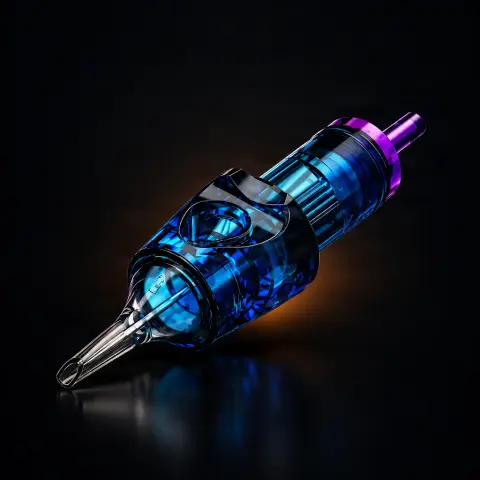
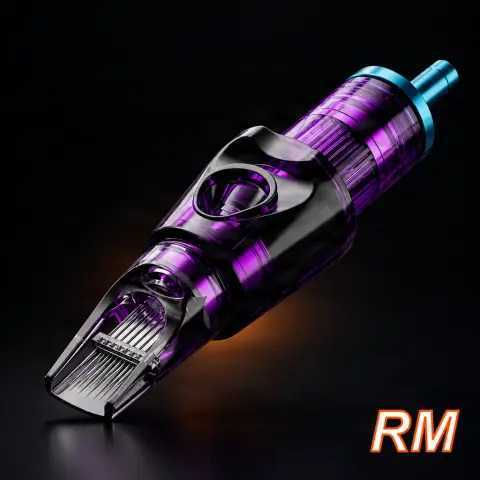
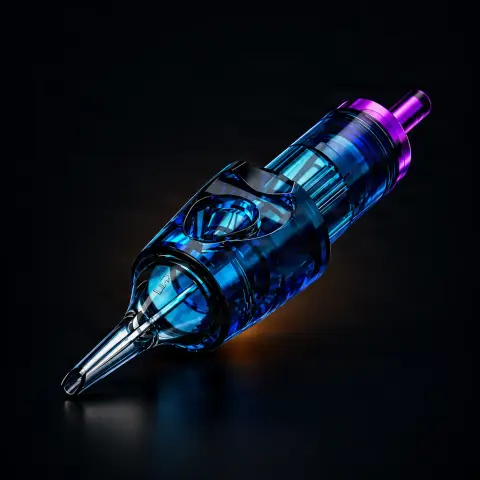
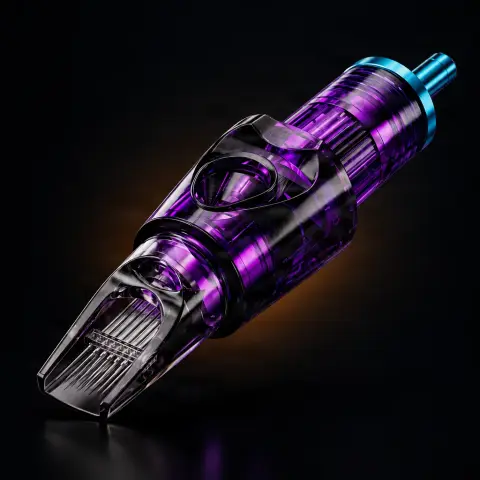
Not every cartridge is interchangeable without a tradeoff, even when it physically fits the grip. Each machine is built for a specific stroke length and needle bar diameter. A cartridge built for a longer stroke than your machine's forces the internal membrane at every cycle, producing a click or extra vibration that originates in the cartridge, not the machine. The isolation test above pinpoints exactly this: if the vibration only shows up with the cartridge loaded, it's not the machine — it's the match. Check your machine's stroke specification and pick cartridges rated for it, not just ones with the right grip diameter.
Tattoo needle cartridges
Missing lubrication or the wrong oil
On rotary machines, the motor and the cam that converts circular motion into linear stroke need periodic lubrication — typically every few sessions, depending on the model. Without oil, metal-on-metal friction produces a grinding noise rather than a classic rattle, but the two are often confused. Use only oil rated for tattoo machines (usually a fine mineral or mechanical-grade oil), never universal spray lubricants, which can degrade seals or draw dust and debris into the mechanism. On coil machines, the contact point (contact screw) needs cleaning, not oiling — oxidation buildup there produces an electrical buzz, distinct from mechanical vibration.
Loose screws and worn parts — quick checklist
- Grip screw — loose, and the whole assembly vibrates on every stroke
- Needle bar screw — check for lateral play by gently moving the bar with the machine off
- Contact screw (coil machines only) — oxidation buildup means an electrical buzz, not a mechanical one
- Armature bar spring — uneven tension causes uneven strikes
- Bent needle bar — roll it on a flat surface; if it wobbles, it's bent and needs replacing
- Slide bar bushings (rotaries) — visible lateral play here means a worn part, not just a dry one
Rotary vs coil — the diagnosis differs
On rotary machines, abnormal vibration is almost always in the motor (worn bearings), the cam, or missing lubrication — the noise is continuous and scales with speed. On coil machines, the most common cause is a mechanical-electrical hybrid: spring tension and contact-point condition, not just the bands. If you've replaced the rubber bands on a coil machine and the noise persists, check the contact screw next before suspecting the coils themselves — they're rarely the culprit.
Any machine that's been repaired or had parts replaced should run for a few minutes with no needle on skin before you start working on a client. A vibration that seems minor on the bench test can become inconsistent over a long session, affecting the line and the depth of pigment implantation.
When to send it for service or replace it
If you've checked the rubber bands, cartridge match, lubrication, and screws and the vibration persists, the problem is likely in the motor (rotaries) or the coil armature (coil machines) — parts that need specialized tools and diagnosis, not routine maintenance. On budget rotaries with a sealed motor, replacing the motor often costs nearly as much as a new machine, in which case full replacement is more rational than repair.
Browse maintenance accessories for your machine →
Frequently asked questions
Întrebări frecvente
My machine vibrates only when idling, but feels fine while tattooing — is that still an issue?+
Yes, check it anyway. Visible vibration at idle, with no pressure on skin, usually points to loosened rubber bands or mechanical play that can become noticeable in the line over a long session, even if it isn't felt in the hand at first.
Can the cartridge be the problem even if it's from a well-known brand?+
Yes. Compatibility comes down to your specific machine's stroke length, not the cartridge brand. A well-made cartridge with a stroke mismatched to your machine can still produce extra vibration regardless of its overall quality.
How often should a rotary machine be lubricated?+
It depends on the model and how heavily it's used — manufacturers typically recommend every few working sessions. Check your machine's manual; long-term lack of lubrication prematurely wears the motor and cam.
Does a rattling noise mean the machine is permanently broken?+
Not in most cases. Worn rubber bands, an incompatible cartridge, or loose screws are common causes and cheap to fix. Only if the problem persists after a full check is it likely an internal part (motor, armature) needing specialist service.
Does any mineral oil work for lubrication?+
We don't recommend improvising. Use oil specifically rated for tattoo machines or similar precision equipment; universal spray lubricants can degrade seals or draw debris into the mechanism.
Can rubber bands that are too tight cause vibration, not just loose ones?+
Yes. Uneven tension between the two bands, or over-tightening one of them, produces an asymmetric needle bar stroke — just as problematic as loose bands, only from the opposite cause.