
Accidental Needlestick with a Used Needle in the Studio: What to Do in the First Hours
An accidental stick with a needle already used on a client is a scenario every tattoo artist, piercer, or PMU technician needs to know how to handle before it happens, not in the panic of the moment. This isn't a "probably fine" situation — it's a window of a few hours in which your decisions have real medical consequences. This guide is a first-aid and orientation protocol, not a medical consultation.
A practical step-by-step protocol for artists: washing, disinfection, where to go for care in Romania, and why every hour matters for post-exposure prophylaxis.
The first minutes: what to do right at the workstation
- Stop working and remove your gloves safely, without touching other surfaces.
- Wash the punctured area immediately with running water and soap for at least 1-2 minutes.
- Apply an antiseptic (iodine-based or chlorhexidine solution) and leave it in contact with the skin for about 5 minutes, following the same occupational-exposure protocol used in Romanian medical facilities.
- Do NOT squeeze the wound to "push out" the blood — squeezing can drive contaminated material deeper into the tissue, the opposite of what you want.
- Let the wound bleed freely for a few seconds before washing, but never suck on the wound with your mouth.
- If there was a splash to the eyes, mouth, or mucous membranes, flush thoroughly with running water or saline for several minutes.
There's no evidence that aggressive disinfectants (chlorine, concentrated alcohol poured directly into the wound) reduce transmission risk — they can just irritate the tissue further. Stick to water, soap, and a standard antiseptic.
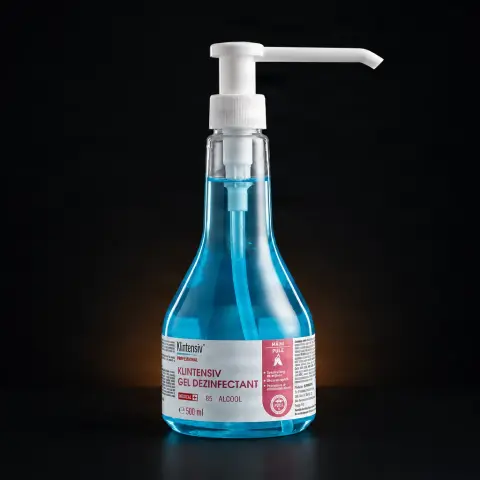
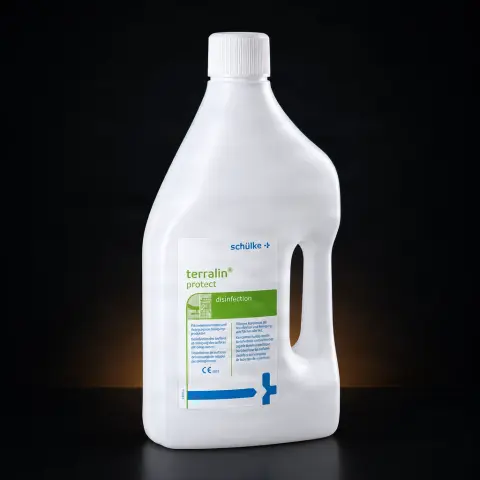
Skin disinfectants and antiseptics for the studio
Why every hour counts: the post-exposure prophylaxis (PEP) window
For HIV risk, post-exposure prophylaxis (PEP) exists — a 28-day course of antiretroviral medication that can prevent infection if started in time. Effectiveness depends directly on speed: ideally it starts within 2 hours, and after 72 hours from exposure there's no evidence it still has an effect. Don't wait to "see how you feel" — the medical decision needs to happen within this window, not after.
There's no equivalent of PEP for hepatitis C — no emergency preventive regimen exists. The strategy is baseline testing plus follow-up monitoring at intervals set by a doctor, for early detection; if infection does occur, effective treatments exist afterward. For hepatitis B, if you're already properly vaccinated, you're generally protected long-term; if you're not vaccinated or unsure of your status, a doctor may recommend specific immunoglobulin plus the first vaccine dose, also as soon as possible.
Where to go, specifically, in Romania
- If there's HIV and/or hepatitis C risk (you don't know the source client's status, or they declined testing): go directly to an infectious diseases hospital (e.g. the Matei Balș Institute in Bucharest, or your county's infectious diseases hospital) or to an ER (UPU) if that's your only immediate option.
- If the risk is limited to hepatitis B and you're not vaccinated: you can contact your county Public Health Directorate (Direcția de Sănătate Publică) or a vaccination center for evaluation and possibly immunoglobulin plus vaccine.
- If you're not sure which category applies: go to an emergency room (UPU) anyway — they can redirect you and start the timely evaluation.
- Write down the exact time of the incident and the time you arrive at the doctor.
- Note the type of needle/instrument, the approximate depth, and whether blood was visible.
- If possible and the client agrees, note their contact details — testing the source (with their consent) helps the medical decision a lot, but their refusal doesn't block you from receiving prophylaxis based on estimated risk.
HIV, hepatitis B, and hepatitis C — they are not managed the same way
The three major risks from a used-needle exposure behave differently medically, and it matters not to treat them as one single "package": HIV has PEP with a strict 72-hour window; hepatitis B is effectively prevented through vaccination done ahead of time, as a professional, before you ever need it; hepatitis C has no emergency prophylaxis, only testing and monitoring.
The best decision related to this scenario is one you make now, not at the moment of an accident: check your hepatitis B vaccination status, and if you're not vaccinated or unsure, talk to your doctor about the vaccination schedule. That's a decision measured in months, not hours.
Internal reporting in the studio
Regardless of the outcome, the incident should be documented internally: date, time, person involved, type of exposure, steps taken. This isn't unnecessary bureaucracy — if symptoms appear or follow-up results need tracking weeks or months later, you'll need this record, and if the studio owner runs internal training, each real (anonymized) case becomes part of the team's safety protocol.
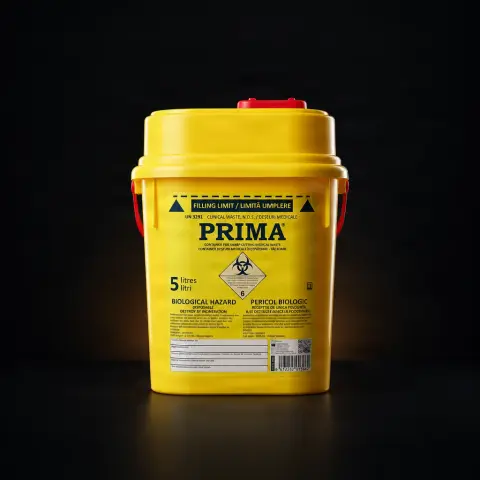
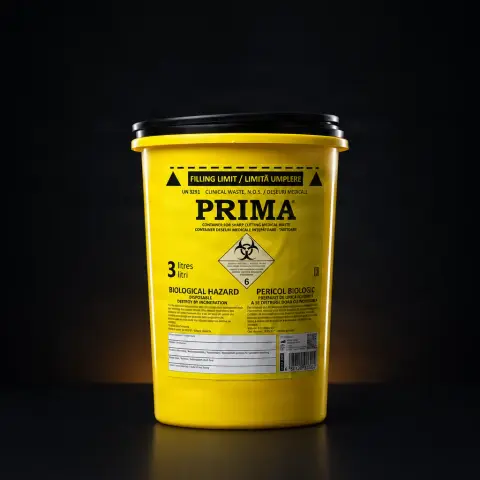
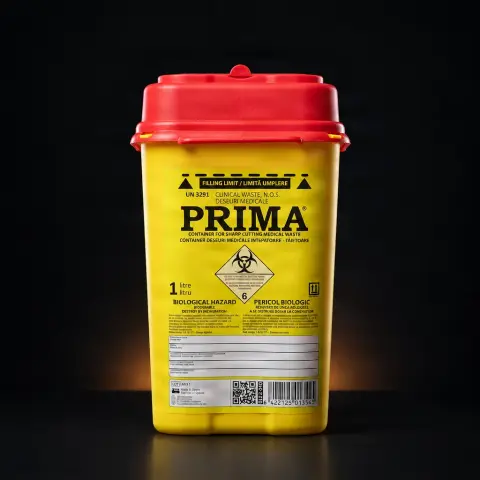
Sharps disposal containers
How to prevent it from happening again
- Single-use needle, opened only when needed, disposed of immediately after use directly into a rigid sharps container — never recapped.
- Sharps container positioned within reach, at the workstation itself, not across the room (most accidental sticks happen while carrying the needle toward the bin).
- Gloves changed correctly between stages, never handling non-sterile surfaces with gloves used for the needle.
- Good lighting at the workstation — poor visibility increases the risk of mishandling the needle.
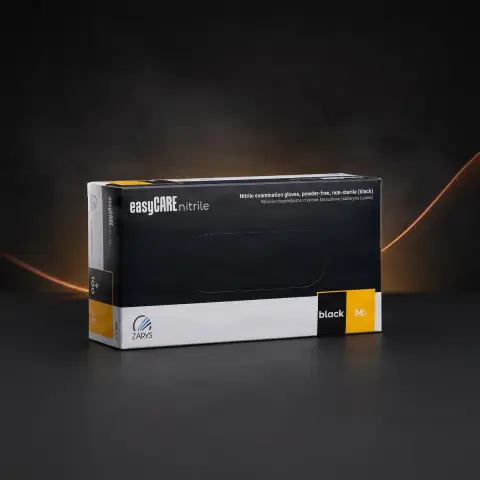
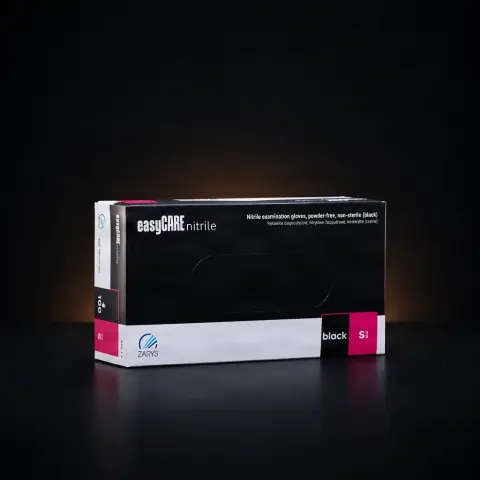
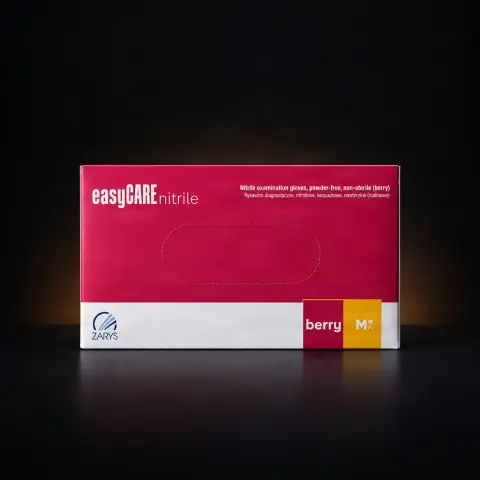
Disposable protective gloves

Întrebări frecvente
How soon do I need to start HIV post-exposure prophylaxis (PEP)?+
Ideally within the first 2 hours of the incident. The documented maximum window is 72 hours — after that there's no evidence PEP still has a protective effect, so don't delay seeing a doctor.
Where do I go in Romania if I've been stuck with a used needle?+
If there's HIV or hepatitis C risk, go to an infectious diseases hospital or an ER (UPU). If the risk is only hepatitis B and you're not vaccinated, go to your county Public Health Directorate or a vaccination center. If unsure, go to the ER — they'll direct you correctly from there.
Should I squeeze the wound to force out the contaminated blood?+
No. Squeezing can push contaminated material deeper into the tissue, potentially increasing risk instead of reducing it. Let the wound bleed freely for a few seconds, then wash with soap and water.
I'm already vaccinated against hepatitis B — do I still need to see a doctor?+
Yes. Vaccination generally protects you long-term against hepatitis B, but it doesn't protect against HIV or hepatitis C, for which evaluation and possible PEP are decided separately by a doctor.
What if the source client refuses to give information or get tested?+
Their refusal doesn't block your access to prophylaxis — a doctor can decide to start PEP based on estimated risk, even without data about the source. Still, document the circumstances of the exposure as precisely as possible.
How do I reduce the risk of this kind of stick in the studio?+
A rigid sharps disposal container within reach at the workstation, needles disposed of immediately after use without recapping, gloves changed correctly between stages, and good lighting at the workstation.