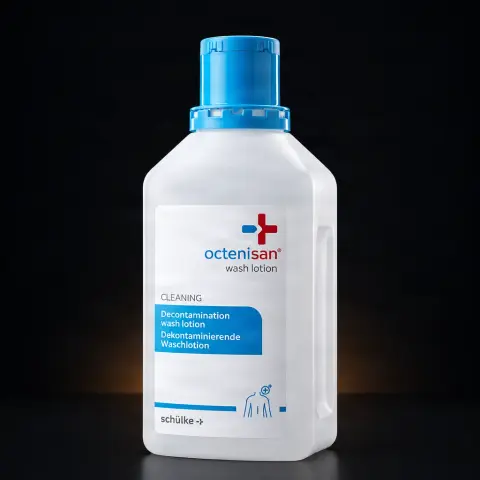
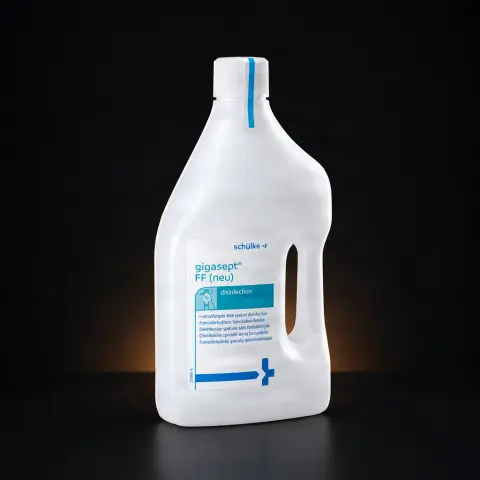
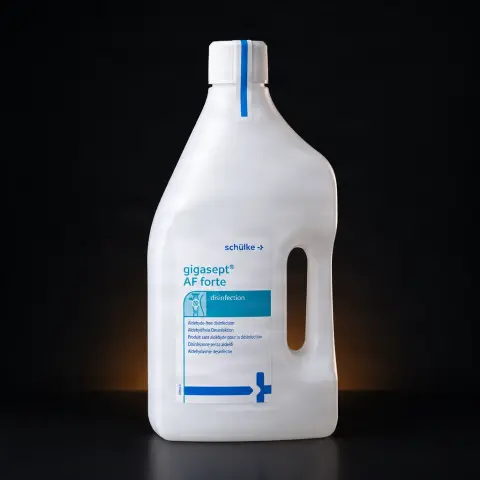
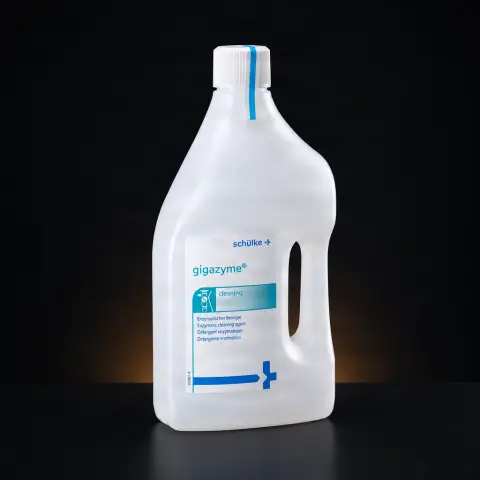
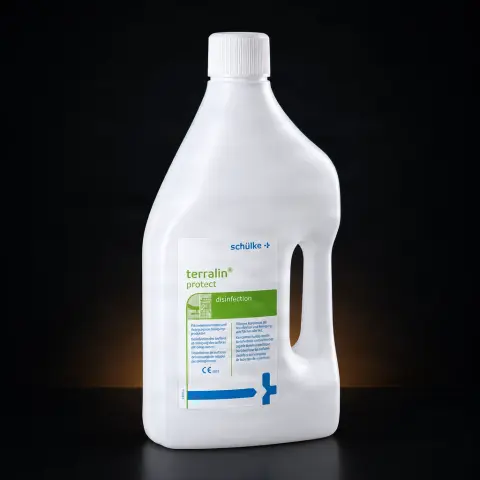
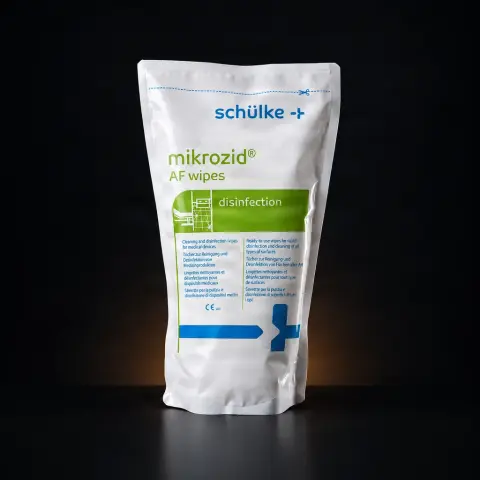
We are talking about a liquid disinfectant for hard surfaces, delivered ready-to-use — applied undiluted, no rinsing required, and leaves no residue. In a tattoo studio, it finds its place exactly where it matters: the work table, the consumables tray, the chair arm, the lamp, the door handles. The manufacturer describes it as bactericidal, fungicidal, yeasticidal, virucidal, mycobactericidal and sporicidal, with over 98% biodegradable ingredients and no colorants. The packaging in a case of 12 bottles of 1000 ml makes it suitable for those who consume consistently: busy studios, medical offices, clinics, triage centers, HoReCa or cleaning companies.
Can I use it on the client's skin, before or after the tattoo?▾
No. It is intended for hard surfaces, not skin. For preparing the tattoo area and for aftercare, use products specially formulated for skin contact (tattoo soaps, cutaneous antiseptic solutions, aftercare ointments). Using a surface disinfectant on skin, especially on needle-traumatized skin, is a serious mistake — besides irritation, it can compromise healing. The simple rule: this product stops at the edge of the table, it does not go on the client.
Does it need to be diluted or rinsed after application?▾
No, in neither case. It comes ready to use, applied directly from the bottle, without dilution, and does not require rinsing. Being colorless, it leaves no residue on the surface. The only thing to respect is the contact time indicated by the manufacturer on the bottle label — until then, the surface must remain wet, not wiped immediately.
What exactly do I disinfect in the studio and how often?▾
Between every two clients: the work table or tray, the arm and headrest of the chair or bed, the machine stand, the lamp body and arm, the bottles and containers you touched with your gloves, plus any surface where something from the setup was placed. At the beginning and end of the day, add door handles, switches, the sink, countertops in the sterilization area, and the floor in the workspace. The key is not the amount of solution, but consistency: a short routine followed every time beats a general cleaning done once a week.
Won't it damage my chair, stainless steel, or wooden countertop?▾
The product description lists as compatible materials: plastic, stainless steel, aluminum, ceramic, glass, Teflon, rubber, wood, and flooring — tile, marble, concrete, linoleum, carpet. Additionally, it contains no colorants, so it does not stain, discolor, or whiten. For materials not on the list (special upholstery, lacquered finishes, screens) apply the common-sense rule for any chemical product: test first on a small, hidden area, wait for it to dry, then check the appearance.
How do I store it and how long does a case of 12 bottles last?▾
Keep the bottles sealed, upright, in a dry place, away from direct sunlight and heat sources, and open only one bottle at a time. Do not top up a started bottle with new solution and do not transfer it into unlabeled containers — you lose product traceability and usage instructions. How long a case lasts depends entirely on your workload: a studio with daily appointments consumes noticeably more than one that works a few days a week, so it's worth noting your consumption for several weeks in a row and calculating your reorder rhythm from real data.
What microorganisms does it act on?▾
The manufacturer describes it as having a bactericidal, fungicidal, yeasticidal, virucidal, mycobactericidal and sporicidal spectrum, effective even in dirty conditions or in the presence of organic residues, and explicitly mentions viruses such as Coronavirus, HIV, HBV, HCV, Influenza and Parvovirus B19. The description states that the product has been tested and validated according to European standards. For exact details — contact time per microorganism type and test conditions — consult the bottle label and the manufacturer's technical data sheet, because that is where the official values appear.