
Bump, Granuloma, or Keloid? How to Tell Cartilage Piercing Swelling Apart and What Treatment Fits Each
A lump that won't go away after a cartilage piercing (helix, conch, tragus, rook) is usually one of three things: an irritation bump, a granuloma, or a keloid — and they don't respond to the same treatment. This guide breaks down how to tell them apart by location relative to the hole, texture, and how they change over time, plus what actually works for each, including the compression earring method used for cartilage keloids. It's informational, not a diagnosis — see a dermatologist or your piercer for an actual assessment.
A practical guide to persistent swelling after a cartilage piercing: how to recognize an irritation bump, a granuloma, and a keloid, and which treatment actually fits each one — including the compression earring method.
The three types, at a glance
- Irritation bump (hypertrophic scar): stays confined to the piercing hole, pink to red, pea-sized, shrinks with proper care within a few weeks.
- Granuloma: a red, fleshy, soft bump next to the hole, sometimes slightly moist; it doesn't grow aggressively but can linger if the cause isn't fixed.
- Keloid: spreads BEYOND the edge of the piercing hole, firm tissue, can itch or hurt, doesn't resolve on its own — needs dermatological treatment.
The irritation bump (hypertrophic scar)
This is the most common cartilage lump, especially in the first few months. It's caused by ongoing pressure or friction — sleeping on the piercing, a hoodie or headphones catching it, jewelry that's too short or too tight for normal healing swelling, or lower-grade metal irritating the tissue. It stays limited to the hole itself and doesn't spread into surrounding skin.
- Confined strictly to the piercing hole, no spread into surrounding skin
- Pink to red, firm, small (pea-sized)
- Comes and goes depending on how much the area gets disturbed
It usually clears within a few weeks: saline soaks twice a day, checking jewelry length and material with your piercer (a too-short post or the wrong metal keeps feeding the irritation), and removing whatever's pressing on it. If it hasn't improved after 4-6 weeks of correct care, see your piercer or a dermatologist.
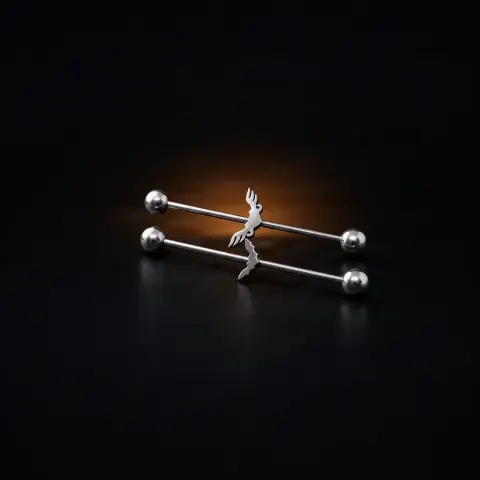
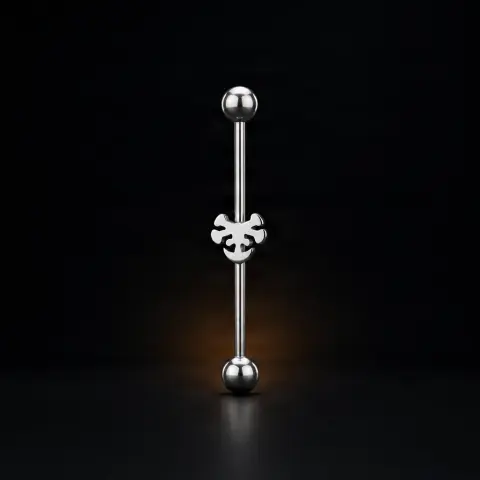
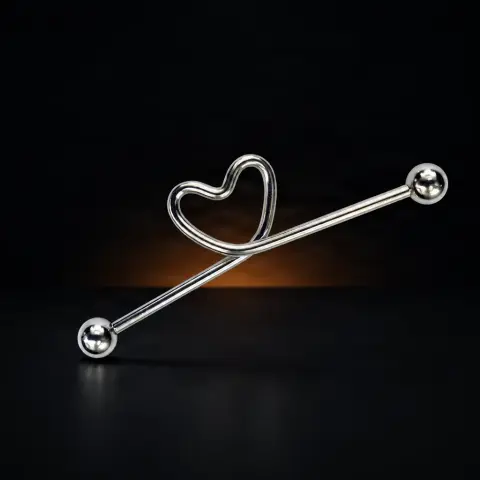
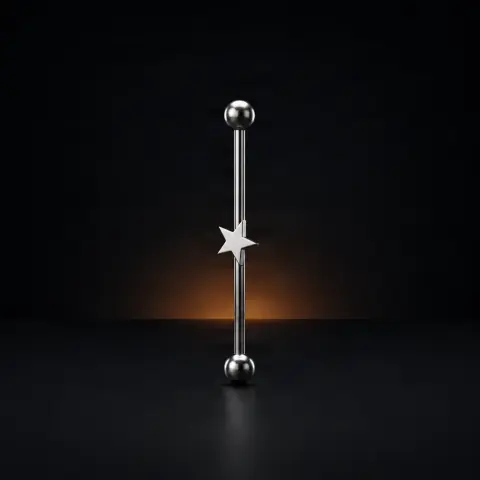
Titanium jewelry for cartilage
The granuloma
A granuloma differs from a bump by texture — it's fleshier, softer, sometimes slightly moist or shiny, and can bleed a little if bumped. It also comes from chronic irritation or repeated trauma to healing tissue, but unlike a keloid it doesn't grow aggressively; it mostly just sits there, red and visible.
- About the size of a pencil eraser or slightly bigger
- Soft, fleshy, possibly slightly moist
- Doesn't extend beyond the area right around the hole
- Can bleed lightly if touched or caught on something
Saline care, correct jewelry, and time usually shrink it. If it's still there after 4-6 weeks, a piercer or doctor can step in — light cauterization or, rarely, removal. Don't squeeze it or cut it yourself.
The keloid
A keloid is excess collagen scar tissue that grows BEYOND the edge of the piercing hole — that's the key difference from a bump, which always stays confined to the hole. It's firm, can itch or hurt, and unlike a bump or granuloma, it doesn't go away on its own with time and care — it needs dermatological treatment.
Cartilage produces keloids more often than earlobes because it has limited blood supply: healing takes 6-12 months (versus 6-8 weeks for a lobe), a long window during which the area accumulates repeated micro-trauma that can trigger collagen overproduction. Genetic predisposition matters a lot, and people with darker skin tones carry a higher risk, according to Cleveland Clinic.
Keloid predisposition is largely genetic. Correct jewelry and careful aftercare lower the risk, but they don't remove it entirely for people prone to keloids.
- Corticosteroid injections (triamcinolone) directly into the keloid — usually several sessions spaced 3-4 months apart; can thin the skin or leave visible dilated blood vessels
- Cryotherapy (freezing the tissue) — can cause blistering or loss of pigment, more noticeable on darker skin
- Laser treatment to flatten and fade the scar tissue
- Surgical excision, almost always followed by compression — without post-surgical compression, recurrence risk is much higher
The compression earring method for cartilage keloids
A compression earring applies constant mechanical pressure to the keloid tissue. Sustained pressure reduces blood supply to the area and the activity of the fibroblasts producing the excess collagen, which gradually softens and flattens the scar. It's worn consistently, usually several hours a day, over weeks to months — not a one-time fix.
It's rarely a standalone first treatment: it's typically used after surgical excision of the keloid, or alongside steroid injections and silicone gel, on a dermatologist's recommendation. A study published on PMC on ear keloids found a 21.7% recurrence rate with combination therapy that included compression, versus 38.3% with compression used alone — the combination is what matters, not the earring by itself.
How to tell them apart, quickly
- Where is it relative to the hole? A bump and a granuloma stay at the hole; a keloid spreads past the edge.
- How does it feel? A bump is small and firm, a granuloma is soft and fleshy (maybe moist), a keloid is firm and rubbery.
- Does it have a clear border? A bump and granuloma have a fairly defined edge; a keloid grows irregularly.
- How does it change over time? A bump or granuloma shrinks with proper care within weeks; a keloid keeps growing if untreated and won't resolve on its own.
- Does it itch or hurt? A keloid itches or hurts more often than a bump or granuloma does.
Yellow or green pus, spreading redness around the area, warmth, increasing pain, or fever mean infection, not just an ordinary bump. Don't remove the jewelry if you suspect infection — it can trap an abscess under the skin. See your piercer or a doctor right away.
What NOT to do
- Don't squeeze, pop, or cut the bump yourself — it risks infection and a bigger scar
- Don't use alcohol or hydrogen peroxide on the area — it irritates healing tissue further
- Don't remove the jewelry if you suspect infection, unless a doctor tells you to
- Don't self-treat with injections or unknown products found online
- Don't ignore a lump that keeps growing over several months — an untreated keloid gets harder to treat with time
Search titanium jewelry suited for cartilage →
Surse și referințe
- Cleveland Clinic — Keloid on Ear
- Medical News Today — Piercing bump vs. keloid: how to tell the difference
- American Family Physician (AAFP) — Management of Keloids and Hypertrophic Scars
- WebMD — What Are Treatments for Keloid Scars?
- PMC — Combination Therapy of 5-Fluorouracil and Triamcinolone Acetonide with Compression Therapy after Surgical Excision in the Management of Keloids in Ears
Întrebări frecvente
Can an irritation bump turn into a keloid if I don't take care of it?+
They're not the same process, but repeated irritation and micro-trauma (wrong jewelry, constant pressure) raise keloid risk in people already prone to it — which is why correct jewelry from day one matters.
Why do keloids show up on cartilage but not earlobes?+
Lobes have rich blood supply and heal in 6-8 weeks; cartilage has limited blood supply and heals in 6-12 months, a long window that accumulates micro-trauma — that's why helix, conch, and tragus piercings carry more risk.
Does the compression earring hurt?+
It applies steady pressure, not sharp pain; the discomfort mostly comes from wearing it for hours a day over a long stretch of time.
Can I use a compression earring without seeing a dermatologist first?+
It's not recommended as a standalone first step — it's usually used after surgical removal or alongside dermatologist-prescribed treatment like steroid injections and silicone gel.
Does a granuloma go away on its own?+
Often, yes, with proper care (saline, correct jewelry) within a few weeks; if it's still there after 4-6 weeks, get it checked by a piercer or doctor.
What jewelry lowers the risk of a bump or keloid on cartilage?+
Implant-grade titanium, sized correctly for your anatomy, fitted by a professional piercer — it cuts down on the pressure and metal reactions that trigger many of these bumps in the first place.