
Piercing Rejection vs Migration: The Difference and When to Remove It
People often treat migration and rejection as the same problem, assuming that once jewelry shifts, the piercing is already lost. It isn't — migration is a warning, rejection is the point of no return. Telling them apart determines whether you can still save the piercing or whether removal is the only option left. This guide breaks down the signs of each stage, what causes them, and exactly what to do the moment you notice something's off — especially if you're wearing a surface piercing or a nostril piece that seems to have moved.
Migration is the warning sign, rejection is the irreversible final stage — learn to tell them apart before you're left with a permanent scar.
Migration vs. Rejection: Where the Line Is
Migration means the jewelry is shifting from its original position, usually moving closer to the surface of the skin, while the tissue bridge between the entry and exit points thins out. It can stop on its own, letting the piercing settle at a shallower depth. Rejection is the final stage: the body pushes the jewelry all the way out through the skin, treating it as a foreign object. Once a piercing has crossed into rejection, the process can't be reversed — the jewelry is coming out no matter what you do.
Migration = warning sign, often reversible if you act. Rejection = final stage, irreversible — the jewelry will exit regardless. Any migrating piercing can progress to rejection if nothing changes (jewelry, placement, pressure on the site).
Early Signs of Migration
- The entry and exit holes look like they're getting closer together
- The skin bridge between them is visibly thinning or turning translucent
- You can see the jewelry through the skin, or more of it is showing than before
- The piercing sits noticeably shallower than right after it was done
- The jewelry hangs differently, sags, or no longer sits straight
- Often little to no pain or visible inflammation — which is exactly why migration gets missed
Signs of Rejection
- Persistent redness, with dry, flaking skin around the piercing
- The area feels hot, tender, or painful to the touch, sometimes with a sensation of pressure
- Thick yellow-to-green discharge
- Whitish skin where the jewelry is pressing from underneath toward the surface
- The jewelry is visibly much closer to exiting completely than it would be with simple migration
| What to check | Migration | Rejection |
|---|---|---|
| What is happening | The jewelry shifts from its original position, usually moving closer to the surface of the skin | The body pushes the jewelry all the way out through the skin, treating it as a foreign object |
| Reversibility | Can stop on its own, letting the piercing settle at a shallower depth | Irreversible — the jewelry is coming out no matter what you do |
| Pain and inflammation | Often little to no pain or visible inflammation, which is why it gets missed | The area feels hot, tender, or painful to the touch, sometimes with a sensation of pressure |
| How the skin looks | The bridge between the holes thins or turns translucent, and the jewelry shows through the skin | Persistent redness, dry flaking skin, whitish skin where the jewelry presses from underneath |
| Discharge | Not part of the typical migration picture | Thick yellow-to-green discharge |
| Tissue bridge | Starts at roughly 8mm (5/16 inch) on a healthy piercing and thins gradually | Roughly 2-3mm — the threshold most piercers treat as the point of no return |
| What to do | See a piercer: lighter, shorter, or implant-grade titanium jewelry may stop the process | Removal (ideally by a piercer) and full healing before any re-pierce in the same spot |
| Scarring risk | Minimal or barely visible if you act early | Rises the longer you wait — the eventual scar is more visible |
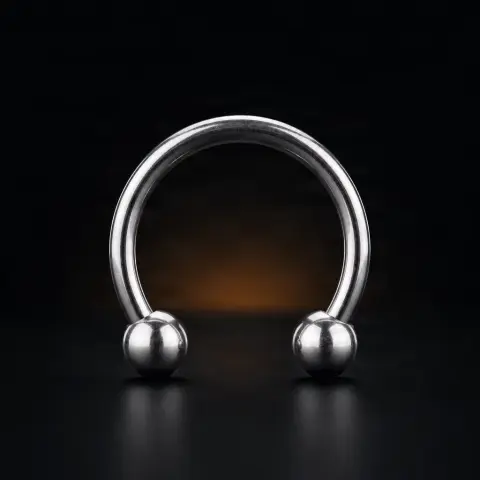
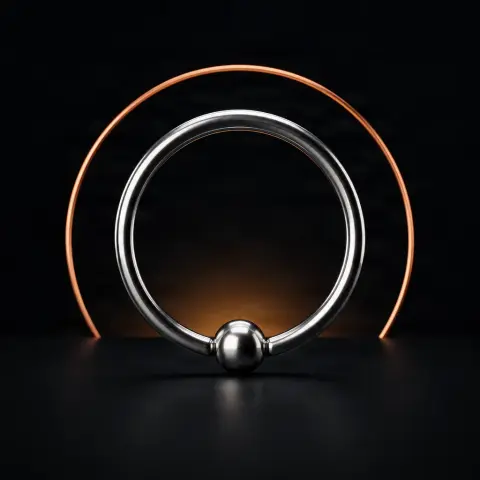
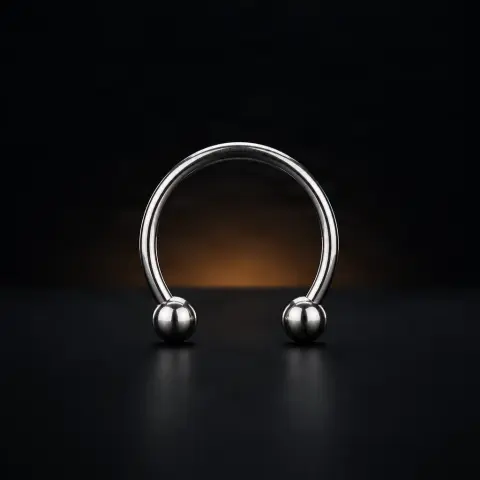
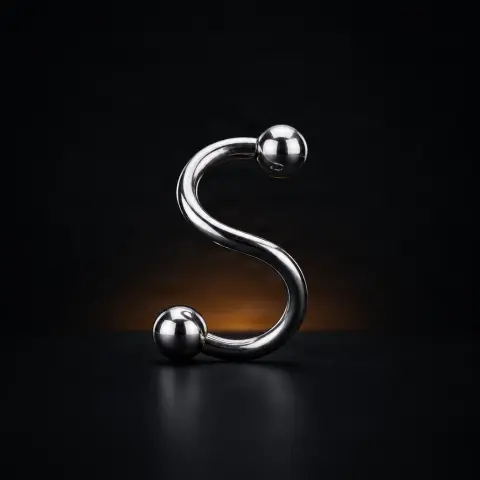
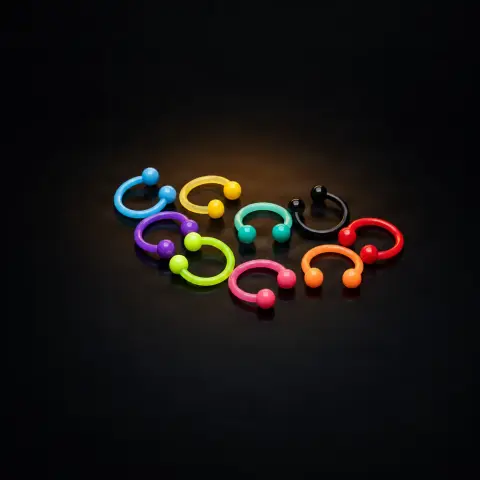
Titanium Jewelry for Sensitive or Healing Piercings

Why Migration or Rejection Happens
- Ill-fitting jewelry — too thin a gauge, wrong length, or the wrong shape for the placement
- Reactive materials, such as nickel-releasing metal instead of implant-grade titanium
- Anatomically shallow placement, common in surface piercings, eyebrows, or high nostril piercings
- Repeated trauma or friction — clothing, sleeping on the piercing, sports, a phone catching on it
- Overly aggressive aftercare — harsh products, over-cleaning, alcohol or peroxide on the site
- A piercing placed too shallow to begin with by an inexperienced piercer
The Millimeter Test: When It's Too Late to Save the Piercing
A healthy tissue bridge generally needs around 8mm (5/16 inch) of tissue between the entry and exit points. Once that bridge thins down to roughly 2-3mm, most piercers consider it the point of no return — continuing to wear the jewelry past that point all but guarantees a more visible scar once it comes out anyway.
If the skin over the jewelry looks thin or nearly see-through, don't assume it will resolve on its own. Remove the jewelry (or have a professional piercer do it) and book a consultation as soon as possible — the longer you wait, the higher the chance of a permanent scar.
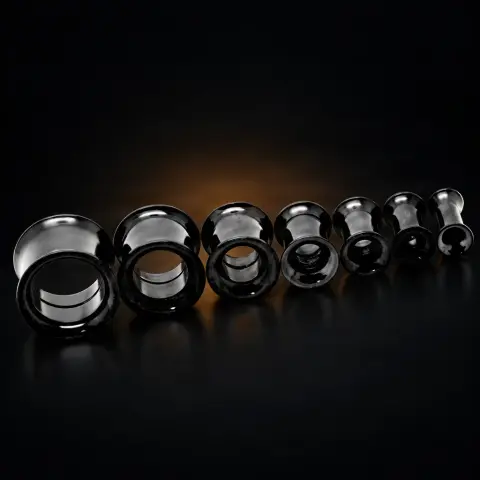
Flat-Back Titanium Labrets for Surface Piercings
What to Actually Do When You Notice the First Signs
- Don't ignore it or wait to see if it fixes itself — contact the piercer who did the work, or a trusted studio, as soon as you can
- Don't try to reposition, tighten, or loosen the jewelry yourself — you can make migration worse
- Ask the piercer whether lighter, shorter, or differently-shaped jewelry (implant-grade titanium, for instance) could stop the migration
- If the skin bridge is already thin or translucent, talk about removal — delaying doesn't save the piercing, it only enlarges the eventual scar
- After removal, let the skin fully heal before considering a re-pierce in the same spot
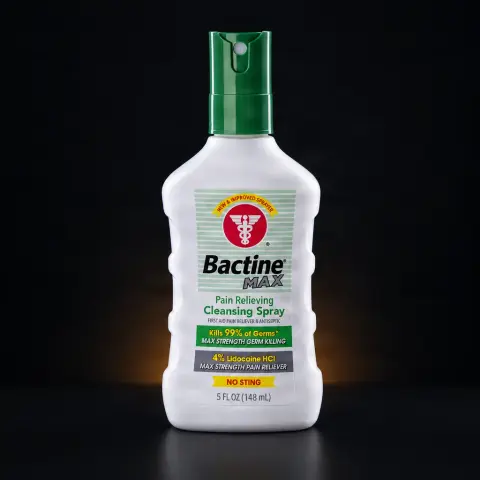
Saline Solution for Piercing Aftercare
Rejection or Infection? Don't Mix Them Up
Rejection on its own isn't the same as infection, but skin damaged by rejection can make infection more likely. Thick green or yellow discharge combined with fever, spreading redness (red streaking), or severe pain point toward infection rather than plain rejection — and that needs medical attention, not just a jewelry change.
This information is for education, not diagnosis. For a decision on whether to remove a piercing, talk to the piercer who did it or a professional studio, and if you notice signs of infection (fever, heavy discharge, spreading redness, severe pain), see a doctor.
Find piercing jewelry built for healing skin →
Surse și referințe
Întrebări frecvente
Can migration stop on its own without removing the jewelry?+
Yes — migration can stop and the piercing can settle at a shallower depth, especially once you remove the cause (pressure, friction, ill-fitting jewelry). But if the skin bridge keeps thinning, don't count on it fixing itself — get a piercer's opinion.
How long does it take for migration to turn into full rejection?+
It varies from a few weeks to months or even years, depending on the cause and how quickly you address it. That's exactly why catching early signs matters, rather than waiting until the jewelry is nearly out.
Which piercings are most prone to migration?+
Surface piercings (nape, eyebrow, and similar shallow placements) and some nostril piercings with jewelry that's too thick or poorly chosen are among the most at risk, simply because there's less tissue underneath the jewelry.
Can changing the jewelry stop migration?+
Sometimes, yes — lighter, shorter, or biocompatible jewelry (implant-grade titanium) can reduce pressure on the tissue. The actual swap should be done by a piercer, not at home.
If I remove the jewelry in time, will there still be a scar?+
Often, if you act early and the tissue bridge hasn't thinned too much, scarring is minimal or barely visible. The longer you wait after signs appear, the higher the chance of a visible scar.
Can a piercer tell just by looking whether it's migration or rejection?+
Usually, yes — an experienced piercer visually checks the thickness of the skin bridge, the jewelry's position, and any signs of inflammation to determine whether the piercing can still be saved or needs to come out.