
Why Cartilage Piercings (Tragus, Conch, Helix) Are Always Done With a Needle, Never a Gun
Piercing guns are still common at mall kiosks for earlobes, and some studios use them out of habit or cost-cutting. On cartilage — tragus, conch, helix, industrial — that's a different situation with real, documented health consequences. This guide explains the technical and medical reasons why needle-only is the professional standard, not a matter of preference.
Piercing guns can't be properly sterilized and force jewelry through tissue with blunt trauma instead of a clean cut — that's why professional piercers use only a needle on tragus, conch, or helix.
The Technical Difference: A Clean Cut vs Blunt Force
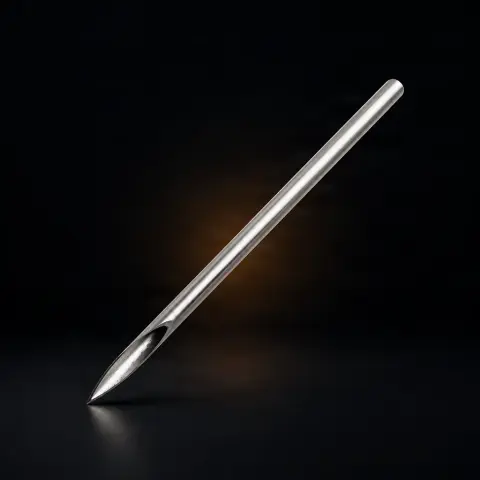
A piercing needle is a hollow, surgical-grade cannula with a beveled tip. It slices a thin cylinder of tissue and removes it as the needle passes through, leaving a smooth, clean channel. A piercing gun doesn't cut at all — it uses a spring-loaded mechanism to punch a sharp-tipped stud through tissue with sudden blunt force. On the earlobe, which is soft and elastic, that difference matters less. On cartilage — tragus, conch, helix, industrial — the tissue is dense and brittle, so the sudden impact doesn't cut cleanly. It cracks and crushes the structure around the channel.
A Gun Can't Be Sterilized the Way a Needle Can
A professional piercing needle is single-use: it arrives sterile, individually sealed, is opened in front of the client, and goes straight into a sharps container after use. A piercing gun is a reusable device with an internal mechanism — spring, slide, plastic housing — that contacts blood and tissue every time it fires. That mechanism cannot go through an autoclave; the plastic components deform under sterilization temperatures. In practice, guns get wiped down with an alcohol swab or spray, which does not eliminate cross-contamination risk.
The Association of Professional Piercers (APP) and U.S. public health bodies including NEHA have documented bloodborne pathogen concerns (hepatitis B, hepatitis C) linked to reused piercing guns. Several U.S. states have restricted or banned gun use on cartilage by law as a result.
Why Cartilage Is More Vulnerable Than the Lobe
Ear cartilage has a much poorer blood supply than the lobe. That means slower healing — typically 6 to 12 months for a cartilage piercing versus 6 to 8 weeks for a lobe — and a reduced ability to fight off local infection. When tissue is traumatized by blunt force instead of cut cleanly, complication risk rises: cartilage micro-fractures, heavier bleeding, prolonged swelling, and, in documented medical cases, auricular chondritis or perichondritis — an infection of the cartilage that can permanently deform the ear if left untreated.
- Redness and warmth spreading beyond the piercing site
- Hard, painful swelling
- Persistent pus or blood discharge
- Pain that increases instead of decreasing after 48-72 hours
- Fever or general malaise
If you notice these signs, see a doctor (dermatologist or ENT) — don't wait it out. Untreated cartilage infection can require surgical drainage and targeted antibiotics, most often active against Pseudomonas aeruginosa, the bacterium most frequently involved in documented cases.
Sterile Piercing Needles for Cartilage
What Actually Happens When a Gun Hits Cartilage
Histological studies — tissue examined under a microscope after piercing — show clear differences between needle and gun channels. With a gun, the cartilage around the channel shows crushing and fracturing, not a clean cut. The effect is closer to a controlled fracture than an incision. On top of that, the starter jewelry guns typically use — a short-post stud, often in cheap alloy rather than certified surgical steel — leaves no room for normal post-piercing swelling. The frequent result is jewelry embedding into the skin or outright rejection of the piercing.
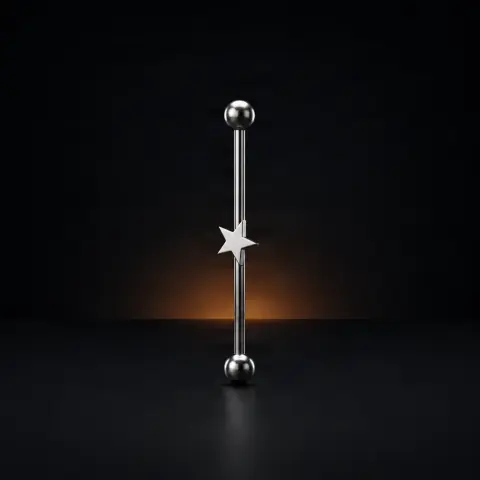
Titanium Starter Jewelry for Cartilage
What Professional Piercers Recommend
- The piercing is done exclusively with a sterile, single-use needle, opened in front of you from a sealed pouch.
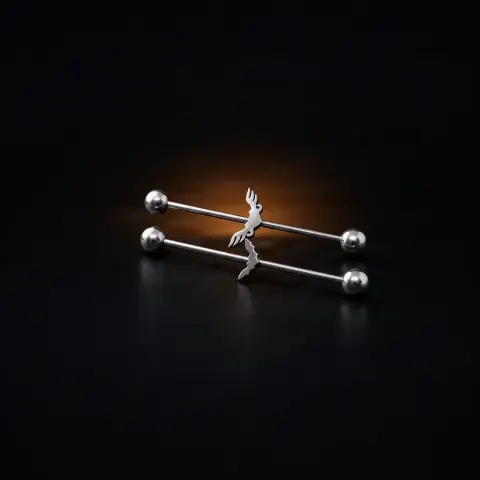
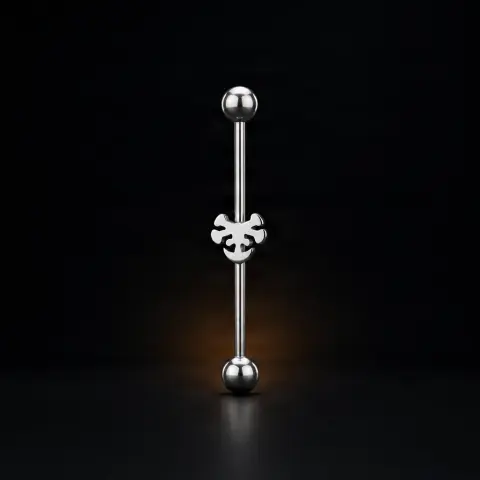
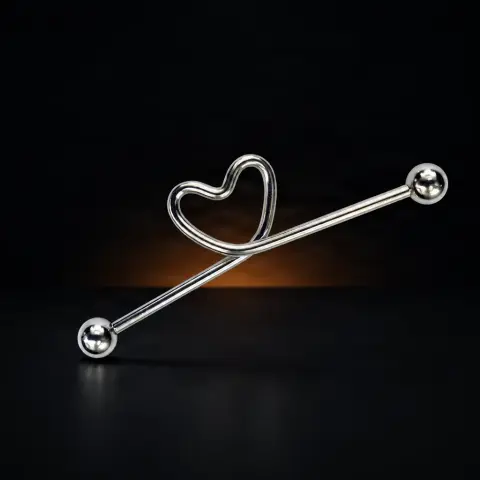
- Starter jewelry is implant-grade titanium or certified surgical steel, with a post long enough to accommodate swelling.
- The studio has a working autoclave (not just UV light or spray disinfection) and can show proof of regular sterilization testing.
- The piercer wears fresh gloves opened in front of you and uses a sharps container.
- A gun is never used on cartilage — if a studio offers that, treat it as a clear red flag.
The Association of Professional Piercers explicitly recommends that piercing guns, if used at all, be limited to earlobes — never cartilage. Several public health authorities, including NEHA in the U.S., have issued similar positions, and some jurisdictions have restricted gun use on cartilage by law.
Browse sterile piercing needles for cartilage →
Surse și referințe
- Association of Professional Piercers — Piercing Guns
- National Environmental Health Association — Policy Statement on Ear Piercing Guns (PDF)
- Ear piercing techniques and their effect on cartilage, a histologic study — ScienceDirect
- Auricular perichondritis by piercing complicated with Pseudomonas infection — PMC
Întrebări frecvente
Does a needle hurt more than a gun?+
Not necessarily — perceived pain has more to do with speed and technique than the instrument itself. A needle is slower but the cut is clean; a gun is faster, but the sudden impact on dense cartilage can cause more immediate discomfort, plus a more painful healing process afterward due to tissue trauma.
Can I ask for a gun on my tragus if the studio has one for lobes?+
A professional piercer should decline — guns are designed and calibrated for soft lobe tissue, not dense cartilage. If a studio agrees to use a gun on cartilage on request, that's a sign it doesn't meet basic safety standards.
What is auricular chondritis/perichondritis?+
It's an infection of the cartilage or the membrane covering it (perichondrium), most commonly caused by the bacterium Pseudomonas aeruginosa. Left untreated, it can destroy cartilage structure and permanently deform the ear. Treatment involves targeted antibiotics and, in advanced cases, surgical drainage.
How long does a cartilage piercing take to heal?+
Typically 6 to 12 months, compared to 6 to 8 weeks for a lobe. Healing time varies by placement (tragus vs conch vs helix), aftercare, and individual factors.
I already got a cartilage piercing with a gun — what now?+
If you have no signs of infection (spreading redness, hard swelling, pus, increasing pain), monitor the area and follow standard saline aftercare. If infection signs appear, see a doctor — don't try to treat perichondritis yourself. For future cartilage piercings, choose a studio that works exclusively with needles.
Is a gun at least okay for earlobes?+
The sterilization problem stays the same regardless of placement — the gun's mechanism still can't be autoclaved. On the lobe, tissue trauma risk is lower because the tissue is soft, but cross-contamination risk remains. Most professional piercers prefer needles for any placement.