
Illustrative vs Realism Tattoos: Where Drawing Ends and Photography on Skin Begins
Illustrative and realism often sit side by side in portfolios, but they start from opposite technical principles: one builds the image out of visible lines and texture, the other builds it out of shadow transitions with no lines at all. The difference isn't just aesthetic — it changes which needles, ink, and healing behavior are involved. This guide breaks down exactly where 'drawing on skin' stops and 'photography on skin' takes over.
A technical comparison between illustrative tattooing (cross-hatching, stippling, graphic linework) and realism (seamless tonal transitions, photo reference) — pick the right style before you book.
Illustrative: built from lines, hatching, and dots
Illustrative work keeps the artist's hand visible: bold, variable-width outlines and shading made of cross-hatching or stippling. It doesn't hide the technique — it exposes it as a design element, closer to a woodcut or a book illustration than a photo. The result reads as graphic, with strong black-and-white contrast and clearly separated zones rather than blended-together tones.
Realism: built from tonal transitions, no visible lines
Realism (black & grey or color) removes the outline as a visible element entirely. Shadow shifts gradually from one tone to the next, the way it does in a photograph, using successive layers of diluted ink and techniques like whip shading or packing. The artist works from a photo reference, tracking light and surface texture rather than simplifying the shape — the goal is reproduction, not interpretation.
Needles for illustrative linework
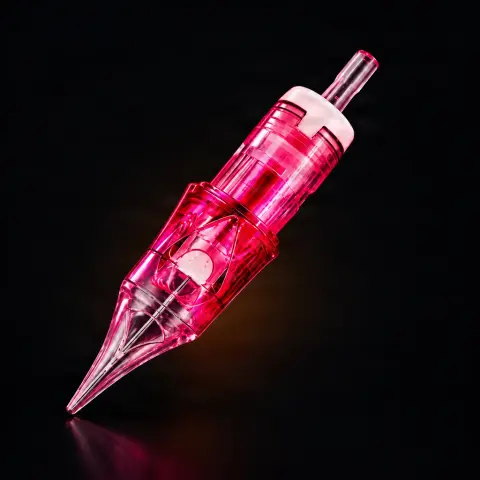
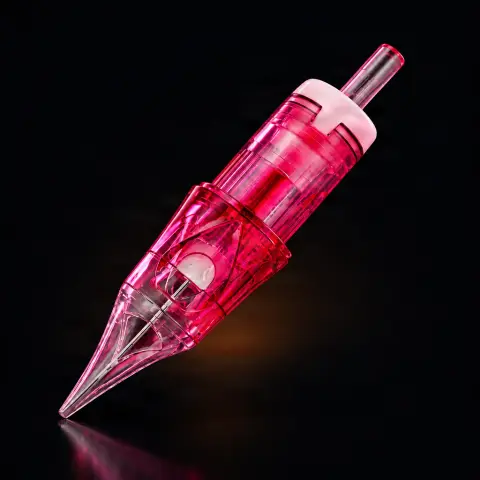
Why needle choice matters
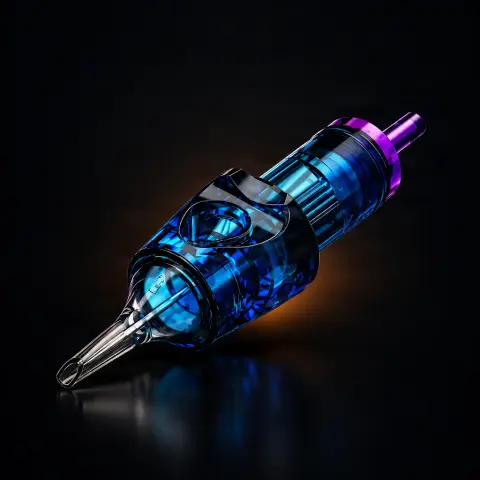
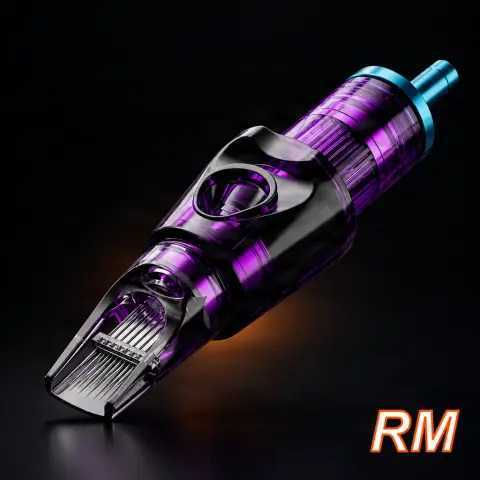
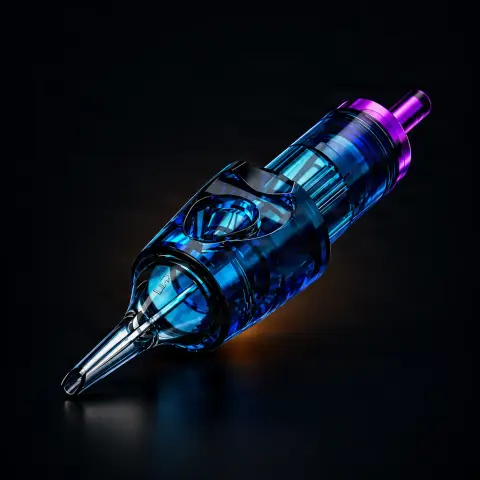
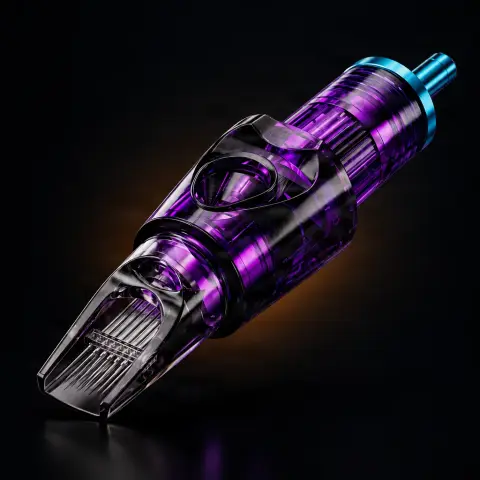
The clean outline characteristic of illustrative work is usually done with round liner (RL) needles, grouped tightly for precise, repeatable lines. The graduated shading in realism needs magnum (M1) or curved magnum (CM) needles, with tips arranged for even coverage and transitions with no visible edges. The same machine can run both styles, but swapping needle configurations between linework and shading is mandatory — it's a technical requirement, not a matter of preference.
Magnum needles for graduated shading
Ink: hard contrast vs a gray-scale palette
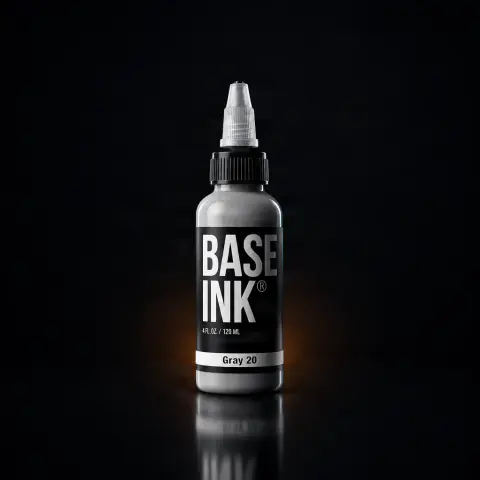
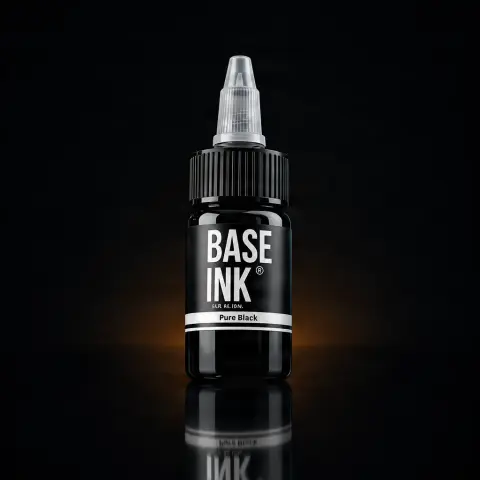
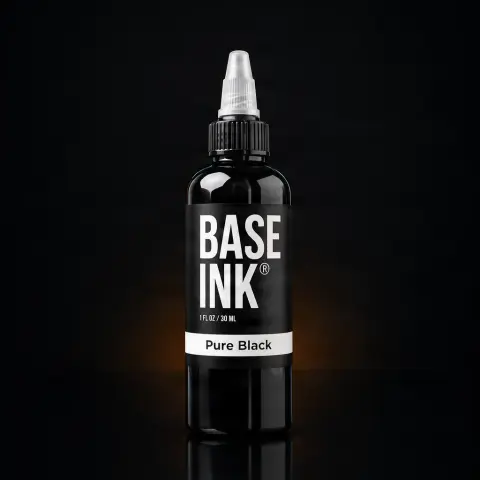
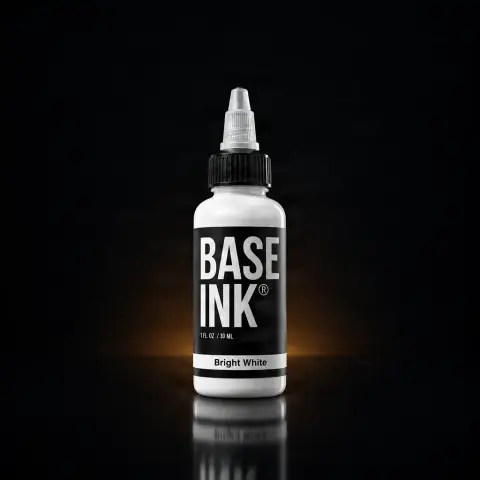
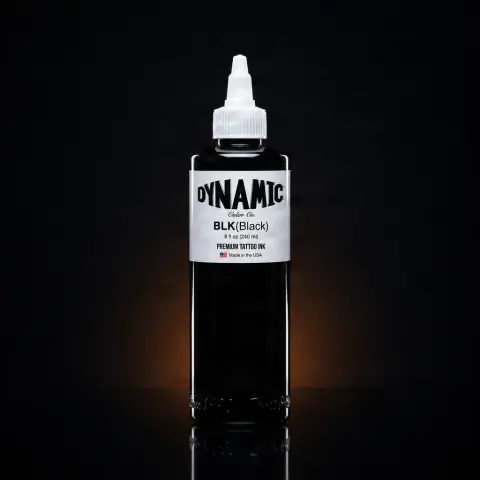
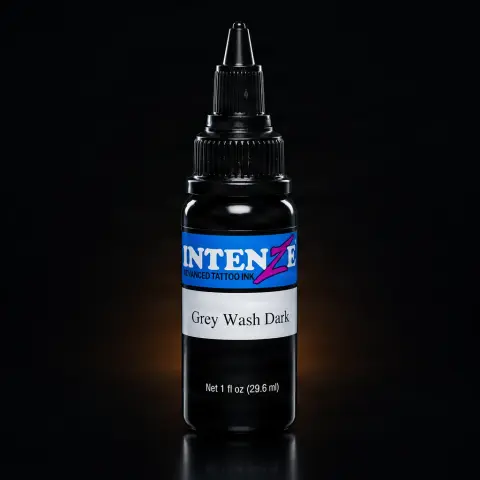
Illustrative work relies on saturated black, with maximum contrast between line and bare skin, using few intermediate tones. Black & grey realism depends on a grey wash ink set, diluted in steps, to build the mid-tones that create the illusion of depth and volume. Without a full dilution set, transitions come out banded and visibly stepped instead of smooth.
Grey wash ink sets
Ask to see the artist's own portfolio in the specific style you want, not generic examples of 'illustrative' or 'realism' pulled from the internet. Consistency across several of the artist's own pieces tells you more than one strong photo.
Healing and how each style ages on skin
Both styles heal following the same general aftercare process, but they age differently over time. Thin illustrative lines can fade more visibly long-term, especially on areas exposed to frequent sun or friction. The fine tonal transitions in realism are more sensitive to ink blowout under the skin if shading wasn't done with controlled depth and pressure — one more reason the artist's skill matters as much as the style choice itself.
- High-movement areas (hands, elbows, fingers) wear down fine detail faster regardless of style
- Lighter skin tones tend to preserve illustrative contrast longer
- Color realism typically needs a touch-up after a few years, like any heavily toned tattoo
- Unprotected sun exposure fades both styles, but it shows up faster on realism's fine transitions
| Criterion | Illustrative | Realism |
|---|---|---|
| Construction principle | Visible lines, cross-hatching, stippling | Gradual tonal transitions, no visible lines |
| Outline | Bold, variable width — a deliberate design element | Absent as a visible element |
| Working source | Graphic drawing, shape deliberately simplified | Photo reference, shape reproduced from light and texture |
| Usual needles | Round liner (RL), tightly grouped for precise lines | Magnum (M1) or curved magnum (CM) for shading, RL only for outline detail |
| Ink | Saturated black, maximum contrast, few intermediate tones | Grey wash set diluted in steps, to build the mid-tones |
| Time and sessions | Less working time per square centimetre at the same size | Shading takes more time per square centimetre; large pieces usually need more sessions |
| Body placement | Bold lines tolerate curvature better; contrast lasts longer on lighter skin tones | Fine detail is harder to preserve on high-curvature areas or areas with dense hair |
| How it ages | Thin lines can fade visibly on areas exposed to sun or friction | Fine transitions are sensitive to blowout and sun; colour realism typically needs a touch-up after a few years |
How to choose between the two
- Look only at the artist's portfolio in the style you actually want, not their general body of work
- Ask how many sessions your specific design will take — large-scale realism usually needs more sessions than an illustrative piece of the same size
- Factor in body placement: fine realism detail is harder to preserve on high-curvature areas or areas with dense hair
- Request a sketch or mockup before the session, especially for realism, where corrections afterward are difficult
- If you're undecided, an illustrative design with some graduated shading (a hybrid style) is a real option, not a compromise
Întrebări frecvente
Does illustrative or realism tattooing hurt more?+
There's no data showing a clear pain difference between styles — pain relates more to body placement and session length. Large-scale realism shading tends to mean longer sessions, which can increase skin fatigue, not necessarily pain intensity.
Can I combine illustrative and realism in the same tattoo?+
Yes, this hybrid approach is used by many artists — for example, a realistic subject with an illustrative background or surrounding elements. Talk explicitly with your artist about how the transition between the two techniques will look, so it doesn't read as two separate tattoos stitched together.
Why does realism usually cost more than a similarly sized illustrative piece?+
Graduated shading takes more working time per square centimeter than linework, and often requires more sessions for the ink layers to build up properly. The price reflects time, not necessarily one style being technically harder than the other.
Which style holds up better over time?+
There's no universal answer — it depends on execution, body placement, and aftercare, not just style. Bold illustrative lines tend to stay visible longer; realism's fine transitions are more sensitive to ink spread if the shading wasn't done correctly.
What needles should an artist use for black & grey realism?+
Typically magnum (M1) or curved magnum (CM) needles for shading, combined with round liner (RL) needles only for any outline detail. The exact configuration varies by artist preference and the specific design.
Can an illustrative tattoo later be turned into realism through a cover-up?+
Sometimes, but it depends on the density of the existing lines and ink. An artist needs to assess the original piece in person, on skin, before confirming whether a realism cover-up will realistically achieve the desired result.