
Chrome / Liquid Metal Tattoos: The Real Technique Behind the Effect
The 'chrome tattoo' or 'liquid metal tattoo' trend blew up on TikTok and Instagram with pieces that look poured from polished chrome. No metallic ink is involved — the effect is entirely optical, built through black & grey realism pushed to its extreme: hard contrast, a fine shading gradient, and strategically placed highlights. This guide breaks down the real technique so you know what to expect when you request it.
That viral 'liquid chrome' look isn't made with metallic ink — it's extreme contrast, a controlled shading gradient, and highlights placed around a single light source. Here's how realism artists actually build it.
Why there's no such thing as 'liquid chrome ink'
Actual metallic ink (with metallic pigment particles, like car-paint formulas) isn't used under the skin — it isn't formulated for dermal insertion, and no supplier sells it for permanent tattooing. What you see in the viral clips is black & grey realism: the same black ink and grey wash sets used in any realism piece, but applied with very precise contrast control. The 'metal' comes from how the eye reads the sharp transition between deep black, mid grey, and white — not from pigment.
The chrome effect requires advanced control over shading gradients, visual memory for a consistent light source across the whole surface, and a steady hand for crisp separation lines. Ask for a black & grey realism portfolio, not just linework, before booking a session.
- Base outline — the curved shapes that will 'reflect' light, drawn as if on a real curved surface (fender, sphere, 3D letter)
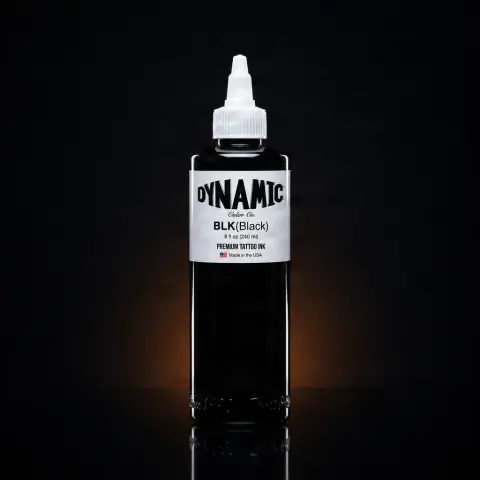
- Base black fill in the deepest shadow zones, as the contrast foundation
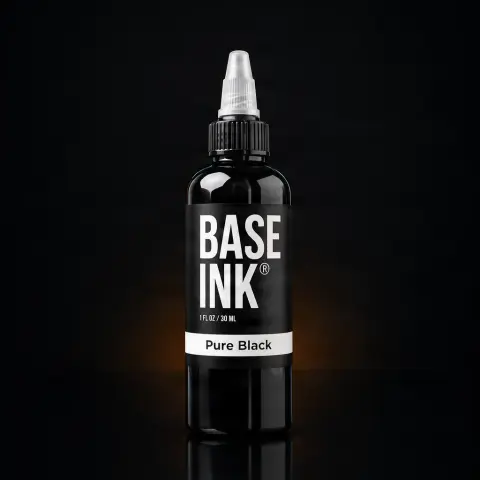
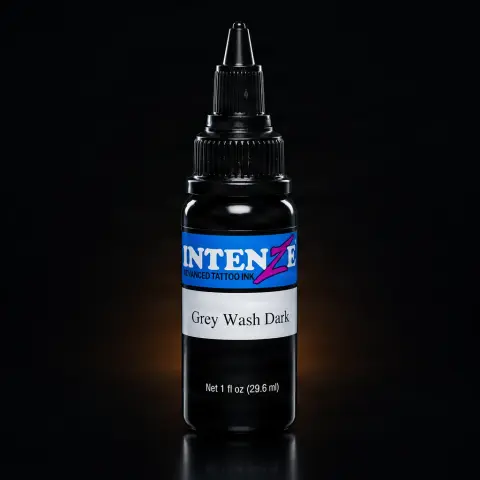
- Transition gradient with grey wash ink, from black to mid grey to light grey, applied in very fine steps
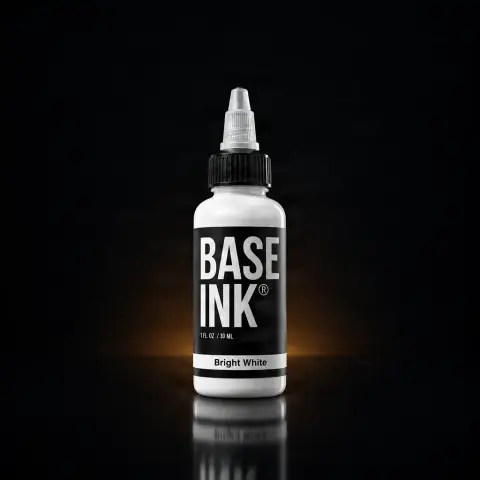
- Highlights — areas left completely uninked (negative space) or minimal white accents, placed consistently around a single imagined light source
- Saturation pass — a second pass over the deep black zones so the tone doesn't fade unevenly during healing
Needles for separation lines and realism shading
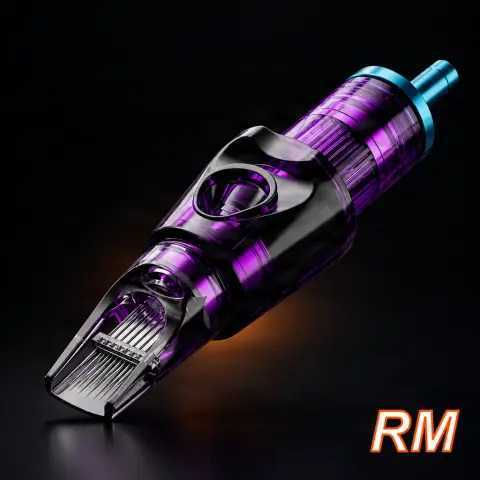
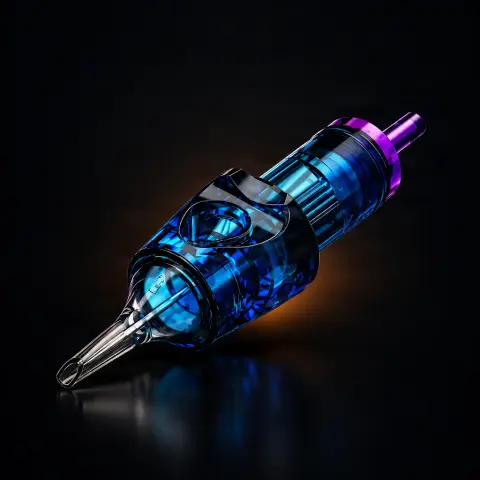
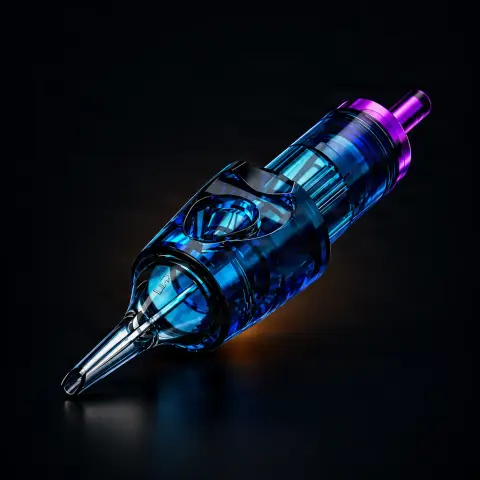
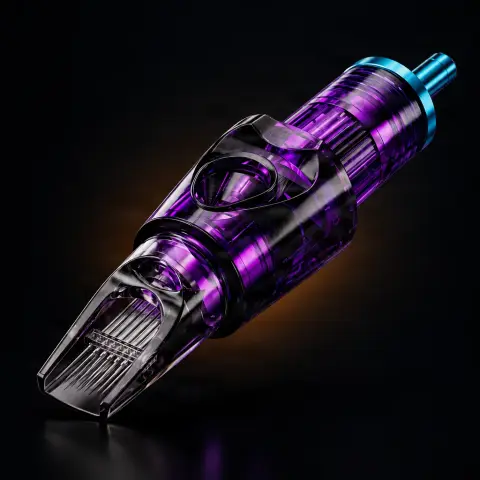
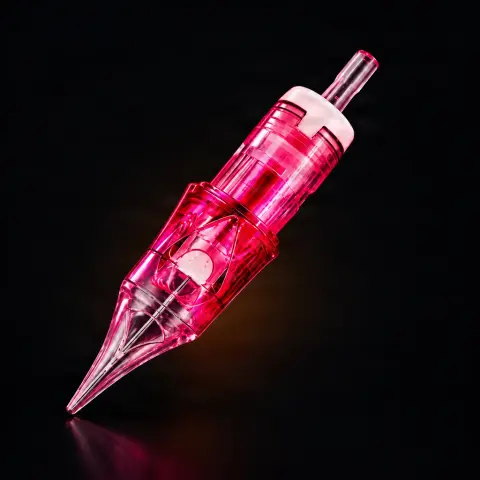
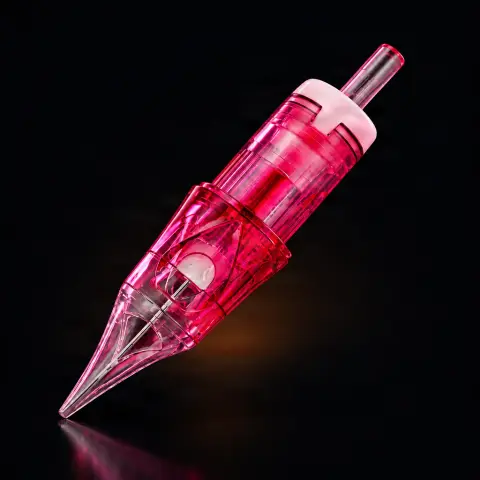
The shading gradient — where the 3D illusion is built
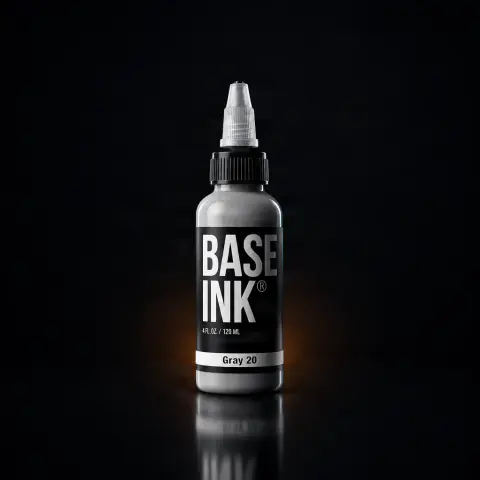
The difference between ordinary black & grey and a convincing chrome effect comes down to how many grey steps are used and how smoothly the edges between them are blended. Artists typically work with a grey wash set diluted progressively (from concentrated to very light) and switch needle groups between large shadow areas and thin transition lines, so the gradient shows no visible steps — any abrupt tone jump breaks the illusion of a curved, metallic surface.
Grey wash ink for shading gradients
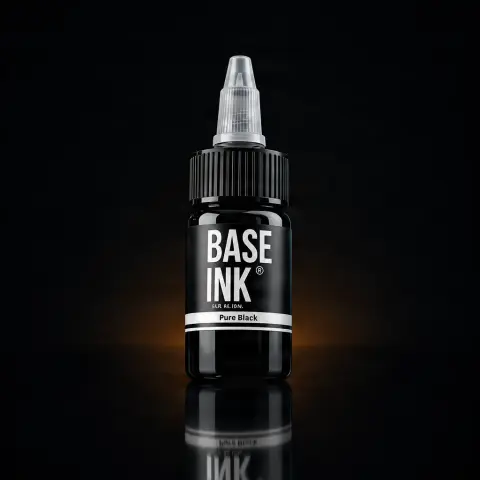
Highlights — where you 'see' the metal
Highlights are what sell the effect, and also the most commonly botched part: it's not about loading on white ink, it's about leaving skin uninked exactly where light would hit a polished surface. A skilled artist locks in one light angle for the entire piece and holds it across every curve, the way a technical drawing would — any inconsistency (highlights pointing two different directions on the same object) reads instantly as a mistake, not a style choice.
- Highlights placed at different light angles on the same piece — the most common amateur mistake
- Too much white ink layered over black — it fades noticeably faster during healing than negative space does
- Grey transitions with visible steps instead of a continuous gradient
- An outer outline too thick, which flattens the curvature the shading is trying to build
Healing and long-term retention
A piece with large saturated black areas and fine grey transitions heals like any black & grey tattoo of similar size: follow the aftercare protocol given by your artist, avoid unprotected sun exposure, and keep the area consistently moisturized. The specific quirk of the chrome style is that a fine gradient can lose contrast more noticeably than a piece built from flat color blocks, simply because the eye is trained to catch any tonal unevenness on a 'polished surface'. That's why realism artists frequently schedule a touch-up session 4-8 weeks out for larger pieces in this style, regardless of how well the tattoo was cared for.
For medium to large pieces with an extended gradient, ask your artist whether a touch-up is included in the price or billed separately — it's standard practice in realism work, not a sign the initial piece was done poorly.
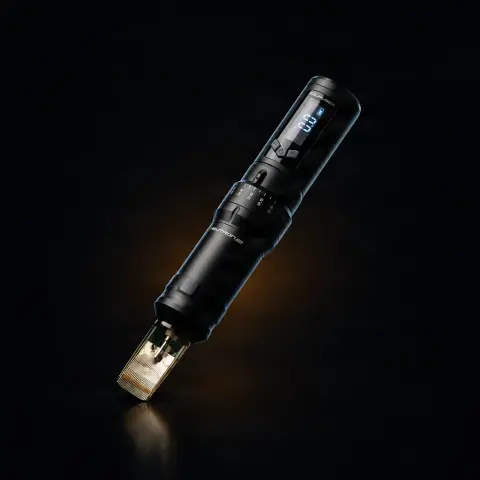
Rotary machines for clean lines and fine transitions
What placement and size work best
The chrome effect needs enough surface for the gradient to unfold over a few centimeters — forearm, upper arm, thigh, or back work better than very small pieces, where a credible transition gradient simply doesn't fit. Curved shapes (3D lettering, rounded objects, stylized animals) are the trend's classic choice precisely because a curved surface visually justifies the moving highlight the whole effect relies on.
Întrebări frecvente
Is there actually a metallic, silver, or chrome tattoo ink?+
No metallic-pigment ink is used for permanent tattooing — it isn't formulated for dermal insertion. The 'chrome' look in photos is black & grey realism: black, grey wash, and highlights (negative space or minimal white) applied with tightly controlled contrast.
Can any tattoo artist do a convincing chrome tattoo?+
No — it requires solid black & grey realism experience: gradient control, a consistent light source, and a steady hand on separation lines. Check for a specific realism portfolio, not just linework or color, before booking.
Why does the white highlight fade faster than the rest of the tattoo?+
White ink layered over black tends to lose intensity more visibly during healing than negative-space areas (skin left uninked). That's why realism artists prefer negative space for large highlights and reserve white ink for small accents.
How long does a medium-sized chrome piece take?+
It depends on surface area and how many gradient steps it includes, but a medium piece (e.g. forearm) typically needs more sessions than an ordinary black & grey piece of the same size, due to the number of fine passes required for the gradient.
Do chrome / liquid metal pieces need touch-ups?+
Often, yes — fine gradients can lose visible contrast more easily than flat color blocks. Many realism artists include or recommend a touch-up session a few weeks after healing for larger pieces in this style.
What separates a good chrome tattoo from a mediocre one?+
Consistency of the light source across the whole piece, grey transitions with no visible steps, and an outer outline thin enough not to flatten the curvature. Any highlight pointed the wrong way relative to the rest of the piece reads instantly as an execution error.