
Belly Button Piercing During Pregnancy: Keep It or Remove It?
As the belly grows, the skin around the navel stretches, and a piercing built for a flat surface suddenly sits at the wrong angle. There's no single rule that fits everyone — it depends on whether the piercing is fully healed, which trimester you're in, and how you plan to give birth. Here's what actually matters, trimester by trimester.
A trimester-by-trimester guide to belly piercings in pregnancy: when tearing risk rises, when piercers typically recommend removal, what to swap the jewelry for, and how to reinsert it after birth.
A new piercing vs. an already-healed one
This distinction matters more than the trimester itself. A fully healed navel piercing (typically 9-12 months or more since it was done) behaves very differently from a fresh one. Professional piercing associations advise against getting a new piercing while pregnant — immune response shifts, healing slows down, and any infection is harder to manage safely during pregnancy. The standard guidance is to wait at least 3 months after giving birth before getting a new piercing.
A channel that's still healing, combined with stretching skin, sharply raises the risk of irritation, tearing, and infection. In that case, most piercers recommend removing the jewelry early in pregnancy rather than waiting.
The trimester-by-trimester guide
For a healed piercing, the typical progression looks like this:
- First trimester: the belly hasn't visibly changed yet, so risk is minimal — regular jewelry is usually fine.
- Second trimester: the skin starts actively stretching; rigid jewelry increasingly sits at an angle it wasn't shaped for. This is when most piercers recommend switching to flexible jewelry (PTFE or bioplast).
- Third trimester (roughly weeks 32-36 onward): the belly reaches its largest size, pressure and clothing friction peak, and micro-tearing risk is highest. Many piercers and providers recommend removing the jewelry entirely at this stage, especially as birth approaches.
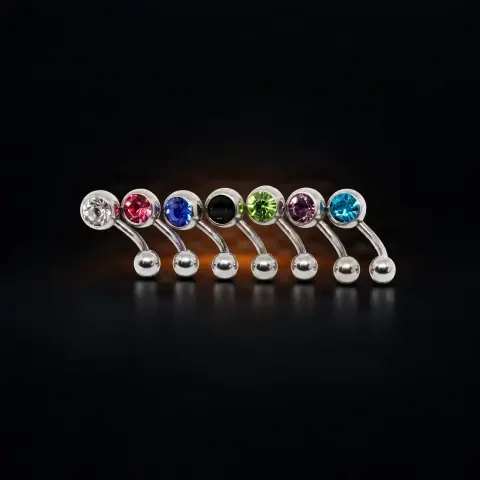
Flexible PTFE belly bars
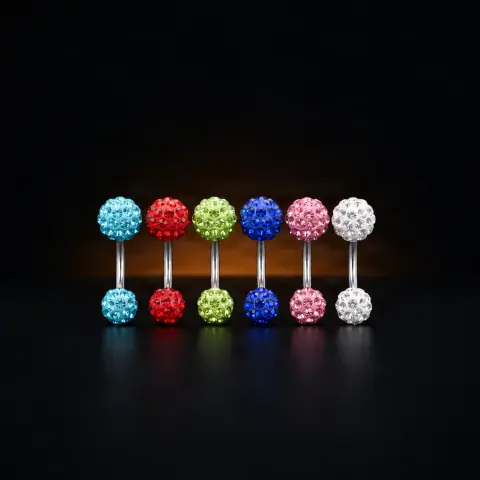
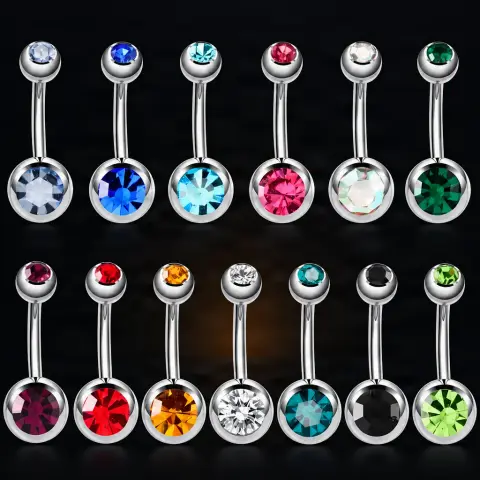
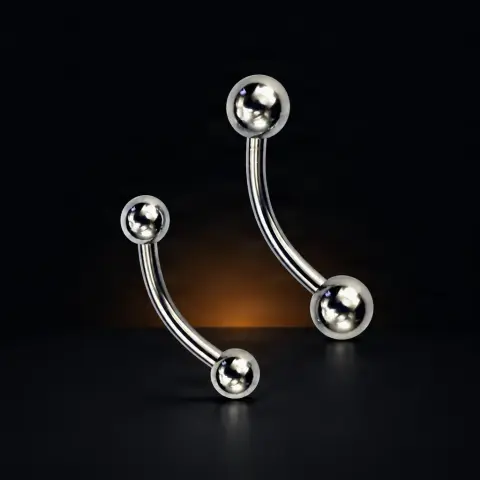
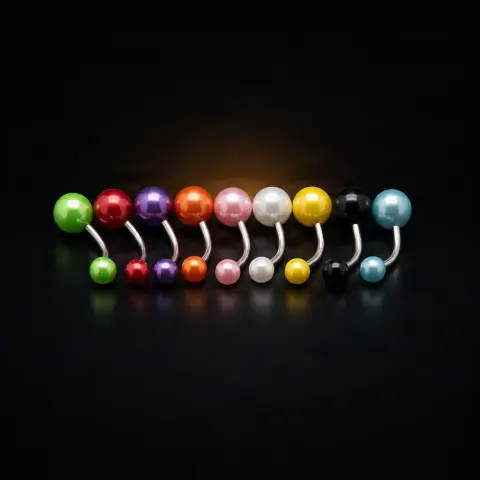
The tearing risk — what actually happens to stretched skin
As the skin around the navel stretches, the piercing channel deforms along with it. Rigid jewelry (straight steel or titanium) can't follow that curve — it presses against one side of the channel, which can cause constant pressure, micro-tears in the tissue, migration (the piercing gradually shifting position), or, in more severe cases, full rejection (the body pushing the jewelry out). Friction from tight clothing over a growing belly adds to the irritation.
- Persistent redness or skin that's warm to the touch around the hole
- Discharge beyond the small amount of clear fluid normal for an older piercing
- Pain that isn't improving or is getting worse
- The jewelry visibly shifting position or appearing to cut into the skin
- Swelling that isn't going down
What to swap the rigid jewelry for
The recommended material for pregnancy is PTFE (polytetrafluoroethylene, a surgical-grade plastic) or bioplast/bioflex — both flexible, nickel-free, and safe during ultrasounds. PTFE can be gently hand-bent for a better fit in the later months; bioplast comes pre-shaped and is less pliable, but still far more flexible than metal. Avoid cheap jewelry marketed generically as 'pregnancy jewelry' if it doesn't specify the exact material — professional piercing associations warn that some of these aren't made from materials safe for an active piercing channel.
The piercing and giving birth — including C-sections
Whatever jewelry you're wearing during pregnancy, most maternity units require any abdominal piercing to be removed before admission — for a vaginal birth, but especially for a C-section, where the incision is made right in that area and jewelry can interfere with the sterile field or instruments. The simplest approach is to remove the jewelry entirely a few days before your due date rather than counting on removing it 'at the hospital.'
Plan ahead for a jewelry-free option: if you want to keep the channel open without a rigid or metal piece, ask your piercer about a soft PTFE retainer that can be removed quickly, even by hospital staff if needed.
After birth: how long before you can wear jewelry again
If you removed the piercing, a gentle reinsertion attempt with a tapered piece of jewelry around 4-6 weeks postpartum will show whether the channel is still passable. Even if it goes in, most piercers recommend waiting 6-12 months postpartum before wearing permanent jewelry again, giving the skin and the shape of the navel time to fully settle after the changes in volume.
If the hole has closed completely, re-piercing is still an option, but not right away — scar tissue has reduced blood flow, which means slower and more difficult healing if you pierce directly through it. A professional piercer can assess the tissue and tell you whether you need a longer wait or can go straight to re-piercing.
When to see a doctor or piercer without waiting
- Spreading redness or skin that's hot to the touch around the area
- Pus or foul-smelling discharge
- Fever combined with pain around the navel
- Jewelry that's become fully embedded in the skin (no visible end showing)
- Intense pain that persists beyond 48 hours
Browse PTFE and bioflex jewelry suited for pregnancy →
Surse și referințe
Întrebări frecvente
Can I get a belly button piercing while pregnant?+
It's not recommended. Professional piercing associations advise against any new piercing during pregnancy because of shifted immune response and slower healing, and recommend waiting at least 3 months after giving birth.
Do I have to remove a fully healed piercing right away?+
Not necessarily from the start. A piercing healed for more than 9-12 months can usually stay in place through the early months of pregnancy with monitoring, typically switching to flexible jewelry (PTFE/bioplast) as the belly grows, with many people choosing full removal toward the end of pregnancy.
Why can't I keep wearing regular steel or titanium jewelry late in pregnancy?+
Because it's rigid and can't follow the curve of stretching skin. It can press constantly against one side of the channel, raising the risk of micro-tears, migration, or the piercing being rejected.
Do I need to remove the piercing before a C-section?+
Yes, almost always. The C-section incision is made in the abdominal area, and most maternity units require navel jewelry removed before surgery, regardless of the birth plan.
How long until I can wear jewelry again after giving birth?+
If the piercing stayed partially open, a gentle reinsertion attempt around 4-6 weeks postpartum will show where things stand, but most piercers recommend waiting 6-12 months before wearing permanent jewelry again, so the skin can fully settle.
What if the piercing closed completely during pregnancy?+
Re-piercing is still an option, but not immediately postpartum — scar tissue has reduced blood flow and heals more slowly. A professional piercer can assess the tissue and tell you whether and when it's safe to re-pierce.