
Daith Piercing and Migraines: What the Science Actually Says
The daith piercing went viral on TikTok as a migraine 'cure,' built on the idea that it presses on an auricular acupuncture point. The problem: no controlled clinical trial backs that up. What does exist is solid data on how often cartilage piercings get infected. This guide walks through what the actual medical literature says, not social media anecdotes.
A look at the real clinical evidence behind daith piercings and migraines — not TikTok testimonials — plus the infection risk almost nobody mentions.
Where the migraine claim came from
The theory grew out of auricular acupuncture: some acupuncture maps place a point on the daith cartilage in a zone linked to pain relief. From there, people extrapolated that a permanent piercing in that spot would work like acupuncture needles. The idea circulated on Pinterest as early as 2017 and exploded on TikTok in recent years, carried almost entirely by individual testimonials rather than research.
What the 2024 research says
A 2024 narrative review published in Headache: The Journal of Head and Face Pain (Pradhan et al.) searched the existing literature and found no controlled clinical trials on daith piercing for any headache disorder. The authors also checked both Chinese and Western auricular acupuncture maps and concluded that neither provides a sufficient explanation for why a piercing at that specific point would relieve migraines.
There's an important distinction between auricular acupuncture and a piercing. Acupuncture involves repeated stimulation, sometimes electrical, delivered by a practitioner — and 2025 meta-analyses show that repeated stimulation can reduce migraine frequency and severity. A daith piercing is the opposite: a one-time act, a static piece of jewelry, with no ongoing active stimulation. Even if acupuncture's mechanism were fully proven, there's no physiological reason to expect the same effect from the constant, passive pressure of an earring.
There's no evidence that a static ear piercing reduces migraine frequency or intensity. The single published case with a positive outcome (2017) describes one patient — that's an isolated observation, not generalizable proof.
Why some people still report relief
The placebo effect is well documented in pain treatment: in acute pain studies, placebo produces an average 13% pain-free response and 35% pain relief, with even stronger responses for procedures perceived as invasive — and a piercing clearly qualifies. Add to that the natural fluctuation of migraine episodes (quieter stretches happen with or without a piercing) and the confirmation bias typical of social media: people who feel better post about it, people whose piercing gets infected or does nothing rarely make a follow-up video.
The real risks of a daith piercing
- Roughly 1 in 3 cartilage piercings (32%) develop a complication, and infection accounts for the majority of those cases (77%), according to data cited in the piercing-complications literature.
- Cartilage piercings get infected more often than earlobe piercings — among young women (18-28), infection rates were 41.4% for cartilage versus 29.6% for the lobe.
- Cartilage has poor blood supply, which means infections are harder to clear and carry a risk of perichondritis — an inflammation that can permanently deform the ear if not treated promptly.
- Full healing takes 6-12 months, considerably longer than a lobe piercing.
- Other possible complications include keloid scarring, contact dermatitis from nickel, and jewelry rejection.
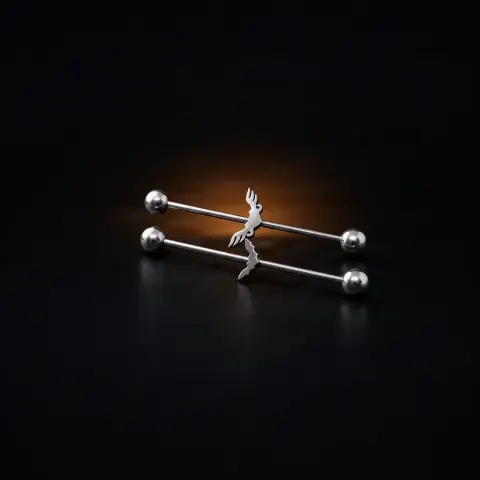
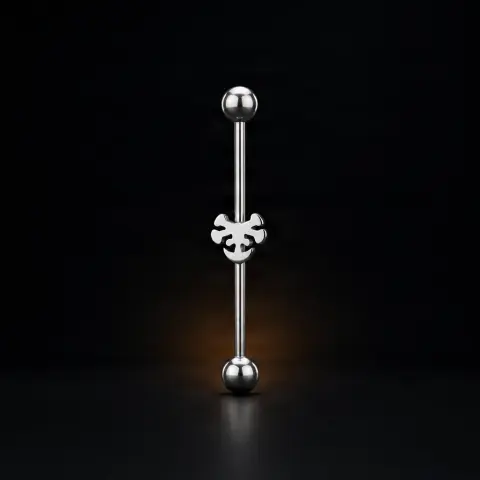
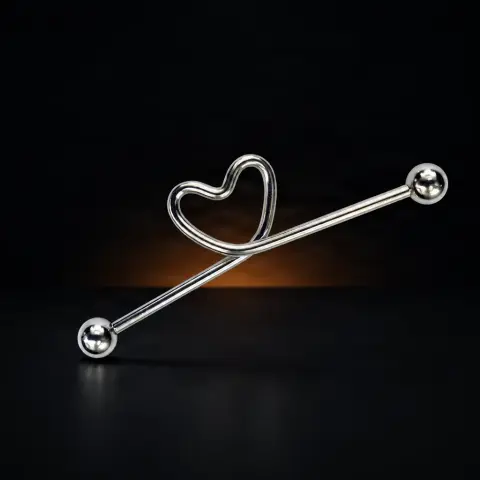
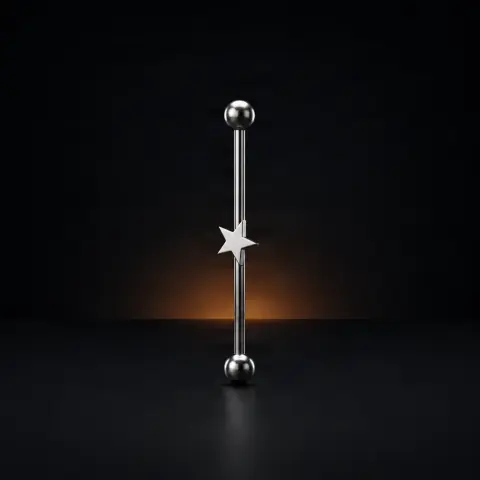
Implant-grade titanium daith jewelry
If you're getting a daith anyway — what actually matters
- Choose a licensed piercer who uses a hollow needle, not a piercing gun — a gun crushes cartilage and raises the risk of complications.
- Ask for implant-grade titanium (ASTM F136) or quality surgical steel, not nickel, which increases the risk of an allergic reaction.
- Follow the full 6-12 month healing protocol, cleaning regularly with sterile saline solution.
- Don't swap the jewelry before healing is fully complete, even if it looks healed on the surface.
- At the first sign of spreading redness, throbbing pain, or pus, see a doctor — don't wait for it to resolve on its own.
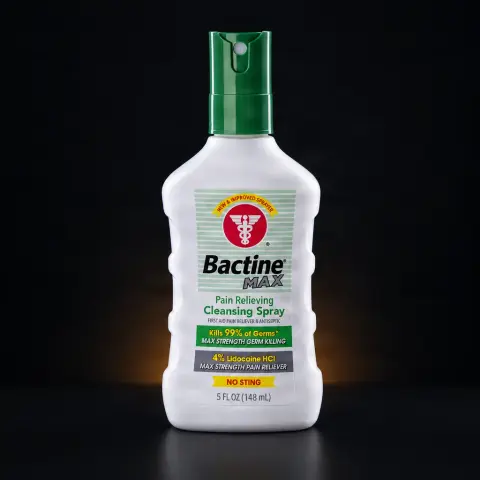
Saline aftercare sprays for fresh piercings
A daith piercing is not a medical treatment for migraine. If you have chronic migraines, talk to a neurologist about options backed by clinical evidence — preventive medication, triptans, anti-CGRP therapies, or Botox for chronic migraine. A piercing can stay a personal aesthetic choice, but the treatment decision belongs with a doctor, not a TikTok trend.
Browse implant-grade piercing jewelry →
Surse și referințe
- Daith piercing: Revisited from the perspective of auricular acupuncture systems — A narrative review, Headache: The Journal of Head and Face Pain, 2024 (PubMed)
- Daith Piercings as Migraine Treatment — American Migraine Foundation
- Body Piercing Infections — StatPearls, NCBI Bookshelf (NIH)
- Daith Piercing Infection: Symptoms, Treatment, Prevention — Healthline
- Daith Piercing in a Case of Chronic Migraine: A Possible Vagal Modulation — PMC (single-patient case study)
Întrebări frecvente
Does a daith piercing actually treat migraines?+
There's no clinical evidence for it. A 2024 review searched the medical literature and found no controlled clinical trials on daith piercing for migraine or any other headache disorder.
If it's not proven to work, why do so many people say it helped them?+
Most likely a combination of placebo effect (well documented for invasive procedures), the natural fluctuation of migraine episodes, and confirmation bias on social media.
How high is the infection risk with a daith?+
Notably higher than other piercings: roughly 1 in 3 cartilage piercings develop a complication, and most of those are infections, because cartilage has poor blood supply.
How long does a daith piercing take to heal?+
Around 6-12 months for full healing, considerably longer than an earlobe piercing.
Should I still see a doctor about migraines if I get a daith?+
Yes. A piercing can be an aesthetic choice, but chronic migraine treatment should be discussed with a neurologist, who can recommend options backed by solid clinical evidence.
What's the safest jewelry for a daith piercing?+
Implant-grade titanium (ASTM F136) or quality surgical steel, which lower the risk of allergic reaction compared to nickel-containing jewelry.