
Wireless Tattoo Pen Battery Wear: Signs It's Failing, Not Just Flat
A wireless pen that runs dry faster and faster isn't always a settings or charging-habit issue. Past a certain number of cycles and a certain calendar age, the Li-ion cell inside genuinely loses capacity — for good. This guide covers how to tell real degradation apart from a simply flat battery, and the point at which you actually need a replacement instead of just charging more often.
How to tell a flat battery from a permanently degraded one, what happens to the Li-ion cell after 18+ months of heavy use, and when it actually needs replacing rather than another charge.
Why a wireless pen battery degrades
The Li-ion or Li-Po cells inside wireless pens don't fail overnight — they lose capacity gradually, starting from day one. Every full charge-discharge cycle eats a small amount of the cell's maximum capacity, and the process speeds up with heat, repeated full discharges to 0%, and long storage periods at 100% charge. It's an irreversible chemical process, not a fault you can reset or fix with a calibration cycle.
Signs the battery is degraded, not just empty
- Runtime dropped sharply and stays low — from a full session down to 1-2 hours, even with unchanged power settings.
- It loses charge visibly while sitting unused, powered off, on charge, or in the bag.
- Power/torque drops toward the end of a session even while the display still shows a decent percentage (60-70%), a sign the real voltage sags below the normal curve.
- Full-charge time has shrunk noticeably compared to when it was new — the battery 'fills up' in a few minutes, a clear sign of reduced capacity, not a healthy cell.
- The LED or display reads 100% but the pen dies after just a few minutes of real work.
- The battery runs noticeably hotter than before, both while charging and during use.
- The battery housing is slightly swollen, warped, or no longer seats cleanly in the pen's slot.
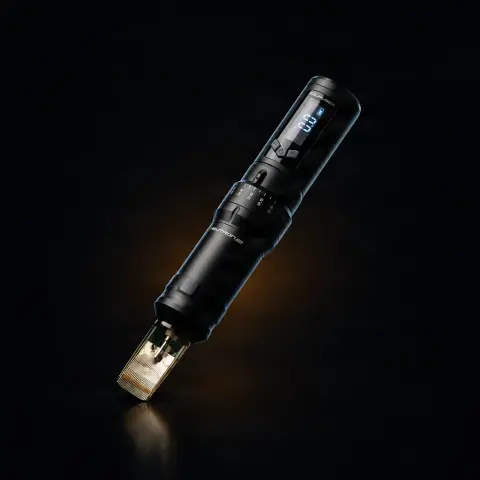
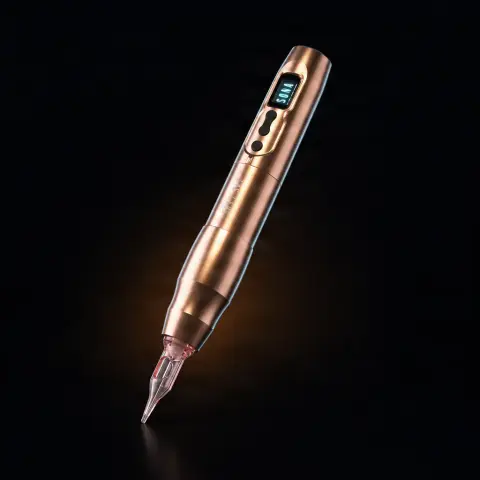
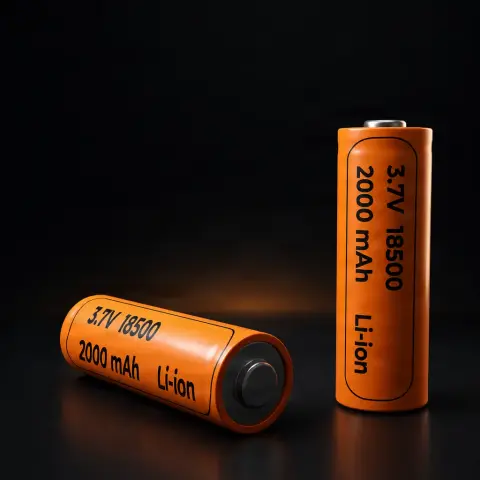
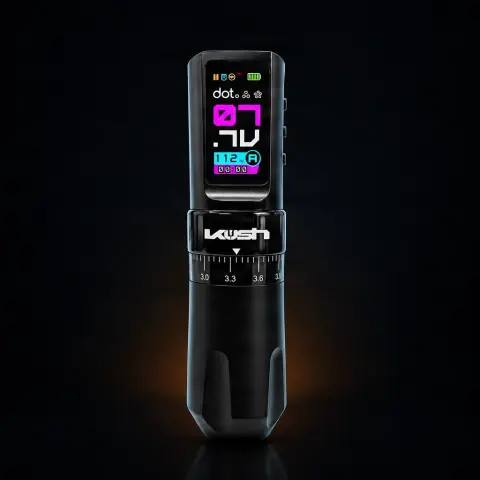
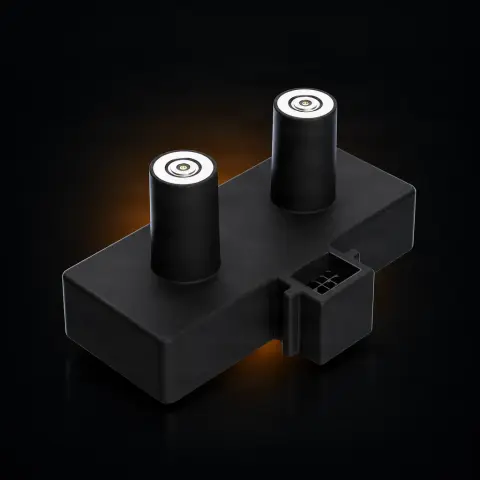
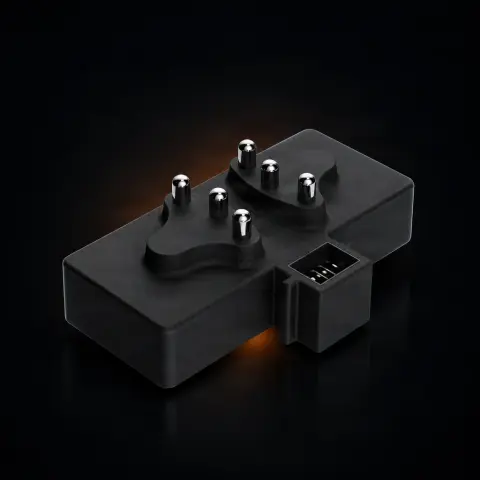
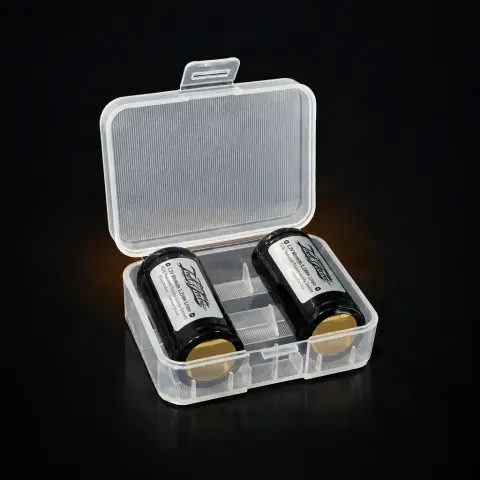
Replacement batteries for wireless pens
Per-session settings vs. long-term degradation
Not every rough session means the battery is done. Power set too high, sustained high speed, a hot studio, or a battery that wasn't fully charged before the session all mimic degradation but are temporary — fixed by adjusting settings or your charging habits. Real degradation shows a pattern: it persists regardless of settings, builds up gradually over months, and doesn't go away after a full, steady charge.
The real lifecycle of the battery — what to expect
Most Li-ion/Li-Po cells used in portable gear, including wireless pens, hold up for roughly a few hundred full charge-discharge cycles before degradation becomes noticeable to the user — the exact threshold varies by manufacturer and cell chemistry. For an artist working frequently, that usually translates to somewhere between 12 and 24 months of heavy use, sometimes sooner if the battery was regularly run down to 0% or kept in heat. Degradation isn't only about cycle count either — calendar age matters too, and a rarely used battery that's 2-3 years old can degrade about as much as one that's been used heavily.
A swollen, warped, or abnormally hot Li-ion battery should never be used again — the risk of short circuit or fire is real. Take it out of service immediately, stop charging it, and don't store it near flammable materials. Faulty batteries belong at an e-waste/battery collection point, never in household trash.
How to extend battery life
- Avoid fully draining to 0% — ideally charge between 20% and 90%, rather than waiting for auto shut-off.
- Don't leave the battery on the charger or in storage at 100% for months — capacity fades faster held at peak voltage.
- Keep batteries away from direct heat (work lamps, sunny windows, radiators) — heat is the main driver of accelerated wear.
- Use only the original charger or one explicitly recommended by the manufacturer — the wrong charging current speeds up wear.
- If you have spare batteries, rotate them in use instead of always running the same one down to empty.
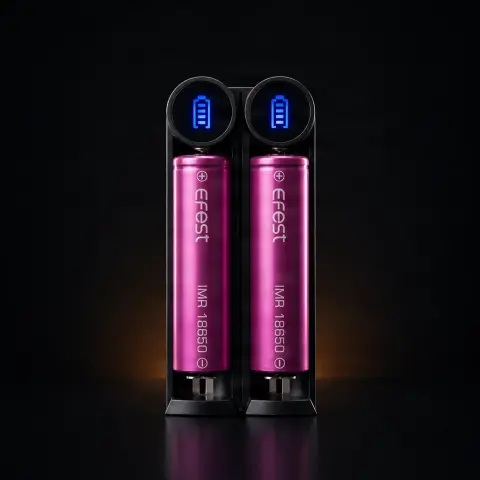
Compatible chargers for wireless pens
When the battery actually needs replacing
- Runtime has dropped below roughly half of its original value and stays there consistently, regardless of settings.
- Full-charge time has shrunk drastically (a sign of genuinely reduced capacity).
- The pen shuts off abruptly mid-session despite showing a reasonable percentage minutes earlier.
- The housing is swollen, warped, or no longer seats properly — replace immediately for safety, regardless of remaining runtime.
- The battery has 18-24+ months of frequent use and several of the signs above are showing up together, not in isolation.
Wireless tattoo pens and compatible batteries
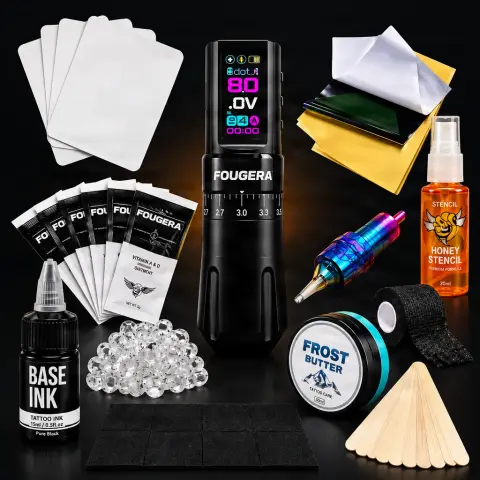
If you recognize 2-3 of the signs above happening together, it's most likely not a charging problem anymore but a battery that has reached the end of its useful life. Keeping a degraded battery in use during a client session raises the risk of it dying mid-work, which costs more than having a spare ready ahead of time.
Browse batteries and chargers compatible with wireless pens →
Întrebări frecvente
How long does a wireless pen battery usually last before it needs replacing?+
It depends on how often you work and how the battery is charged, but for an artist working regularly, clear degradation signs typically show up somewhere between 12 and 24 months. A rarely used battery may last longer calendar-wise, but it still loses capacity with age, not just cycle count.
Why does the pen shut off when the LED still showed near-full battery?+
That's a typical degradation sign — the cell can no longer hold voltage under real load, even though the indicator (calibrated for a healthy battery) still shows a high percentage. It's not a display fault, it's the battery's real capacity failing.
Can I replace just the battery, or does the whole pen need swapping?+
On most modern wireless pens, the battery is a separate, detachable module specifically designed to be replaced without affecting the rest of the device. Still check exact compatibility with your model before ordering.
Is it normal for the battery to get warm while charging?+
A mild, moderate warmth is normal. Noticeable heat beyond what you're used to, or a housing that starts warping, isn't normal and means the battery should be taken out of service immediately for safety.
Can I keep working with a corded pen while I wait for a replacement battery?+
Yes, most wireless pens also accept direct cable power from a supply as a temporary solution until a new or spare battery arrives.
How should I store a spare battery I won't use for a while?+
Ideally around 40-60% charge, in a dry place at room temperature, away from direct heat — not fully drained and not left permanently at 100%.