
PMU Eyebrows Too Thick or Too Low: Real Options (Not Just Laser)
A permanent makeup brow result that's too thick, too dark, or sitting too low doesn't automatically mean laser removal is the answer. Several alternatives exist, each with different risks and outcomes, and the right choice depends on how dense and how deep the original pigment sits. This guide walks through the real options and the criteria a certified technician uses to match a technique to your specific result.
If your permanent makeup eyebrows turned out too thick, too dark, or positioned too low, laser removal isn't the only route. Here are the real alternatives — camouflage pigment, natural fading, saline lifting, recalibration — and how to choose.
Why laser isn't the automatic first move
Many PMU brow pigments contain iron oxide, used to create natural brown tones. When hit with Q-switched laser energy, iron oxide can chemically reduce and shift toward darker or even black shades — a documented phenomenon in dermatology literature called paradoxical darkening. Because of this, a small test spot before a full session is recommended, and the risk is higher for light cosmetic pigments (beige, pink, light brown) than for classic black tattoo ink.
Dermatology studies confirm the paradoxical darkening risk for cosmetic pigments containing titanium dioxide or iron oxide treated with Q-switched lasers; some cases need additional sessions or alternative laser types (Er:YAG, fractional CO2) to correct the darkened color. See the sources at the end of this article.
Option 1: Camouflage (corrective) pigment
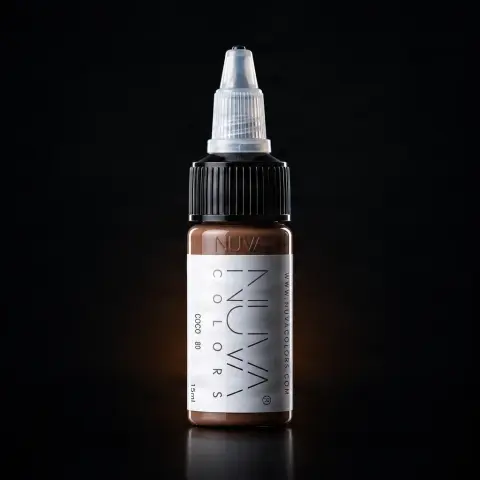
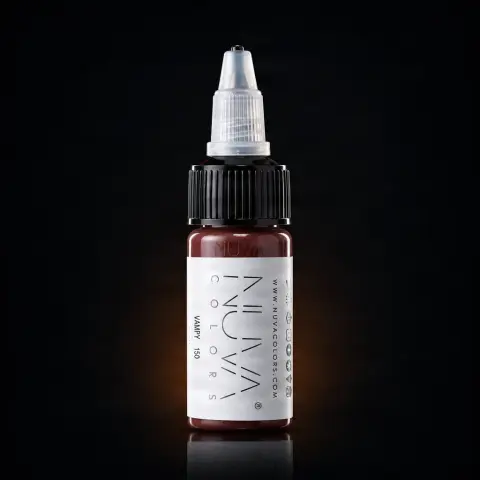
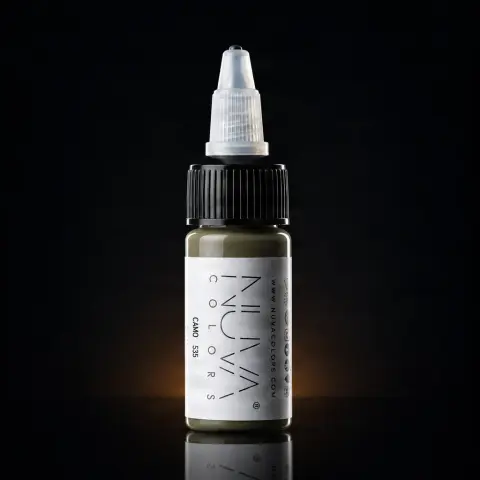
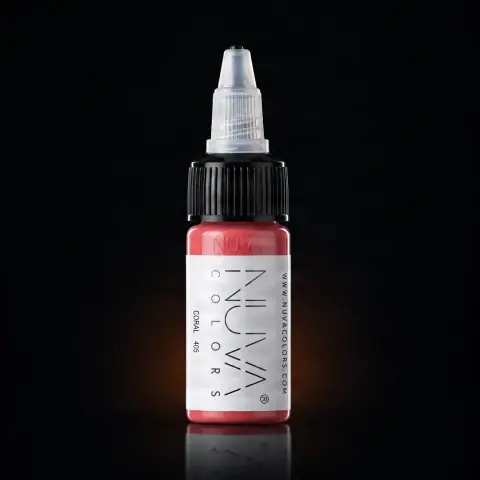
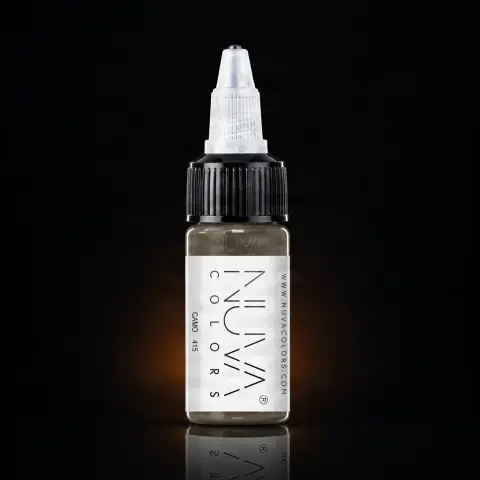
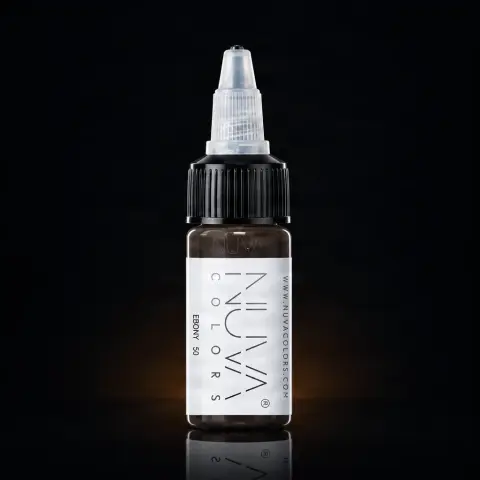
Camouflage means applying a pigment with the opposite undertone over the too-dark or too-thick area to neutralize it optically (for example, orange/red undertones over a cool grey-brown), or redrawing the brow edge with a skin-tone pigment that visually narrows the shape. It works well when the old pigment isn't very dense, the skin has no scarring, and the shape adjustment needed is a few millimeters — not a full redesign.
Corrective and camouflage pigments for PMU
Option 2: Natural fading — how much waiting actually helps
PMU pigment fades naturally over time, typically within 1-3 years, depending on application depth, pigment type, and sun exposure. Fading reduces color intensity but doesn't change brow position — if the real issue is that the arch sits too low relative to the bone, waiting doesn't fix the geometry, it just makes it less visible. This is a realistic option when the main complaint is color intensity, not shape or position.
Option 3: Saline removal — the direct alternative to laser
The saline technique deposits a high-salt-concentration solution into the layer where the pigment sits, using standard PMU equipment. Osmosis draws the pigment toward the surface, and it's shed along with the scab formed during healing. Unlike laser, it doesn't carry the iron-oxide paradoxical darkening risk, because it doesn't break the pigment down chemically with heat — it lifts it out mechanically and osmotically. It usually takes 2-4 sessions spaced 6-8 weeks apart, and the result is partial to near-complete fading, not always 100%.
Option 4: Laser — when it's actually the right call
Laser remains relevant when the pigment is very dense, applied deep, or is classic tattoo ink rather than cosmetic PMU pigment. It requires a small test spot to check the pigment's reaction to laser energy, several sessions spaced 6-8 weeks apart, and, if paradoxical darkening occurs, additional treatment or a different laser type. The recommendation is to discuss this option with a tattoo/PMU removal specialist or dermatologist, not only with the technician who did the original work.
Option 5: Recalibration / redesign without full removal
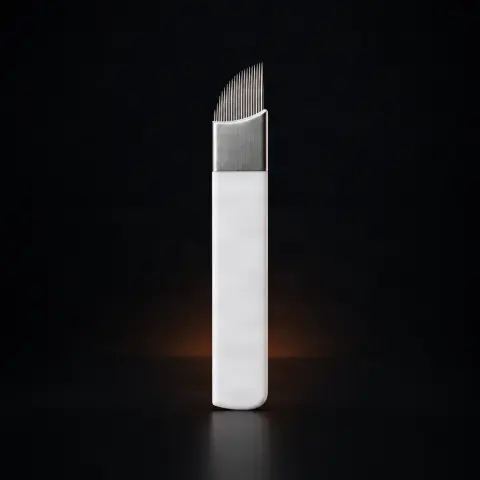
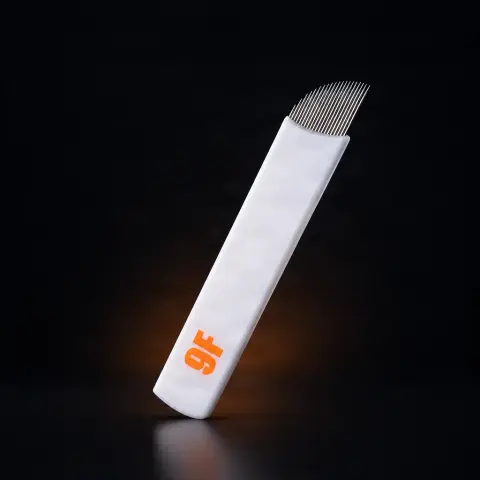
Recalibration adjusts the existing shape by adding pigment where it's missing, not by erasing what's there: the tail can be visually lifted with shading above it, and a too-low position can be balanced by defining a more visible arch above the old line, letting the old pigment fade gradually underneath. It's the lowest-risk, fastest-recovery option, but it doesn't correct very dense or very dark pigment — camouflage or saline removal are needed first in those cases.
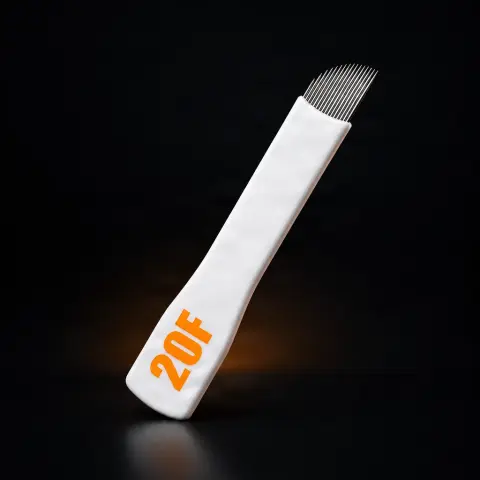
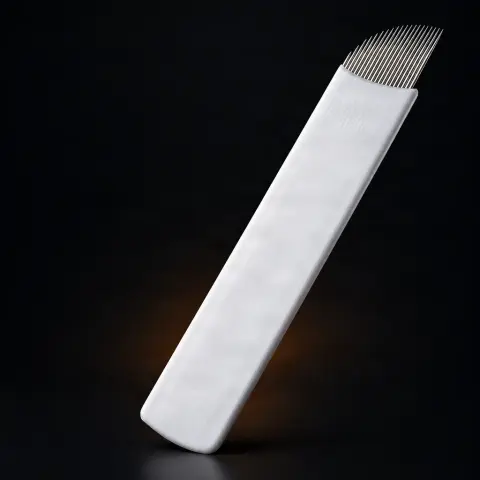
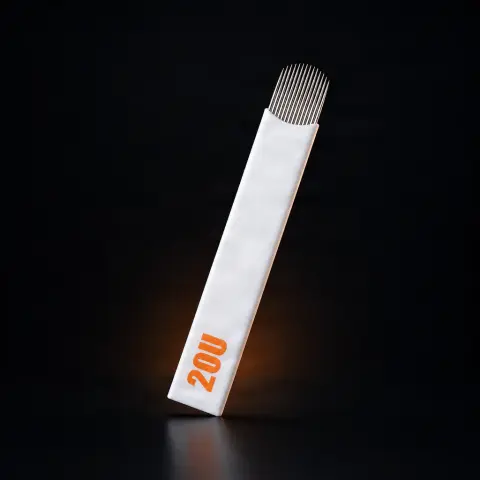
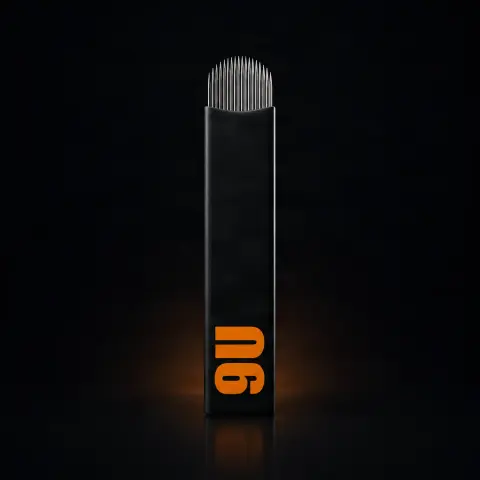
Needles and supplies for brow recalibration (microblading/shading)
How to choose between options: practical criteria
- How dense and deep the old pigment is — camouflage and recalibration work on medium-density pigment; very dense pigment needs saline or laser first.
- What actually bothers you — color too intense (fading/saline), shape too thick (camouflage/recalibration), position too low (optical recalibration; laser doesn't fix position).
- The pigment type originally used — iron-oxide pigments raise the paradoxical darkening risk with laser; saline is safer in that case.
- Skin condition — scarring, very thin or sensitive skin limits the more aggressive options (laser, repeated saline).
- Time available — camouflage can show a visible result in one session; saline and laser need multiple sessions 6-8 weeks apart.
- A portfolio focused on corrections, not just new PMU applications
- Clearly explains the limits of the chosen technique instead of promising guaranteed full removal
- Runs a reaction test before laser or extensive saline sessions
- Respects a minimum healing interval (4-8 weeks) between sessions
Search corrective and camouflage PMU pigments →
Surse și referințe
- American Academy of Dermatology — Laser tattoo removal
- Skin Therapy Letter — Optimizing Outcomes of Laser Tattoo Removal (paradoxical darkening risk)
- PMC (NIH) — Q-switched laser micro-drilling and multipass full-beam Q-switched laser for tattoo removal, case series
- Botched Ink — Saline Tattoo Removal Explained (mechanism and risks of saline removal, PMU industry resource)
Întrebări frecvente
Can I fix my eyebrows without fully removing the old pigment?+
Yes — recalibration (optical redesign) and camouflage both work over existing pigment without full removal. They suit cases where the pigment isn't very dense and the shape adjustment needed is small.
How long does it take for overly dark PMU to fade naturally?+
Typically 1-3 years, depending on application depth and pigment type. Fading lowers color intensity but doesn't change the brow's position or shape.
Is laser risky on PMU pigment containing iron oxide?+
There's a documented risk of paradoxical darkening — iron oxide or titanium dioxide pigment can turn darker instead of fading when hit with a Q-switched laser. That's why a small test spot beforehand and a consult with a removal specialist or dermatologist are recommended.
How is saline removal different from laser?+
Saline uses osmosis to draw pigment to the surface through a concentrated salt solution applied with PMU equipment, and the pigment sheds with the healing scab. It doesn't chemically break down pigment with heat, so it avoids the paradoxical darkening risk tied to laser.
How many sessions does saline or camouflage correction need?+
Saline removal usually needs 2-4 sessions spaced 6-8 weeks apart; camouflage can show a visible result after one session, with touch-ups possible later.
How do I pick a technician for correction work, not just new PMU?+
Look for a portfolio focused on corrections (not only new applications), clear explanations of the chosen technique's limits, and a respected minimum healing interval between sessions.