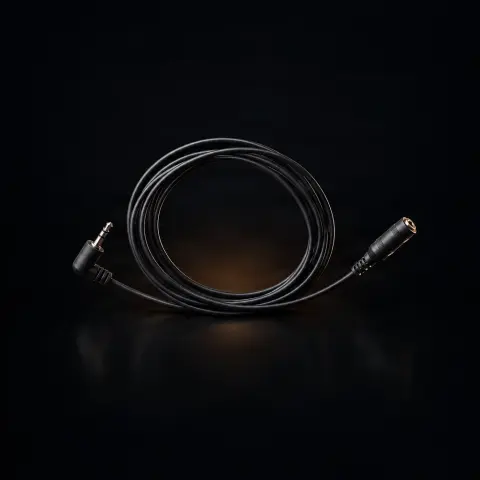
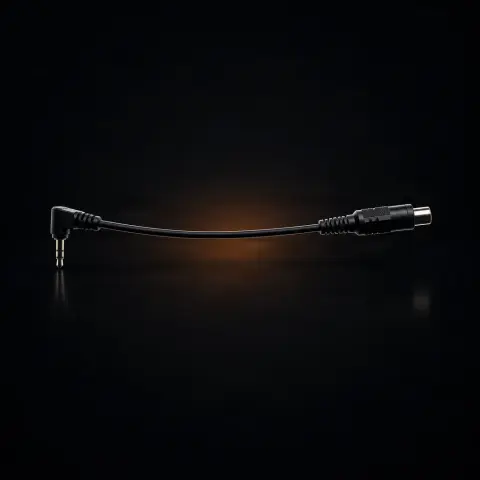
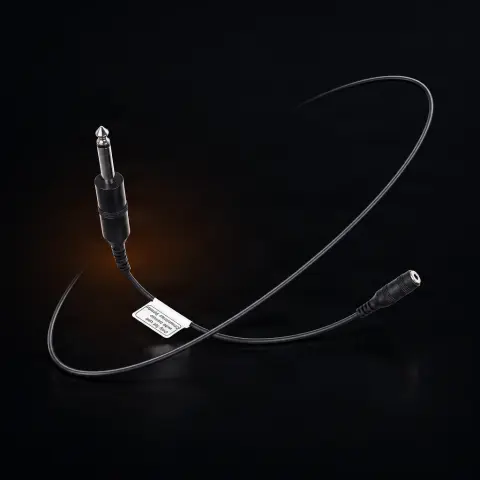
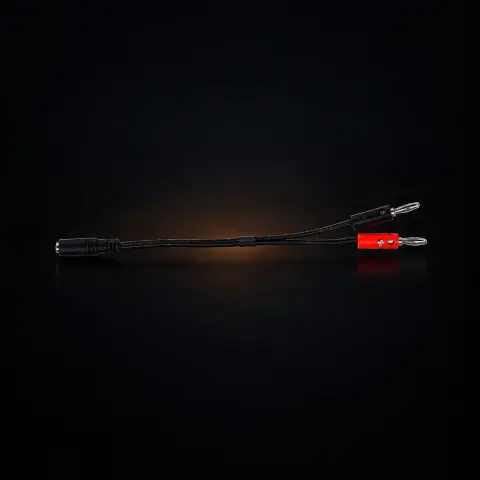
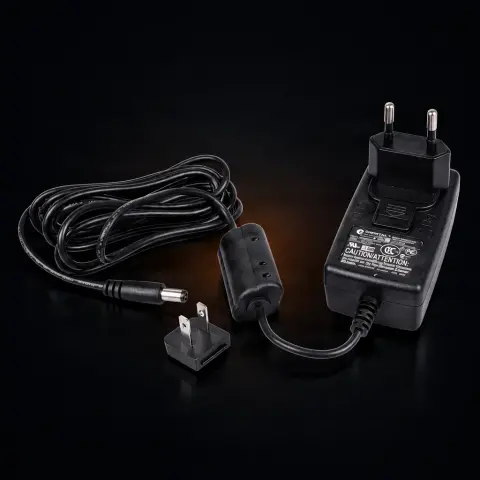
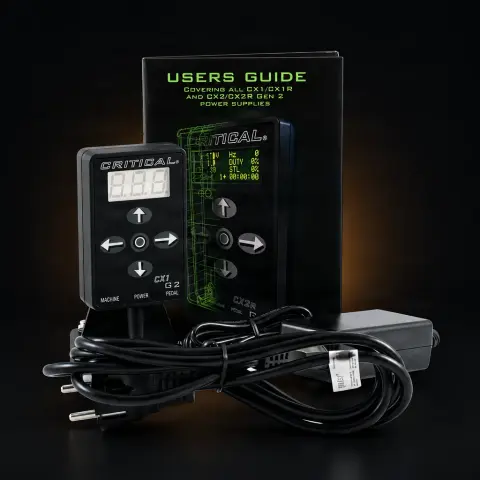
When your Cheyenne equipment and power supply (or foot pedal) 'speak' different connector sizes, you need a bridge between them. That is exactly the role of this cable: it makes the transition between the small 3.5mm jack (mini-jack) and the large 6.3mm jack (quarter-inch), completing the power chain without improvised rigid adapters. It is an original Cheyenne accessory, especially useful for artists who have a power supply or foot pedal with a 6.3mm input.
How do I know if I need this cable?▾
Check the two ends of the power chain. If your Cheyenne device (machine/pen) has a small 3.5mm port—like a headphone connector—and your power supply or foot pedal has a large 6.3mm input—like a guitar connector—then you need this bridge between the two sizes. If both ends already have the same jack size, you don't need this adapter.
What is the difference between a 3.5mm jack and a 6.3mm jack?▾
The difference is purely physical, in the diameter of the connector. The 3.5mm (mini-jack) is the familiar size of a headphone connector, while the 6.3mm (quarter-inch) is the size of a guitar or professional audio equipment connector. Electrically, both can carry the same signal; the problem this cable solves is purely mechanical—fitting into the socket.
Can I use a cheap generic 3.5mm to 6.3mm adapter?▾
Electrically, a generic adapter can work, but it's not ideal for tattooing equipment. Rigid plug adapters (just the connector, without a cable) add leverage directly onto the device's port: with an accidental pull, they can force and damage the port, which is much more expensive to repair than the cable. An adapter cable distributes the strain along its length and provides a more stable contact over time.
Does the cable affect the voltage reaching the machine?▾
Practically no. On a short copper cable in good condition, voltage loss is negligible, and the value set on the power supply essentially reaches the machine completely. What can actually cause problems are oxidized connectors or an internal broken wire—situations that result in intermittent contact, not a constant voltage drop.
How do I maintain and keep it clean?▾
Wipe the connectors with a dry or slightly isopropyl alcohol-dampened cloth, without letting liquid enter the socket—an oxidized contact causes intermittent signal. It is not a disposable item and should not be sterilized by autoclaving; if it enters the work area, protect it with barrier film, just like the rest of the clip cord. Store it loosely coiled, without sharp bends.
What warranty does it have?▾
According to the manufacturer's information, the cable comes with a 6-month warranty, and after any repair you receive an additional 6 months. For a connectivity accessory, issues most often occur at the cable-connector junction, so proper handling (pull by the connector, not the wire) greatly extends its lifespan.