Complete guide: Cheyenne Safety Cartridge Needle POWER
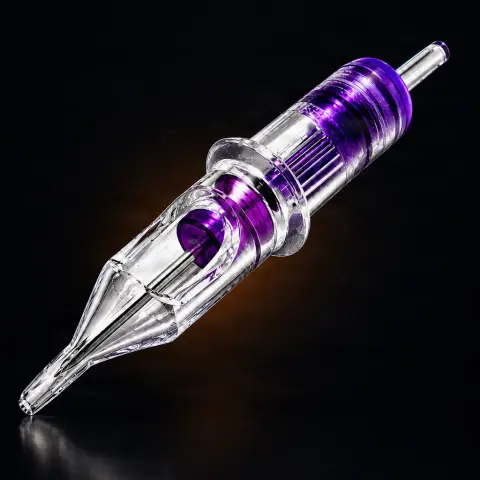
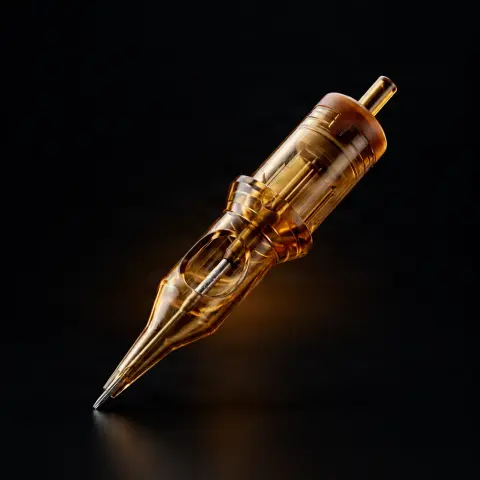
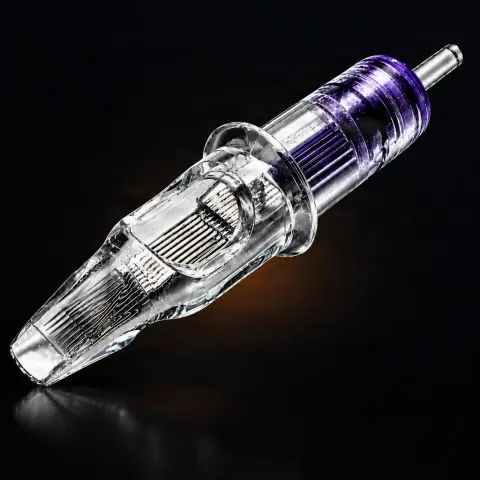
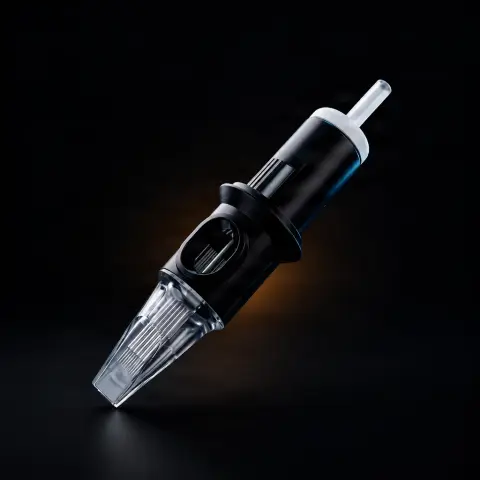
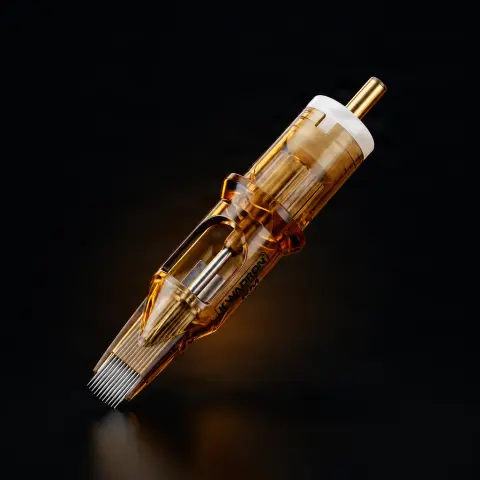
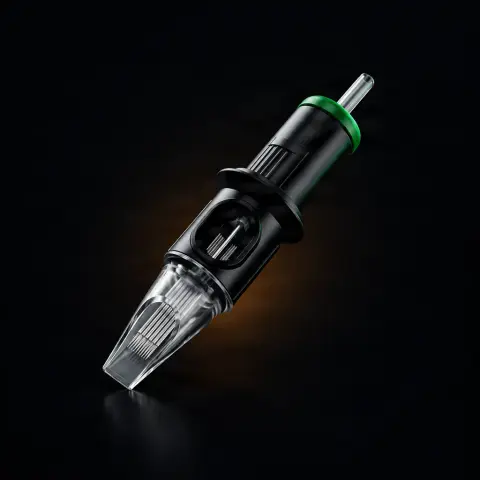
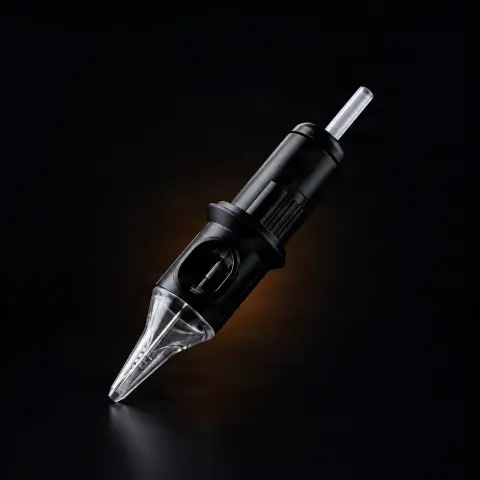
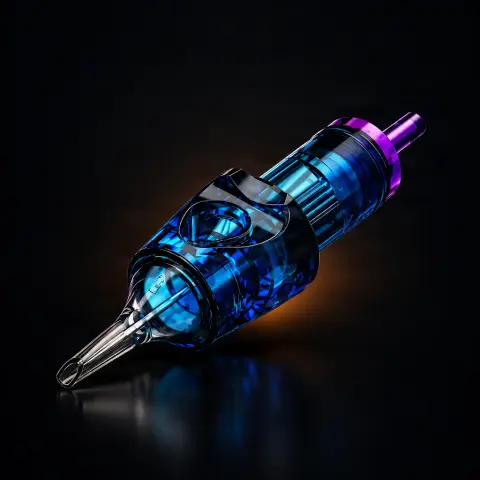
The cartridges from the Safety range of the German manufacturer Cheyenne are disposable tattoo needles, delivered sterile, with a patented safety membrane that prevents blood and ink from entering the grip. The POWER variant is positioned for work that requires a firmer pigment deposit, for example on tougher skin areas. The needles are made of stainless steel, the membrane seal meets the European standard EN 17169, and production complies with the medical standard ISO 13485. They are intended for professional artists working with tattoo machines compatible with the cartridge system.
How to use
- Check the individual sterile packaging before opening: if the blister is damaged, opened, or moist, do not use the cartridge.
- Wash your hands, put on disposable gloves, and prepare the workstation with protective barriers (wrap on the machine, cover on the clip cord, clean work area).
- Open the blister in front of the client and mount the cartridge onto the grip or machine compatible with the cartridge system, until it is properly secured.
- Adjust the needle projection length from the cartridge tip according to your technique and the type of work.
- Turn on the machine and check the needle operation before touching the skin: smooth movement, no obstructions.
- Work normally; the safety membrane inside the cartridge limits liquid backflow towards the grip during the session.
- At the end of the session, remove the cartridge with gloves on and immediately dispose of it in the designated sharps container — never in regular household waste.
- Sanitize the grip and machine according to your protocol: remove barriers, disinfect surfaces, and autoclavable grips are sterilized after each client.
Tips from us
- Remember that the displayed price is per piece — calculate your needs per session and per month accordingly.
- Choose the needle configuration (liner, shader, magnum) according to the work; reserve the POWER variant for situations that truly require a firmer deposit, not as a universal solution for every tattoo.
- Do not compensate for a wrong cartridge choice with high voltage — you unnecessarily traumatize the skin; choose the right needle for the job from the start.
- Store the cartridges in their original packaging, in a dry and clean place, away from sunlight and moisture, to maintain the integrity of the sterile packaging.
- If you are a beginner, practice mounting the cartridge and adjusting the needle on synthetic skin before working on a client.
- Open the cartridge only at the moment of use — a cartridge removed from the blister and not used immediately can no longer be considered sterile.
Warning: The cartridges are strictly single-use: do not disinfect or reuse them under any circumstances, not even on the same client at a later session. Reuse poses a risk of infections and transmission of bloodborne diseases. Do not use a cartridge whose packaging is compromised. After use, dispose of the cartridge in a sharps container, in accordance with hygiene regulations applicable to tattoo studios. The product is intended for professional use, with adherence to hygiene rules: gloves, protective barriers, and disinfection of equipment between clients.
Frequently asked questions
What does 'Safety' mean on Cheyenne cartridges?▾
The Safety range has a patented safety membrane inside the cartridge, which prevents blood and ink from entering the grip during work. The membrane seal meets the requirements of the European standard EN 17169, and production complies with the medical standard ISO 13485. Essentially, it reduces the risk of cross-contamination between clients and protects the grip and machine.
Which machines are these cartridges compatible with?▾
Cheyenne cartridges mount natively on Cheyenne machines and grips, and their cartridge system has become a widely adopted format, accepted by many pen-style rotary machines from other manufacturers. Before ordering, check your machine or grip manual that it accepts Cheyenne-compatible cartridges — if you already use other cartridges of this type without adapters, they most likely fit.
When do I choose the POWER variant over standard Safety cartridges?▾
POWER is a specialized configuration, designed for work that requires a firmer pigment deposit — for example on thicker, tougher skin areas or for cover-ups. For general use and for fine or sensitive areas, the standard cartridges in the range remain the right choice. If you are not sure that the work requires this type of cartridge, start with the standard variant.
Can I disinfect and reuse a cartridge?▾
No. The cartridges are single-use and are delivered sterile, in individual packaging. No studio disinfection method can restore them to the sterile and safe factory condition, and reuse poses a serious risk of infections. After each client, the cartridge is disposed of in the sharps container, and for the next client a new one is opened in front of them.
How can I tell if a cartridge is okay before using it?▾
Check three things: the individual packaging must be intact (unopened, unpunctured, no signs of moisture), the seal must be complete, and after opening the needle must look impeccable — no bent or deformed tips. Any cartridge with compromised packaging or a damaged needle is discarded, not used on skin.
Is the price for one cartridge or for a box?▾
According to the listing, the displayed price is per piece. This way you can order exactly the quantity you need, in the configurations you use most often, without being tied to a whole pack of a single size.
Product description
Cartridge needles With the Safety cartridges, Cheyenne proves once again its leader in innovation, they represent a milestone in work safety, simplicity and hygiene. The needles come with a patented safety membrane that prevents blood and ink from entering the handle. The tightness of the membrane complies with the requirements of the European standard EN 17169. Experienced experts make sure that the needles are in compliance with medical standards (ISO 13485)Material: Stainless steel The needles are single-use and sterile packaged The price is per piece
Cheyenne Safety POWER is the special maximum-power configuration from the Safety range, designed for situations demanding aggressive penetration and massive ink deposition. The Power configuration uses thicker gauge needles with short taper, providing significantly superior rigidity and penetration force compared to standard cartridges. This makes Power the choice for: thick and resistant skin (elbows, knees, hands), cover-ups requiring dense deposition over old tattoos, aggressive color packing in difficult areas, and any situation where standard ink is not going deep enough. The advanced Safety membrane is present, ensuring anti-backflow protection and controlled flow even at higher penetration forces. Made in Germany, premium surgical steel, gamma sterilization. Compatible with Cheyenne and universal machines. Note: Power is not a general-use cartridge — it is a specialized tool for specific situations. Use on normal or thin skin will cause excessive trauma. Compared to standard cartridges at high voltage, Power provides controlled penetration through mechanical design, not electrical brute force — more predictable and safer result. Box of 20 cartridges, CE. Essential tool for professionals working across the full spectrum of skin types.
Frequently Asked Questions What are Cheyenne Safety Power cartridges? Cheyenne Safety Power are special cartridges with thicker gauge (approximately #10 or equivalent, 0.30-0.35mm but with aggressive short taper) and construction optimized for maximum penetration. They are not daily-use cartridges — they are specialized tools for situations requiring extra force: thick skin, difficult areas, cover-ups, and color packing in resistant areas. Think of them as the impact drill equivalent versus a standard drill — same function, but with additional power. When should I use Cheyenne Safety Power? Use Power in these specific situations: thick skin on elbows, knees, hands or feet where standard needles do not penetrate sufficiently; cover-ups where you need to deposit dense ink over an existing tattoo acting as a barrier; color packing in scarred or textured skin areas; and retouch sessions where healed skin has become more resistant. Do not use Power on normal skin, fine areas (neck, fingers, facial area), or thin/sensitive skin — it will cause excessive trauma and problematic healing. What voltage for Cheyenne Safety Power? Voltage for Power: 7-8.5V — surprisingly similar to standard cartridges. Power's purpose is not to be run at higher voltages, but to provide superior penetration at normal voltages. The short taper and thick gauge do the mechanical work — you do not need to compensate electrically. Too-high voltage on Power will cause excessive trauma. Start at 7V and increase by 0.3V until you achieve desired penetration. On thick knee skin, 8V on Power equals approximately 9.5V on standard. Is Power available in all configurations? Cheyenne Safety Power does not follow standard configurations (RL, RS, M1, RM). Power comes in specific configurations optimized for its purpose — predominantly Round Liner and Magnum, with specific variants calibrated for maximum penetration. Check exact availability on tatuat.ro, as the Power range is more limited than standard Safety. Not all sizes are permanently available, being a niche product with lower demand. Is Cheyenne Safety Power safe? Yes, Cheyenne Safety Power includes the same advanced safety membrane as the rest of the Safety range, with complete anti-backflow protection. Gamma sterilization and German manufacturing meet the highest standards. The risk comes not from the product, but from incorrect use — Power on unsuitable skin causes excessive trauma. Used correctly (only on thick/resistant skin, at moderate voltages), Power is as safe as any Safety cartridge, just mechanically more aggressive. Power vs standard at high voltage — what is the difference? The fundamental difference: Power provides superior penetration through mechanical design (thick gauge, short taper, rigid construction), while a standard cartridge at high voltage achieves penetration through brute electrical force. Power: controlled, predictable penetration with less vibration and collateral trauma. Standard at high voltage: excessive, unpredictable penetration with vibrations traumatizing skin adjacent to needles. Power is the correct engineering solution; excessive voltage on standard is a risky hack. How much does Cheyenne Safety Power cost? Cheyenne Safety Power sits in the same price range as standard Safety: 150-210 RON / 20 pcs. There is no additional premium for Power — it is just a different configuration from the same range. Being a niche product, ensure it is in stock before planning sessions that require Power. We recommend keeping one box of Power as permanent reserve in the studio. Does Power work on all machines? Yes, Power is compatible with all standard pen-style machines. However, we recommend machines with powerful motors (FK Irons Xion, Cheyenne Sol Nova, Bishop Fantom) because Power requires somewhat more driving force due to the thicker gauge. Entry-level machines with weaker motors (Dragonhawk Mast Tour, etc.) can function but with reduced efficiency on larger Power configurations. Powerful motors drive Power effortlessly, maintaining natural tactile experience. Can I use Power for the entire tattoo? No, absolutely not. Power is designed exclusively for specific situations requiring additional penetration. Using Power for the entire tattoo would cause excessive trauma, problematic healing, potential scarring, and ink loss. The correct approach: 90% of the tattoo with standard cartridges (Safety RL, RM, M1), and Power only for areas resisting standard (elbows, knees, thick skin). Think of Power as an intervention tool, not a general-use instrument. How do areas done with Power heal? Areas tattooed with Power require extra healing attention due to deeper penetration. Expect: slightly more pronounced redness and swelling in the first 48 hours, potentially thicker crusting, and a complete healing period of 3-4 weeks (vs. 2-3 weeks standard). Aftercare must be rigorous: protective film or cream, constant hydration, avoiding friction on the area. The final result (after complete healing) is usually excellent — ink retains well due to adequate penetration in resistant skin.