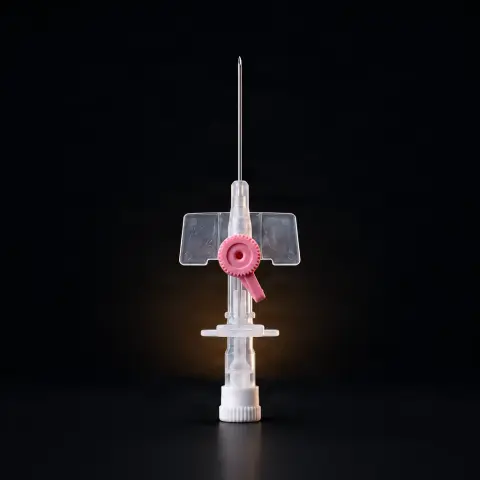
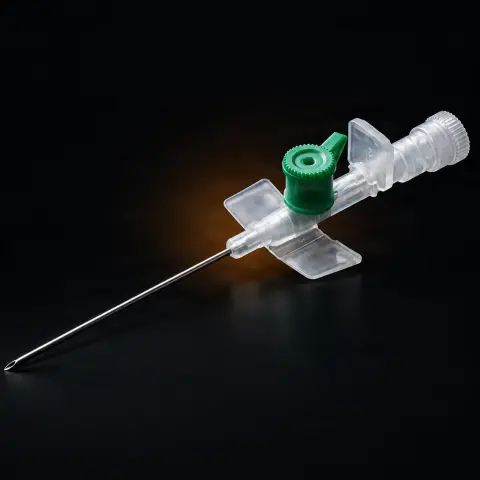
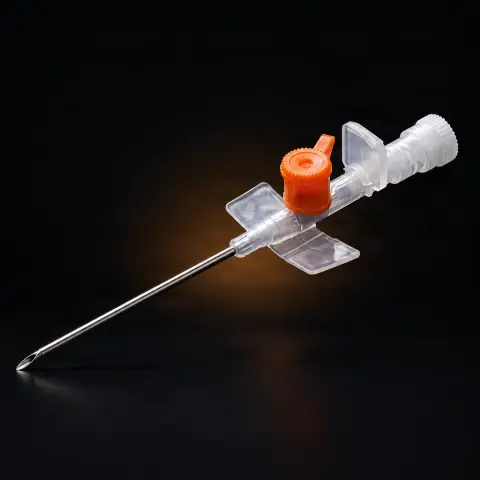
This is a sterile, single-use cannula with valve, in gauge 16G — quickly identified by its gray color code. The needle has a double-ground, siliconized tip to pass through tissue with minimal resistance, and the flexible cannula left in the channel guides the jewelry without leaving the pathway unprotected. It is designed for professional piercers who work with the cannula piercing technique, as well as for artists who want a stock of clearly labeled gauges in the studio.
What does 16G mean and why is the cannula gray?▾
"G" stands for gauge, the standard system for denoting thickness: the smaller the number, the thicker the needle. 16G is a gauge commonly used in professional piercing, and gray is the standardized color code for this gauge in cannulas — you recognize it at a glance without reading the label. According to product specifications, the cannula has an inner diameter of 1.8 mm and a length of 45 mm.
What is the difference compared to a classic piercing needle?▾
With a classic needle, the jewelry must be transferred directly into the fresh channel immediately after withdrawing the needle. With a cannula, after piercing you withdraw only the metal needle, and the flexible cannula remains in place in the channel; the jewelry is inserted guided by the cannula, which exits as the jewelry advances. Thus the channel is never left unprotected, and jewelry insertion is more controlled — which is why many piercers in Europe prefer this technique.
Can I reuse the cannula if I sterilize it in an autoclave?▾
No, under no circumstances. It is strictly a single-use device: after first use, the needle tip loses its sharpness, and the materials are not designed for resterilization. The manufacturer explicitly states that a used product has potential biological risk and must not be reused. Reuse violates salon hygiene standards and endangers the client — a new cannula for every procedure, without exception.
How do I choose the right gauge for the client's jewelry?▾
The practical rule: the jewelry must be able to pass through the cannula, so its thickness must be equal to or less than the inner diameter of the cannula — for this model, 1.8 mm. Choose the 16G cannula when working with jewelry of the corresponding gauge; for thicker or thinner jewelry, use the appropriate gauge cannula, identified by its color code. The final decision also depends on the anatomical area and your experience as a piercer.
Does it contain latex? What do I do if the client has allergies?▾
According to the manufacturer, the product does not contain latex — it is made from silicone rubber and stainless steel, and the needle tip is siliconized. Even so, always discuss with the client their history of allergies and sensitivities before the procedure, including to metals or disinfectants, and stop the procedure if unusual reactions occur.
How do I properly dispose of the cannula after use?▾
After the procedure, the used cannula is considered potentially infectious waste. Dispose of it immediately, without manually recapping the needle, into a special sharps container, never in household trash. Disposal must follow accepted medical practice and local regulations regarding medical waste — any professional studio must have a contract for the collection of such waste.