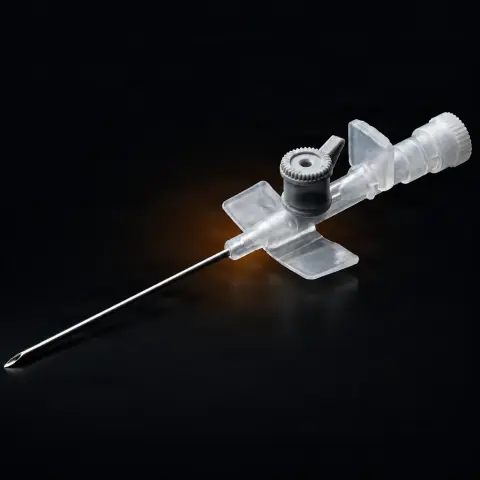
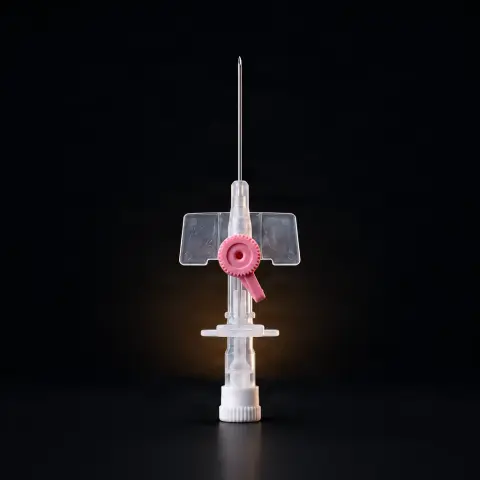
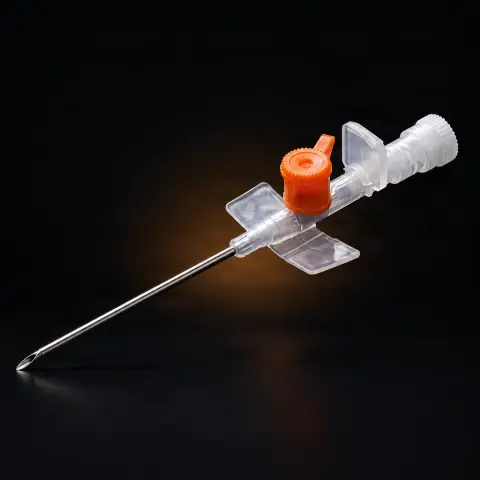
This is a sterile, single-use cannula in 18G, marked with the standard green color code for this gauge. It is the preferred tool of many professional piercers for the cannula technique: the needle pierces the tissue, and the flexible cannula left in the channel guides the jewelry without exposing the fresh channel. It is intended for piercers and studios working with fine jewelry, but is also useful for trainees learning this technique under supervision.
What does '18G' mean and why is the cannula green?▾
'G' stands for 'gauge', the sizing system used for piercing needles and jewelry — the higher the number, the thinner the needle. Cannula colors are standard-coded, and green corresponds to 18G, allowing instant gauge identification during work. According to the specifications of this product, the cannula has an inner diameter of 1.3 mm, length of 45 mm, and a needle of 0.85 mm.
What advantage does cannula piercing have over a simple needle?▾
In the cannula technique, after the puncture you retract the metal needle, and the flexible cannula remains in the freshly created channel. The jewelry is then guided through the cannula, so it enters the channel without directly touching it and without the risk of 'losing' the tract. The result is a more controlled insertion that is less traumatic to the tissue, which is why many piercers in Europe prefer this method, especially in areas where jewelry is difficult to insert with a single needle.
What jewelry and what types of piercing are suitable with an 18G cannula?▾
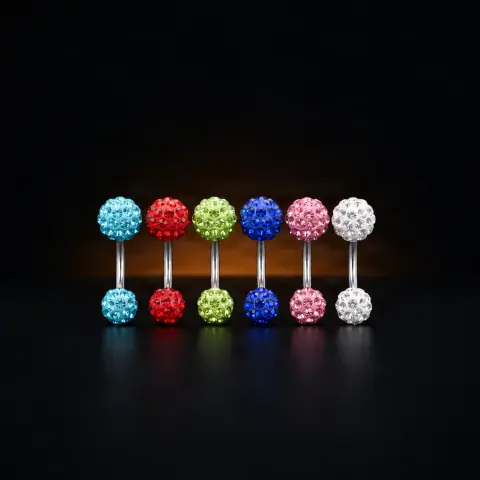
The basic rule is to use jewelry of the same gauge as the cannula, i.e., 18G. This is one of the fine gauges, typically used where thin jewelry is worn — frequently for ear and nose piercings. The final choice depends on the client's anatomy and the desired jewelry: for areas that require more robust jewelry, piercers usually choose a thicker gauge, so always check the gauge of the jewelry before the procedure.
Can I reuse the cannula if I sterilize it in an autoclave?▾
No, absolutely not. The product is designed exclusively for single use, and the manufacturer explicitly states that it must not be reused. After the first use, the needle tip degrades, the silicone coating wears off, and the product becomes biohazard waste. Reusing would expose the client to infection risk and put you in conflict with the hygiene standards applicable to studios. Each client, each procedure — a new, sterile cannula from an intact package.
Does the product contain latex? What is it made of?▾
No, the product does not contain latex — an important aspect for clients with latex allergy. According to the manufacturer's description, the cannula is made of silicone rubber and stainless steel, has a valve, and the needle tip is double-ground and silicone-coated for easier glide through tissue. Each piece is sterile and individually packaged.
How do I correctly dispose of the cannula after use?▾
The needle is discarded immediately after the procedure, without recapping, into a special sharps container (rigid safety box). The remaining used components are treated as biohazard waste. The manufacturer explicitly requires handling and disposal in accordance with accepted medical practice and local legislation — in practice, this means separate collection and handover to an authorized medical waste operator, not disposal in household trash.