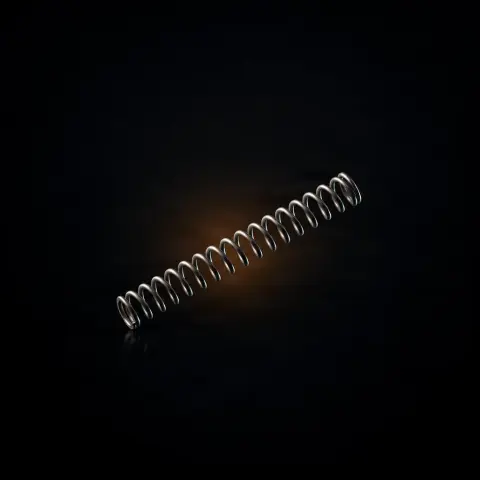
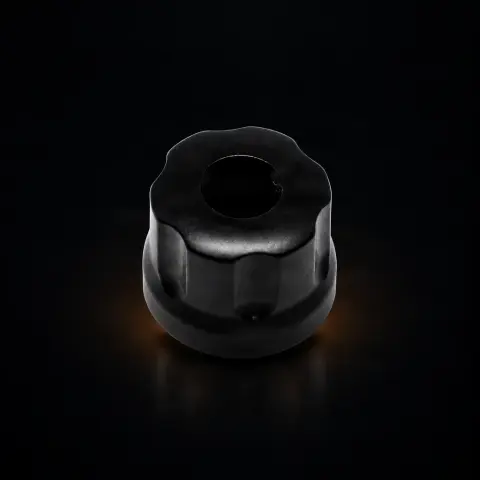
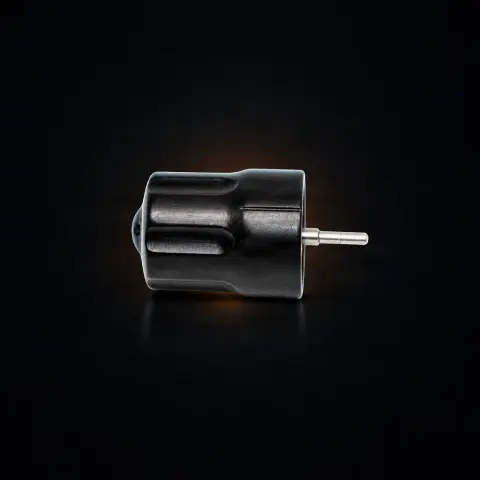
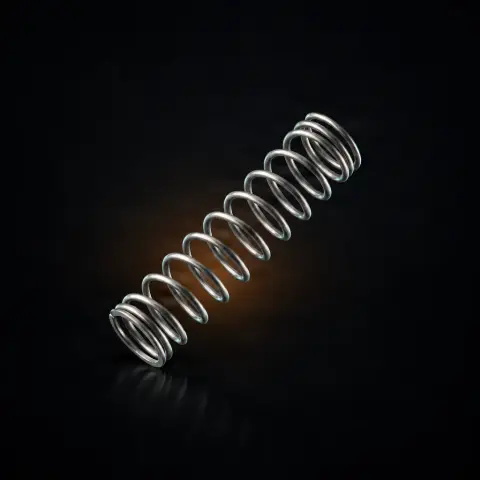
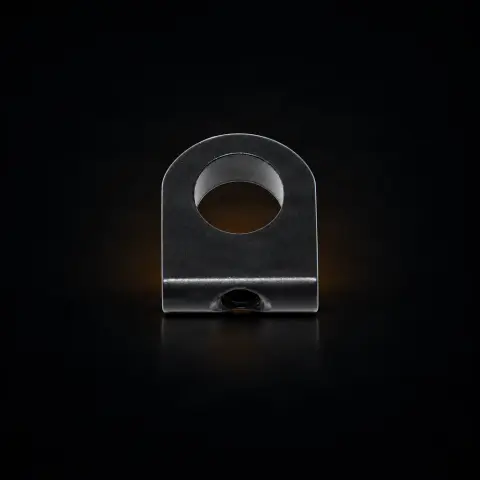
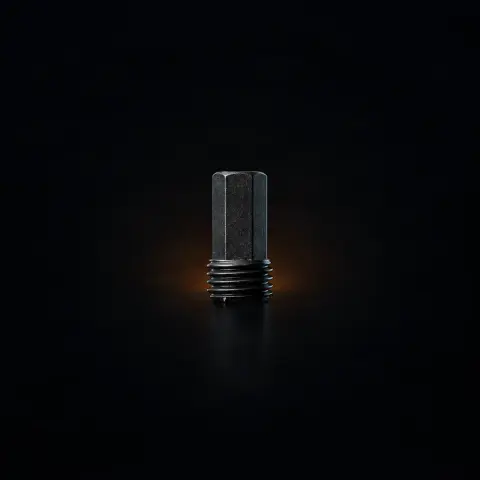
These bearing washers (part no. 68) are original Ink Machines spare parts for the cam mechanism of rotary machines, designed for artists and technicians who maintain their own equipment. They are supplied in a set of 2—one for each cam bearing—and serve as precision spacers: they evenly distribute forces, maintain correct spacing, and protect contact surfaces. Being wear parts, they are replaced periodically to keep the machine quiet, precise, and free of axial play.
What role do these washers play in Ink Machines?▾
They are precision spacers placed between the cam bearings and adjacent components. They evenly distribute axial forces (prevent point wear on bearings), maintain correct cam spacing on the shaft (rotation in the correct plane), and protect machined surfaces from direct wear. Without them, bearings wear faster, the cam can wobble axially, and machine noise increases.
Why do they come in a set of 2?▾
The mechanism uses one washer on each side of the cam, associated with each bearing. The set of 2 allows complete and balanced replacement of both at once. If you change only one, a new washer next to a worn one positions the cam asymmetrically and affects stroke uniformity.
Do I need to change them with the cam bearings?▾
It is the recommended practice: replace the washers (part no. 68) together with the cam bearings (part no. 67). They have the same age and wear, disassembly for bearings exposes the washers anyway, and the combination of new parts gives the best result in terms of noise, vibration, and longevity.
Are they compatible with Dragonfly and Stingray?▾
According to the description, they are designed for the Ink Machines cam mechanism, and the Dragonfly and Stingray models use a cam system with similar specifications, so the same washers are compatible. However, check the product page for your model, as newer versions may have slight modifications; the safest reference remains the part number (no. 68).
How do I check if they need replacing?▾
Inspect them visually every time you disassemble the cam: deep grooves or scratches, uneven wear, reduced thickness (compared to a new part if you have a micrometer), deformation/warping, or ovalization. Any sign of significant wear justifies replacement.
Can I use generic washers instead of the original ones?▾
It is not recommended. Ink Machines washers have calibrated thickness and diameter for this mechanism, and a thickness deviation can cause axial play or excessive pressure on the bearings. Material and surface finish matter just as much—a rough surface prematurely wears the bearing. Since these parts are inexpensive, it's not worth the risk of an alternative.