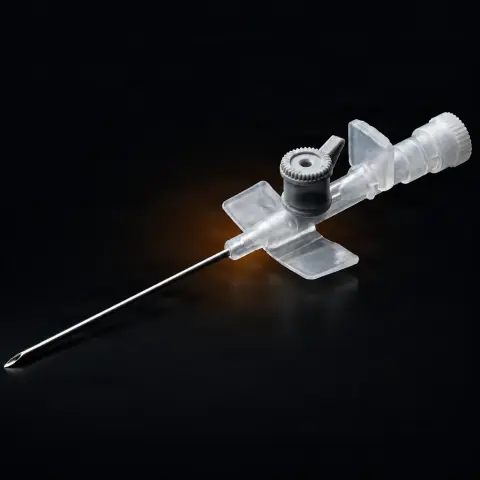
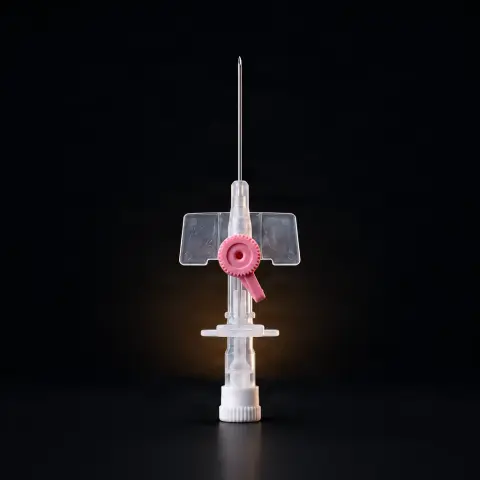
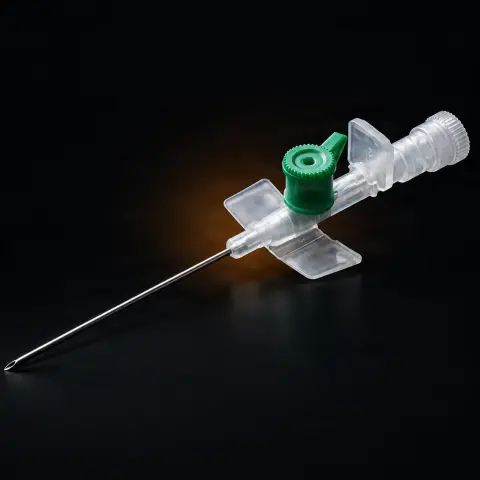
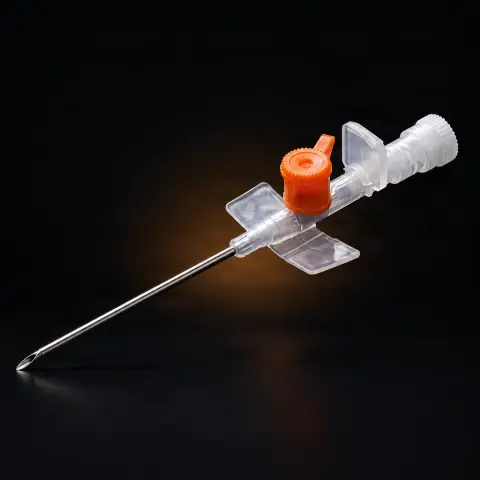
The 14G piercing needle is the most sought-after professional consumable in a piercing studio, used for the most popular areas: navel, eyebrow, lip, tongue, septum, and certain ear piercings. It is made of surgical stainless steel, with a laser-sharpened tri-planar tip for clean penetration, and comes individually packaged, sterile, single-use. It fits 14 gauge (1.6 mm) jewelry and is designed for licensed piercers who follow a strict hygiene and sterility protocol.
Why is 14G the most popular gauge for piercing?▾
14 gauge (1.6 mm) offers a good balance among several factors: 14G jewelry is thick enough not to bend or migrate easily, there is the widest variety of jewelry styles in this gauge, and the created channel heals in a reasonable time for most body locations. That is why it is considered the de facto industry standard for most body piercings.
What is the difference between a 14G and a 16G needle?▾
The 14G needle has a diameter of 1.6 mm, while the 16G has 1.2 mm — a difference of 0.4 mm. Basically, 14G creates a wider channel, suitable for thicker, more stable jewelry, while 16G creates a narrower channel for thinner jewelry. The choice depends on the piercing location: generally 14G is used for body areas (navel, lip, septum), and 16G for more delicate areas (ear, nose).
How is the 14G needle sterilized and handled correctly?▾
The needle comes pre-sterilized from the manufacturer via gamma radiation or ethylene oxide, and is individually packaged in a sealed pouch with a sterility indicator. It is not resterilized in the studio — it is single-use. It is opened only immediately before use, used once, and disposed of directly into a sharps container, in accordance with health regulations.
What jewelry is inserted after piercing with a 14G needle?▾
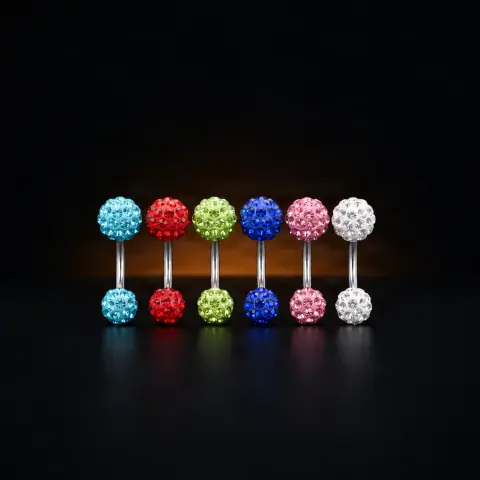
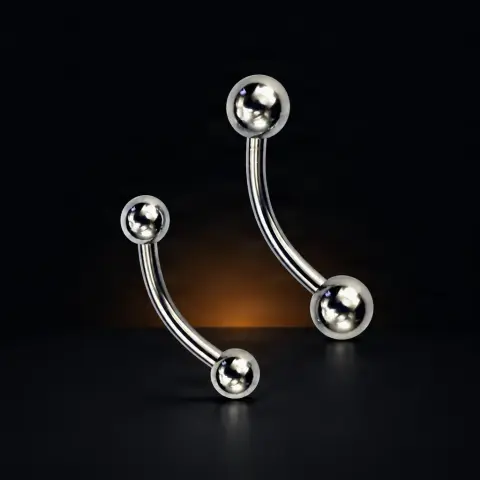
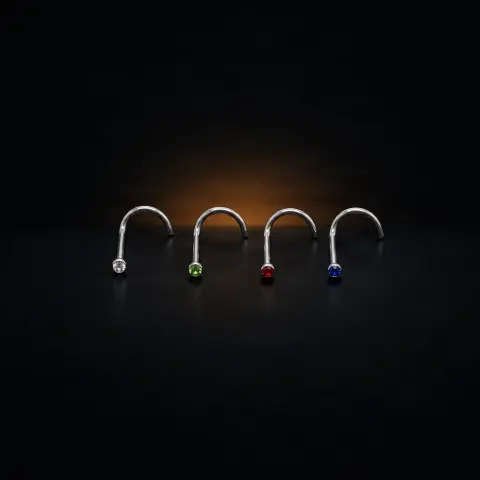
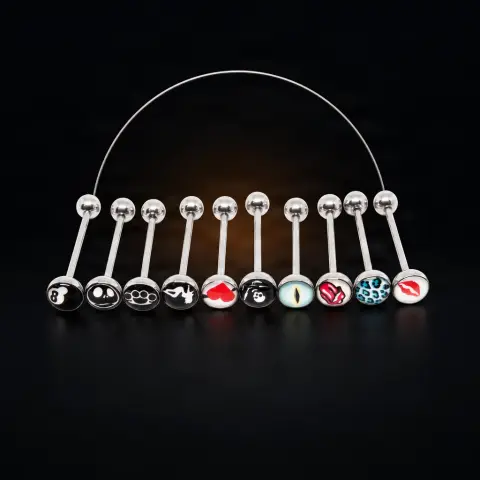
Insert 14 gauge jewelry suitable for the piercing type: banana barbell for navel or eyebrow, straight barbell for tongue, labret stud for lips, circular barbell for septum, or captive bead ring for multiple locations. For initial healing, the recommended material is implant-grade titanium (ASTM F136), 316L surgical steel, or niobium — avoid silver, acrylic, and nickel-containing metals.
Is it suitable for navel piercing?▾
Yes, 14G is the standard gauge for navel piercing. Navel jewelry is mostly manufactured in 14G, and the resulting channel provides the necessary space for the jewelry to move naturally without additional irritation. Complete healing usually takes several good months, with variations from person to person.
Is this gauge also suitable for tongue piercing?▾
Yes, 14G is the standard gauge used for tongue piercing. The tongue is a thick muscle, requiring a sufficiently thick piece of jewelry for stability — thinner gauges are less suitable for this area.