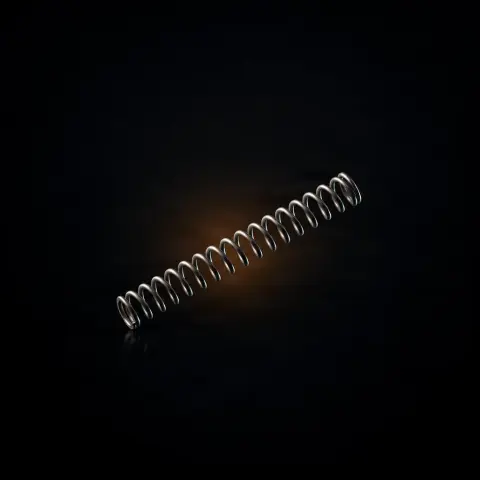
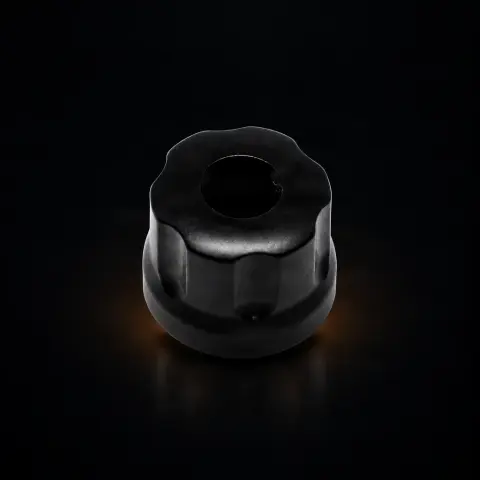
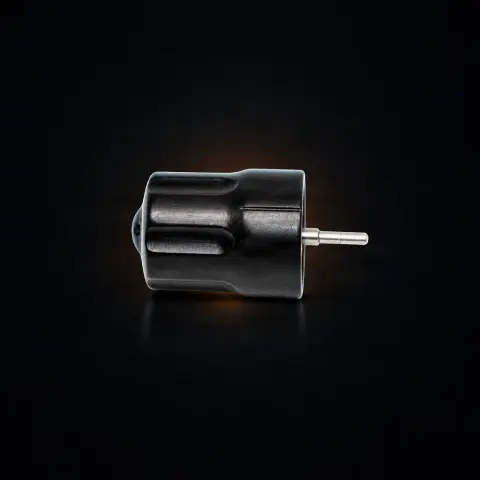
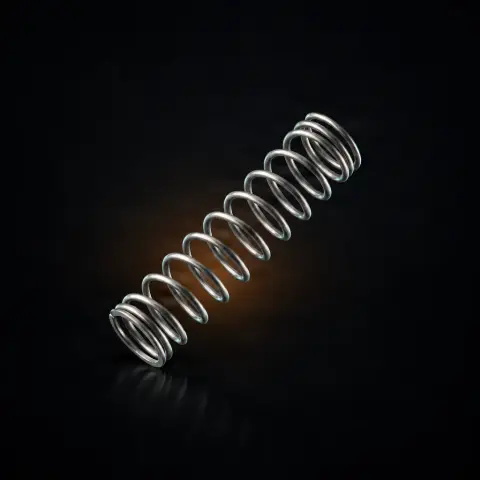
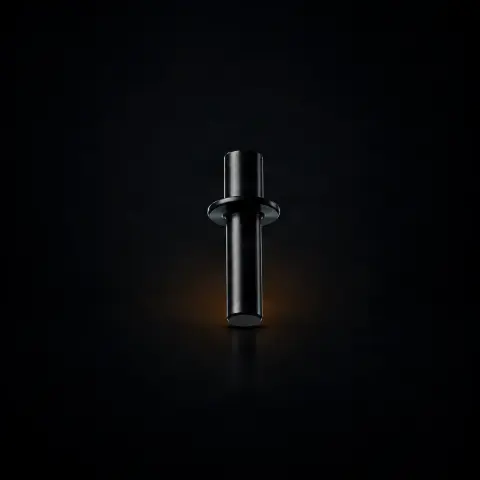
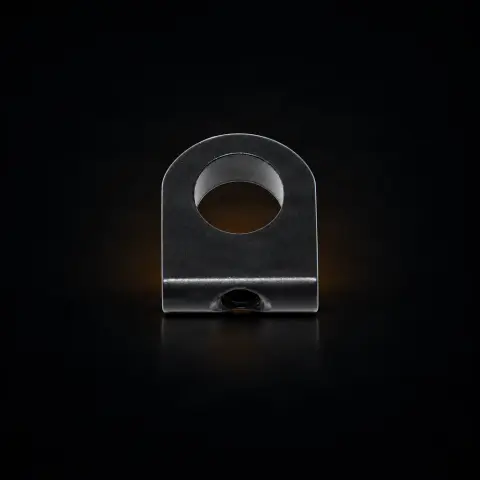
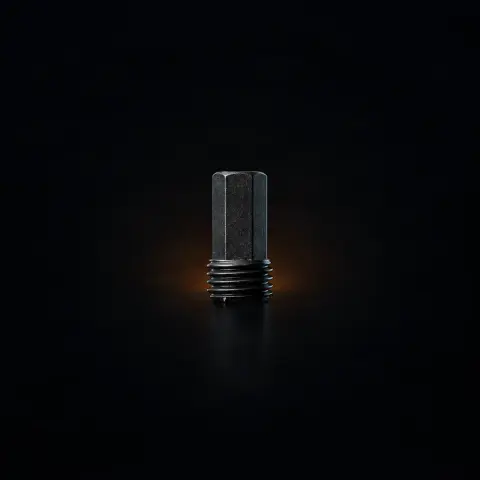
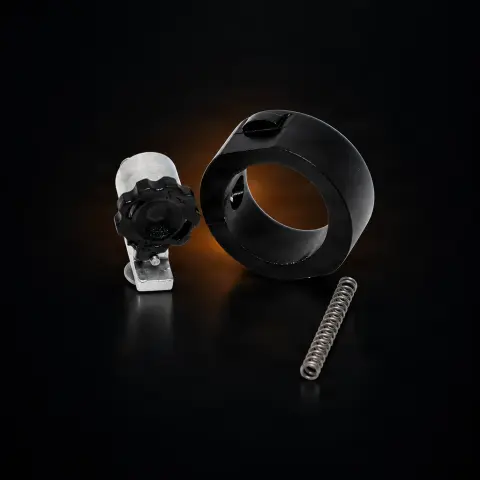
This is the original replacement part no. 72 for the InkMachines Stingray pen-style rotary machine — the piston assembly that converts the cam's rotary motion into the linear motion of the needle bar. It is the mechanical component that dictates the consistency of the needle stroke, thus directly affecting line work and shading. It is intended for artists who own a Stingray and need an original part for replacement due to wear or for maintenance.
What does the piston assembly do on the Stingray machine?▾
It converts the cam's rotary motion into the alternating linear motion of the needle bar. The cam, as it rotates, pushes the piston in an up-down cycle, and the piston transmits this motion to the needle bar. The quality of this conversion determines the consistency of the needle stroke — a precision piston provides the same stroke length and force every cycle.
How do I know I need to replace the piston assembly?▾
The main signs are: increased piston play (the needle bar moves laterally as well as vertically), a mechanical ticking noise that progressively increases, inconsistent needle stroke without changing voltage, and increased resistance to movement (the motor seems to work harder). Check with the machine off, manually moving the needle bar to evaluate linearity and play.
Does the Stingray piston assembly also work on the Dragonfly?▾
No. Part no. 72 is specific to the Stingray's pen-style architecture; the dimensions, geometry, and mounting interfaces differ from the equivalent components of the Dragonfly. Although both are from the same manufacturer, the drive mechanisms have different designs — use exclusively the part specified for your model.
Does the piston need lubrication?▾
Yes. The sliding surface must be lubricated regularly with InkMachines oil (part no. 56) — one drop every 20-30 hours of operation. Lubrication reduces friction, lowers noise and heat, and significantly extends service life. Without lubrication, dry friction quickly wears the precision surfaces.
Can I repair a worn piston assembly?▾
No. It is a precision assembly, and reconditioning, polishing, or modifying does not restore the original specifications and can worsen the problem, damaging other components. The only option for wear is complete replacement with the original part no. 72.
How long does the piston last in professional use?▾
With regular lubrication and use at normal parameters, it lasts approximately 1-3 years in intensive professional use. The lifespan increases with lubrication every 20-30 hours, operation at recommended voltage, and cleaning of residues; it decreases if you work without lubrication, at excessive voltage, or with residues accumulated in the sliding area.